

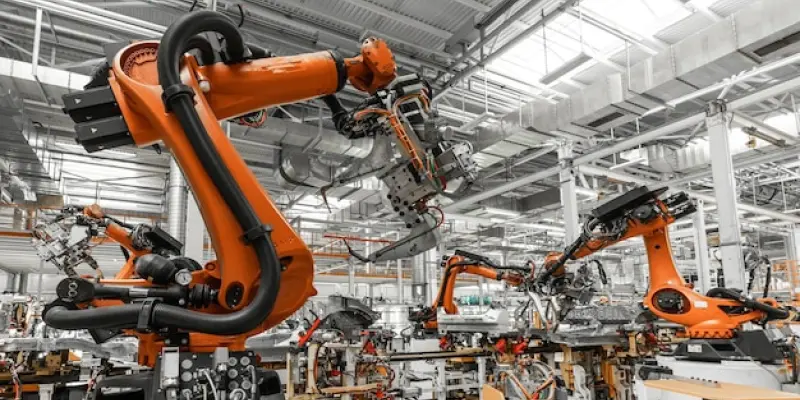
India’s robotics sector has witnessed remarkable growth and evolution, marking its presence in the global arena by 2025. With the integration of advanced technologies and the emergence of innovative companies, the industry is driving automation advancements across various sectors. This dynamic environment, characterized by collaboration between established leaders and agile startups, is propelling India’s automation capabilities to unprecedented heights. The country’s robotics industry, supported by key players, is enhancing operational efficiencies, reducing costs, and fostering significant technological advancements across multiple domains including manufacturing, logistics, defense, agriculture, and real estate.
Leading Industrial Automation Ventures
The Indian robotics landscape includes a mix of prominent companies that have significantly contributed to industrial automation. Established in 2016 and based in Noida, Addverb Technologies specializes in automation solutions for warehouses. Its portfolio includes autonomous mobile robots, automated storage and retrieval systems (AS/RS), and pallet shuttle systems designed to streamline warehouse operations. Another major player, TAL Manufacturing Solutions, a Tata Group company founded in 2000, is credited with creating India’s first industrial robot, which revolutionized manufacturing processes.
DiFACTO Robotics and Automation, based in Bengaluru since 2007, offers comprehensive industrial automation solutions tailored to enhance productivity across diverse industries. This company has earned a reputation for its ability to design and implement systems that boost efficiency while maintaining flexibility. TAL Manufacturing Solutions and DiFACTO Robotics and Automation exemplify how robotics companies are transforming manufacturing industries by adopting cutting-edge technologies to improve operational outcomes.
Innovators in Warehouse and Military Applications
GreyOrange, originating from Gurugram in 2011, has made significant strides in the field of warehouse automation. The company develops robots such as Butler and Sorter, which optimize inventory management and order fulfillment processes, improving the efficiency and accuracy of warehouse operations. Another noteworthy player is Asteria Aerospace, established in Bengaluru in 2011. This company manufactures drones for military and industrial applications, leveraging AI-based analysis tools to enhance operations in sectors such as agriculture, oil and gas, and construction.
Systemantics Robotics, founded in 1995 in Bengaluru, offers cost-effective automation solutions aimed at promoting industrial automation for Indian manufacturers. By providing accessible and affordable technology, Systemantics has positioned itself as a key contributor to the automation industry. These companies highlight the versatility of robotics applications, covering a range from warehouse automation to military-grade drone manufacturing, demonstrating the breadth of India’s robotics capabilities.
AI and Robotic Safety Enhancements
Gridbots, based in Ahmedabad since 2007, is recognized for delivering cutting-edge robotic and AI solutions that enhance safety and efficiency in nuclear, defense, and industrial sectors. The company’s focus on integrating AI with robotics has led to substantial improvements in operational safety and productivity. Gridbots continues to innovate, providing solutions that address critical challenges in hazardous environments.
Kochi-based Sastra Robotics, established in 2013, develops specialized robots for testing applications in the automotive, aerospace, and consumer electronics industries. By focusing on precision and reliability, Sastra’s robots contribute to the quality assurance processes that are vital in these high-stakes sectors. Unbox Robotics, a relative newcomer founded in 2019 in Pune, designs small, versatile robots for warehouse package sorting, providing crucial assistance to logistics and e-commerce companies. These diverse applications underscore the evolving nature of robotics in India, where companies are continually developing solutions to meet demanding industry standards.
Advancements in Housekeeping and Integrated Solutions
Peppermint Robotics, founded in 2020 in Pune, has entered the scene with intelligent housekeeping robots tailored for industrial and commercial facilities. Their technology aims to automate routine cleaning tasks, enhancing hygiene and efficiency in various environments. The commitment to delivering innovative and practical solutions is evident in the company’s design philosophy, setting a new standard in the realm of automated housekeeping.
Overall, the collaborative efforts of these Indian robotics companies exemplify a robust trend towards integrating advanced technologies, offering versatile and intelligent solutions that drive automation and improve efficiency across industries. The synergy between established leaders and emerging startups is fostering industrial growth and technological progress. These companies are positioning India at the forefront of the global robotics landscape, ensuring a dynamic and ever-evolving automation environment that addresses a wide array of industry requirements.
Future Prospects and Next Steps
India’s robotics sector is experiencing tremendous growth and transformation, making a significant impact on the global stage by 2025. With the incorporation of cutting-edge technologies and the rise of enterprising companies, the industry is spearheading automation advances in diverse fields. This energetic ecosystem, marked by partnerships between established giants and nimble startups, is elevating India’s automation prowess to new levels. The nation’s robotics industry, bolstered by prominent players, is boosting operational efficiencies, cutting costs, and driving major technological breakthroughs across various sectors, including manufacturing, logistics, defense, agriculture, and real estate. By leveraging both indigenous talent and global expertise, India’s robotics landscape is positioning itself as a leader in the international market. This convergence of technology and innovation is paving the way for a future where India stands at the forefront of robotics and automation advancements worldwide.