

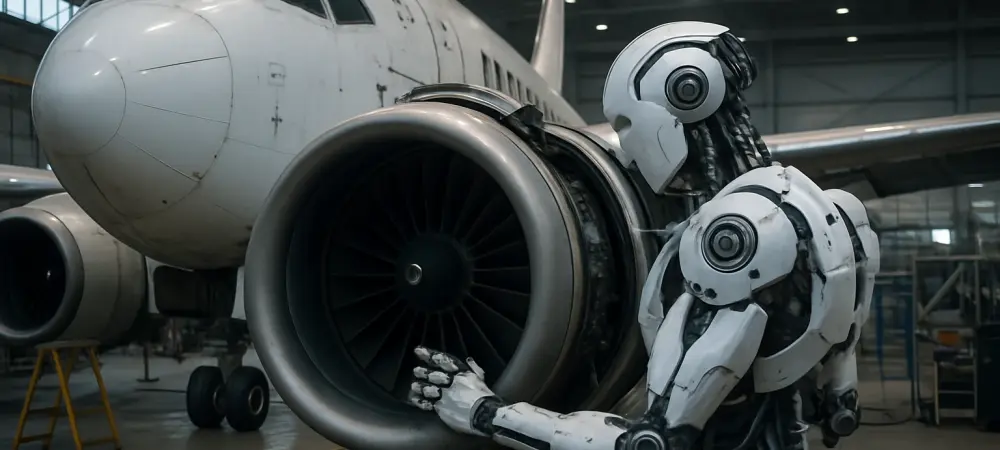
Imagine an airport terminal bustling with anxious passengers as their flights are delayed once again, not by weather or sudden cancellations but by the intricate demands of aircraft maintenance schedules. Maintenance delays can not only infuriate travelers but also result in a significant financial drain for airlines globally. With maintenance costs skyrocketing, the aviation industry grapples with finding viable solutions to reduce operational expenses and improve efficiency. Here lies the challenge—can innovation hold the answer to this pressing dilemma?
Unveiling AI’s Promise for Aviation Efficiency
In the competitive realm of aviation, the need for operational efficiency is reaching an unprecedented peak. Airlines face mounting pressures as maintenance expenses surge, threatening financial stability and operational fluidity. Further complicating this landscape are the stringent environmental regulations pushing airlines toward more sustainable practices. The role of artificial intelligence has emerged as a beacon, holding transformative potential not only for cost savings but also in enabling airlines to meet regulatory mandates seamlessly.
IAG’s Cutting-Edge AI System Revolutionizes Maintenance
IAG’s AI Labs have crafted an innovative Engine Optimization System designed to tackle these maintenance challenges head-on. The system’s brilliance lies in its ability to enhance scheduling and streamline maintenance processes, thereby ensuring operational continuity with minimal aircraft downtime. IAG’s solution may be leading, but it is not alone in innovation. Lufthansa Technik’s Aviatar and Delta Air Lines’ APEX system signify a broader trend toward AI-driven enhancements across the industry, maximizing fleet efficiency and minimizing disruptions.
Insights from IAG’s Brainchild and Industry Experts
Ben Dias, the chief AI scientist at IAG, remarks on the transformative power of AI within their maintenance framework. According to his insights, the system not only enhances fleet availability but also provides staff with tools for superior planning and coordination. Research backs this optimism; studies indicate potential maintenance cost reductions by significant margins through AI integration. Experiences from IAG’s maintenance team further reinforce this narrative, illustrating the tangible benefits of their AI application in real-world scenarios.
Strategies for Adopting AI Across Aviation
The allure of IAG’s success story is undeniable, prompting other airlines to consider similar paths. Key strategies involve integrating AI seamlessly into existing maintenance workflows, emphasizing data consistency, and focusing on effective change management. By systematically addressing these areas, airlines can unlock the untapped potential of AI, ensuring smooth transitions and reaping extensive rewards through enhanced operational efficiency.
Looking Forward to a Future Fueled by AI
As the aviation industry moves towards a more technologically advanced future, the progress achieved by IAG’s AI initiative demonstrates the immense potential of artificial intelligence to reshape industry practices. The successful integration of AI into maintenance workflows not only reduces delays and costs but also sets the stage for future innovations. This initiative becomes a vital stepping stone for other airlines to explore similar technological advancements, paving the way for a more sustainable, efficient, and cost-effective aviation landscape. Ultimately, as airlines build upon these foundations, they are better equipped to navigate the challenges of modern aviation, poised to provide passengers with greater reliability while working toward environmental goals.