

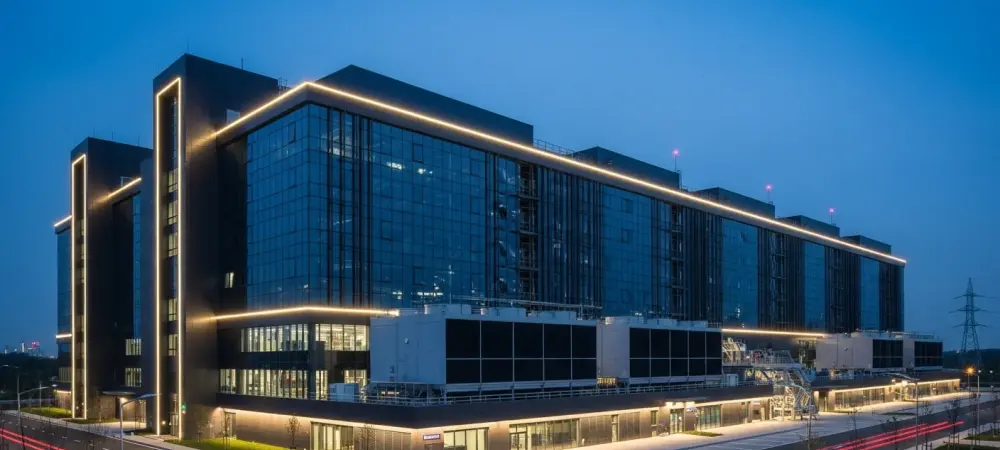
The rapid construction of South Korea’s largest dedicated AI facility marks a definitive shift where massive compute power is no longer just a digital asset but a primary instrument of national and corporate power. This collaboration between Reflection AI and the Shinsegae Group transcends traditional infrastructure by blending American high-tech expertise with localized industrial scale. As the project aims for a massive 250-megawatt capacity, it challenges the traditional boundaries of data centers, evolving into a specialized engine designed to fuel a specific regional economy while securing a place in the global technological hierarchy.
Defining the Architecture of Hyperscale AI Infrastructure
Hyperscale AI data centers are fundamentally different from the general-purpose cloud facilities that defined the previous decade of computing. While traditional centers prioritize storage and general web traffic, these new environments are built for the extreme thermal and computational demands of training foundational models. They require a holistic design that integrates liquid cooling, specialized rack configurations, and ultra-high-density power delivery. This architecture serves as the physical foundation for generative AI, enabling the transition from simple automated tasks to the sophisticated cognitive functions required for modern enterprise applications.
By focusing on a dedicated AI-native environment, these facilities eliminate the “noisy neighbor” problem common in shared cloud spaces, where different workloads compete for resources. In this context, hyperscale refers to more than just physical size; it describes a system’s ability to scale compute power seamlessly across thousands of interconnected nodes. This structural shift is necessary to support the next generation of frontier models, which require uninterrupted, low-latency data flows to maintain the efficiency of their neural networks.
Technological Pillars of Next-Generation Data Centers
High-Density Compute and Nvidia GPU Integration
The engine room of this new infrastructure relies on a full-stack engineering approach centered on Nvidia’s most advanced graphics processing units. These chips are not merely components but are part of a deeply integrated fabric that optimizes the hardware-software interface for maximum throughput. By leveraging proprietary interconnects, these systems bypass traditional networking bottlenecks, allowing for the massive memory bandwidth essential for processing billions of parameters in real-time. This level of optimization ensures that the facility can handle the quadrillions of calculations per second needed for competitive model training.
Open-Weight Foundation Models and Cultural Localization
A defining feature of the Reflection AI partnership is the emphasis on open-weight foundation models rather than restricted, proprietary software. This strategy allows for a high degree of transparency and customization, which is vital for fine-tuning artificial intelligence to match specific linguistic patterns and cultural contexts within South Korea. Unlike generic global models that often struggle with regional nuances, these customized frameworks provide a level of functional accuracy that makes the technology genuinely useful for local commerce and governance.
Emerging Trends in Digital Infrastructure and AI Sovereignty
The industry is moving toward a model of AI sovereignty, where nations seek to reduce their dependence on a handful of global technology giants. By establishing localized hyperscale facilities, countries can ensure their data remains under domestic jurisdiction while building an independent economic future. This trend reflects a growing realization that relying on foreign-controlled “black box” systems creates a long-term strategic vulnerability. Consequently, large-scale projects now prioritize local control over both the physical hardware and the underlying algorithms.
Industrial Applications and Strategic Implementations
For the Shinsegae Group, this infrastructure is the key to a radical transformation from a traditional retail conglomerate into a tech-centric powerhouse. By adopting a data-driven approach to logistics and consumer experiences, the company mirrors the evolution of global leaders like Amazon. This facility will power predictive supply chains and hyper-personalized retail environments, demonstrating how AI moves from a back-office tool to a core driver of corporate strategy and national competitiveness in the robotics and autonomous systems sectors.
Challenges in Scaling Hyperscale AI Environments
The move toward massive 250-megawatt installations introduces significant hurdles regarding power procurement and environmental sustainability. Consuming energy on a scale comparable to a small city places immense pressure on local grids and necessitates the development of innovative green energy solutions. Furthermore, the multi-billion-dollar cost of these projects creates a high barrier to entry, requiring complex financial partnerships and long-term commitments. Navigating the regulatory landscape for such high-impact facilities remains a persistent bottleneck that can delay deployment in competitive markets.
Future Outlook: Geopolitics and Technological Expansion
The expansion of these centers is increasingly tied to geostrategy, particularly through programs that share American technology with Indo-Pacific partners. These facilities act as hubs for a broader alliance, designed to foster a resilient and fragmented global AI landscape that can counter the influence of rival tech blocs. As optical networking and energy-efficient hardware evolve from 2026 to 2028, these hubs will likely become even more decentralized, providing the necessary compute for national security and specialized domestic innovation.
The strategic shift toward localized, high-performance AI infrastructure represented a fundamental change in how digital power was projected. By prioritizing open-weight models and sovereign control, the Reflection AI and Shinsegae partnership provided a blueprint for other nations to balance technological advancement with regional autonomy. While energy constraints and financial risks remained significant, the successful integration of these facilities proved that controlling the physical backbone of AI was the only way to ensure long-term economic relevance. Future developments will likely focus on even more aggressive power scaling and the deeper integration of AI into the very fabric of national infrastructure.