

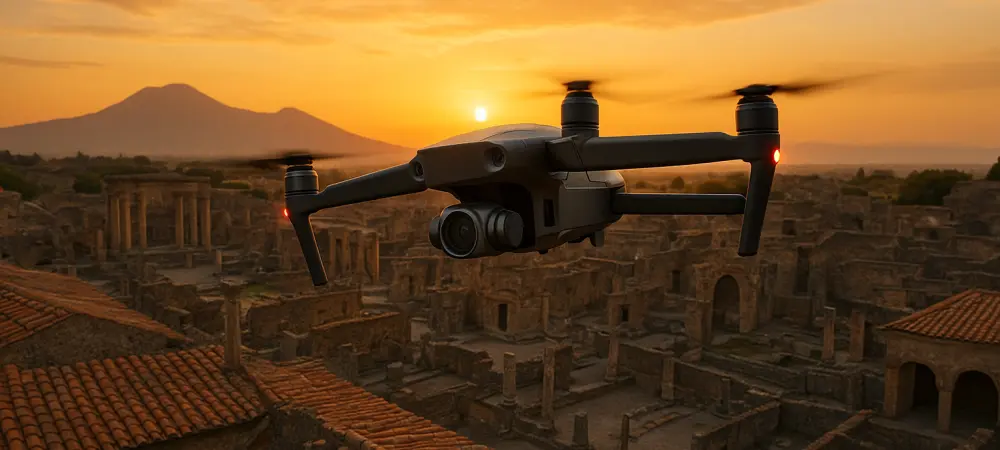
Using a DJI Matrice 300 RTK drone at an altitude of 80 meters, researchers captured high-resolution orthophotos to monitor the condition of both pitched and flat roofs. This aerial perspective is the frontline of a sophisticated effort to safeguard the Archaeological Park of Pompeii, where nearly 1,500 ancient buildings endure relentless environmental pressure. Spread across 44 hectares of excavated terrain, these ruins remain vulnerable to heavy rainfall, thermal expansion, and invasive biological growth. The introduction of HydraML, a hybrid automated machine learning framework, represents a significant shift in heritage management. By combining high-resolution imagery with advanced algorithms, the system allows conservators to identify structural degradation in real time. This technological intervention ensures that the priceless frescoes and mosaics protected beneath these roofs remain sheltered from the elements.
Bridging the Gap: Advanced AI and Practical Conservation
The Mechanics: A Hybrid Pipeline
The core architecture of HydraML utilizes a hybrid approach that harmonizes the immense predictive power of deep learning with the computational speed of classical machine learning models. This process begins with deep feature extraction, where the system employs Amazon’s AutoGluon framework to automatically identify and train a neural network capable of recognizing complex visual patterns. By translating raw drone imagery into high-dimensional numerical representations, the system can detect subtle structural nuances, such as minute cracks or tile displacement, that often escape the human eye during ground-level inspections. This automated pipeline is specifically designed to eliminate the need for constant manual hyperparameter tuning by dedicated data scientists. Consequently, the burden of data processing is shifted to an efficient, automated system that produces insights.
Data Compression: The Role of Fuzzy-Transform
To maintain high operational speeds without compromising accuracy, HydraML processes these high-dimensional data points through a mathematical technique known as the Fuzzy-Transform. This specific step compresses the data into a more manageable format while ensuring that the most critical structural information remains intact for analysis. By projecting image data onto overlapping basic functions, the system creates a smaller feature matrix that acts as a condensed map of the building’s physical condition. This multi-stage pipeline allows the system to achieve high accuracy without the massive computing hardware typically associated with modern deep learning models. By streamlining the path from raw image to classification, the hybrid model ensures that preservation efforts are based on precise, data-driven evidence rather than subjective visual estimates.
The Push: Sustainable and Greener Artificial Intelligence
Energy Efficiency: Environmental Impact and Sustainability
A fundamental priority of the HydraML project is the pursuit of sustainable AI, a concept that addresses the growing global concern over the carbon footprint generated by massive neural network training. Empirical data from the project reveals that this specific methodology can reduce GPU energy consumption by as much as 62.5% compared to other state-of-the-art hybrid models. On site-specific datasets related to the Pompeii ruins, energy savings consistently ranged between 40% and 43%. This commitment to efficiency ensures that the digital tools used to preserve ancient history do not contribute to the ecological degradation of the modern world.
Operational Advantages: Field Applications in Remote Areas
Beyond the obvious ecological benefits, this high level of energy efficiency provides immediate practical advantages for archaeological fieldwork conducted in challenging environments. Because HydraML generates a significantly smaller data footprint through its compression techniques, it can operate effectively on portable hardware or local servers with limited processing power. This capability transforms the system into an ideal tool for real-time monitoring directly in the field, allowing researchers to process drone footage on-site without relying on a centralized data center. By reducing the reliance on massive infrastructure, the system democratizes advanced conservation technology, making it viable for smaller heritage sites.
Field Testing: Empirical Validation of the System
Site-Specific Results: Monitoring Pitched Roof Conditions
To validate the reliability of the system, the research team conducted extensive field tests using professional drones to capture high-resolution imagery across the entire Pompeii complex. The PompeiiTile dataset, comprising over 1,300 images, required the AI to distinguish between healthy tiles, broken sections, and those overgrown with invasive vegetation. The results were remarkably consistent, with the system achieving an F1-score of 0.94, indicating a high level of precision in identifying damage. By providing a clear and objective assessment of pitched roofs, the system allows for more proactive maintenance schedules that can prevent moisture from penetrating interior spaces.
Broad Applications: Disaster Relief and Infrastructure
The secondary dataset, PompeiiFlat, addressed the unique vulnerabilities of flat roofs, which are particularly prone to issues like blocked drainage conduits and damp staining. HydraML performed exceptionally well in this category, maintaining an accuracy score above 91% and proving its ability to detect subtle color and texture changes associated with water damage. The versatility of the system was further demonstrated when it was applied to the RescueNet dataset, which contains aerial imagery from the aftermath of Hurricane Michael in Florida. Even when faced with modern urban wreckage and diverse structural debris, the system outperformed several established deep learning models. This success suggests that the underlying logic of HydraML is not limited to ancient ruins but could serve as a vital asset for modern disaster relief and infrastructure management in 2026.
From DatEffective Decision-Making Tools
Prioritization Systems: Managing Technical Constraints
The utility of HydraML extends far beyond basic binary classification; the system incorporates a granular severity grading mechanism that categorizes detected issues into low, medium, or high-priority levels. This prioritization is essential for park administrators who must manage limited maintenance budgets across thousands of individual structures simultaneously. By feeding the AI’s findings into specialized vulnerability indices, the system helps conservators identify exactly which buildings require immediate scaffolding and which can be safely deferred to the next maintenance cycle. This transformation of raw visual data into a prioritized roadmap for physical intervention ensures that the most at-risk structures receive the necessary resources first.
Technical Challenges: Addressing Visual Ambiguity
Despite these significant advancements, researchers remained objective about the current technical limitations of the system, such as its occasional struggle with complex visual ambiguity. Dark shadows cast by adjacent walls can sometimes be misidentified as damp patches on flat roofs, and the natural accumulation of dirt or mold on ancient tiles can mimic the appearance of a missing or broken element. These challenges highlight the ongoing need for human oversight, as the AI functions most effectively as a force multiplier rather than a total replacement for expert judgment. Future development paths will likely focus on refining the algorithm’s sensitivity to lighting conditions and expanding the training data to include a wider variety of building materials used throughout the complex.
Future Directions: Global Heritage Protection
The integration of the HydraML framework established a new baseline for the sustainable protection of cultural heritage sites globally. By successfully marrying automated machine learning with mathematical compression, researchers provided a blueprint for energy-efficient monitoring that respected the fragile nature of the Pompeii ruins. The project demonstrated that advanced artificial intelligence could be deployed without the exorbitant energy costs traditionally associated with deep neural networks. As the code and datasets were released to the scientific community, the focus shifted toward implementing these tools in diverse archaeological contexts from 2026 onward.
Long-Term Vision: Proactive Preservation Strategies
The success of this initiative prompted international conservation bodies to reconsider the role of automation in long-term maintenance strategies. By prioritizing both accuracy and sustainability, the developers of HydraML proved that modern innovation was the most effective shield against the inevitable march of time. Stakeholders in the heritage sector looked toward integrating this data with building information modeling software to create dynamic digital twins of historic structures. The focus transitioned toward a proactive stance, where AI-driven insights informed every structural stabilization project. This holistic approach ensured that the cultural legacy of ancient civilizations remained accessible to the public while minimizing the environmental impact of the technology used to save them.