

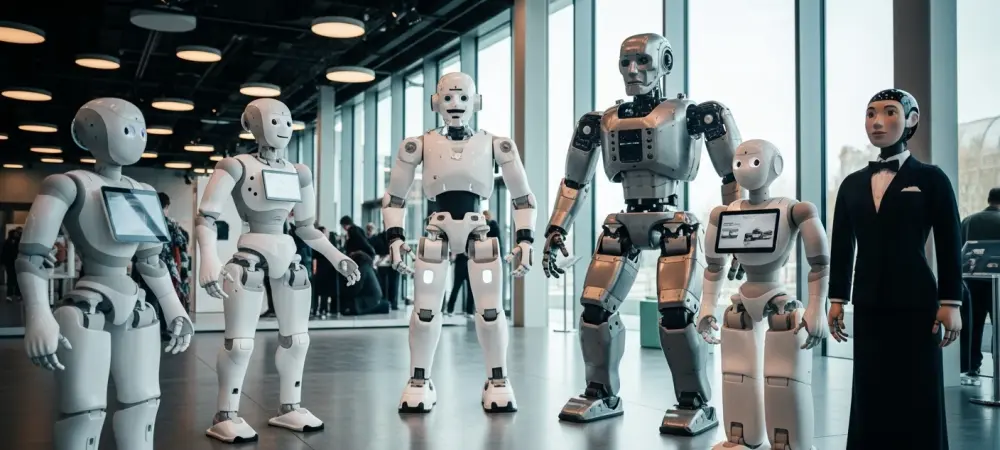
The sight of a sleek metallic humanoid flawlessly performing backflips in a polished laboratory environment has become a staple of modern social media, yet this visual spectacle rarely translates to the gritty, unpredictable conditions of a commercial factory floor. While the fluid motions of these high-tech machines suggest that a robotic revolution is imminent, the engineers behind the scenes recognize a massive disconnect between a successful research prototype and a reliable industrial tool. Physical Artificial Intelligence has certainly reached new heights in the current landscape of 2026, but the leap from controlled experimentation to everyday operational utility remains fraught with significant hardware and software limitations. Most observers are captivated by the humanoid form because it evokes an instinctive sense of human-like intelligence and adaptability, yet this psychological projection often masks the reality of the machine’s actual capabilities. In practice, a robot that looks like a person is often expected to think and react like one, but modern systems still lack the basic common sense and environmental awareness that a human worker utilizes without a second thought. Bridging this expectation gap is perhaps the greatest hurdle facing the industry today as developers attempt to move these complex machines into the workforce.
The Illusion of Progress
The Demo Trap: Polished Performance vs. Raw Reality
Many high-profile robotic demonstrations frequently fall into what industry insiders call the “demo trap,” where a system is meticulously optimized to perform a single, repetitive task in a perfectly managed environment. These theatrical displays are often supported by human teleoperation or sophisticated “Wizard of Oz” techniques, which create a misleading impression of full autonomy and cognitive capability. For example, several major tech firms have faced scrutiny recently after it was revealed that human operators were remotely managing the complex movements that the robot’s own internal software could not yet process in real time. This reliance on human intervention highlights a critical deficiency in the autonomous decision-making loops required for true industrial independence. When a robot is operating under the safety of a remote pilot, it avoids the myriad of micro-decisions and sensory processing challenges that define a real-world labor environment, such as navigating around moving obstacles or adjusting to shifting light conditions.
This fundamental lack of “repeatability” remains the primary barrier to entry for humanoid systems in high-speed production lines where efficiency is measured in seconds and errors lead to expensive downtime. A robot that successfully completes a task nine times out of ten is viewed as a liability rather than an asset in a warehouse or assembly plant, as a single failure can halt an entire logistics chain. In contrast to specialized industrial arms that have mastered fixed-path precision over decades, humanoid robots must contend with a much higher degree of freedom and complexity in their movements. Until these machines can demonstrate a success rate that mirrors the near-perfect reliability of traditional automation, they will likely remain restricted to experimental research labs and small-scale pilot programs. The path forward requires a shift away from flashy marketing videos toward the rigorous, boring validation of performance consistency across thousands of duty cycles without human oversight or intervention.
Industrial Reliability: The Mandate for Absolute Consistency
The transition from a choreographed stage performance to a functional workplace tool requires a level of robustness that current humanoid hardware is simply not designed to handle over long durations. Industrial buyers prioritize systems that can operate for twenty-four hours a day with minimal maintenance, a standard that is currently impossible for humanoid platforms equipped with hundreds of delicate sensors and high-torque actuators. These machines are often prone to overheating or mechanical fatigue when forced to perform strenuous physical labor outside of the temperature-controlled zones of a development facility. Furthermore, the software architectures governing these robots must be able to handle “edge cases” or rare environmental anomalies that were not included in their initial training datasets. Without a robust framework for handling unexpected physical interference, a humanoid robot is more likely to cause a safety incident than to provide a productive return on investment for a manufacturing firm.
Beyond the mechanical durability, the industry must address the safety protocols required for humans and humanoid robots to share a workspace without physical barriers. Traditional industrial robots are often caged for worker protection, but the promise of the humanoid form is its ability to walk alongside people and use the same tools they do. This proximity necessitates a level of sensor fusion and collision avoidance that is still in its nascent stages, as the robot must distinguish between a stationary object and a human coworker who might move unpredictably. Current safety certifications are struggling to keep pace with the rapid iteration of mobile robotic platforms, leaving many companies hesitant to deploy them in active zones. Establishing a standardized safety framework that accounts for the weight and momentum of a bipedal machine is essential for moving past the pilot phase. Only when these systems can guarantee the safety of their human counterparts will they find a permanent home on the factory floor.
Technical and Structural Bottlenecks
Tactile Precision: The Complexity of the Human Hand
One of the most persistent technical challenges in the robotics sector is the “end effector” problem, which refers to the immense difficulty of replicating the sensitivity and versatility of the human hand. Human hands are marvels of evolution, capable of exerting immense crushing force one moment and performing delicate, precision tasks like threading a needle the next, all while providing constant tactile feedback to the brain. Current robotic hands often lack this sophisticated haptic awareness, making it difficult for them to handle variable objects such as soft packaging, slippery tools, or fragile components without causing damage. While “soft robotics” and advanced piezoelectric sensors are being integrated into newer models, they still struggle to match the intuitive grip adjustment that a human worker performs subconsciously. Without the ability to feel the texture or weight of an object, a robot is essentially operating blind, relying solely on visual data that can be easily obscured or misinterpreted.
This lack of tactile intelligence limits the “polyfunctionality” of humanoid robots, forcing them into roles that are often better suited for cheaper, specialized machines. For a multi-purpose robot to justify its high price tag, it must be able to switch between diverse tasks—such as picking up a heavy crate and then precisely sorting small electronic parts—without requiring a hardware change. Developers are currently experimenting with foundation models for movement that attempt to simulate these tactile interactions, but the computational cost of processing this data in real time is significant. Developing a universal “grip logic” that allows a robot to interact with any object in a warehouse remains a top priority for research teams between now and 2028. Until a breakthrough in tactile sensing occurs, the humanoid form will continue to be hindered by its inability to manipulate the world with the same finesse as its biological inspiration.
Spatial Logic: Adapting to Unstructured Workspaces
Environmental variability represents a significant hurdle for the deployment of general-purpose robots, as most modern software is still optimized for structured, predictable settings. Human employees possess an innate ability to adjust their posture or grip if an object is slightly out of place, but most humanoid systems require massive amounts of high-fidelity training data for every conceivable scenario. If a robot encounters a situation it has not been specifically programmed or trained for, its performance often collapses entirely, leading to errors or mechanical “freezing.” This fragility makes humanoid robots far less versatile than human workers in dynamic environments like hospitals or busy distribution centers where the floor plan changes constantly. To overcome this, engineers are turning to generative AI to create synthetic training environments, but the “sim-to-real” gap remains a persistent obstacle where simulated successes do not always translate to physical reality.
The problem of spatial awareness is further complicated by the need for high-speed connectivity and edge computing to process the vast amounts of data generated by a robot’s cameras and LiDAR sensors. To function at peak efficiency, these machines require low-latency 5G or 6G networks to communicate with central servers that handle the complex pathfinding and object recognition tasks. In many older industrial facilities, the existing network infrastructure is insufficient to support a fleet of humanoid robots, leading to lag and communication dropouts that can cause the machines to malfunction. Moreover, the ergonomic design of most workplaces is tailored specifically for the human body, and adapting these physical spaces to accommodate large, heavy robots can be prohibitively expensive. Companies are finding that the cost of retrofitting a facility to be “robot-friendly” often outweighs the initial savings promised by automation, creating a significant barrier to widespread adoption across different sectors.
Strategic and Financial Hurdles for Deployment
Infrastructure Demands: Connectivity and Facility Design
The successful integration of humanoid robots into the global supply chain depends on a massive infrastructure overhaul that many organizations are currently unprepared to finance or manage. These advanced machines are not “plug-and-play” solutions; they require a sophisticated ecosystem of support, including dedicated charging stations, specialized maintenance bays, and high-bandwidth wireless coverage. Most modern warehouses were designed with human ergonomics in mind, featuring stairs, narrow aisles, and lighting levels that may not be optimal for a robot’s vision sensors. To truly leverage the humanoid form, companies must decide whether to adapt their robots to the existing human world or redesign the world to fit the robots. This choice often leads to a financial stalemate, as the capital expenditure required for facility modification can take years to recover through labor savings, particularly when the robots themselves remain expensive and unproven.
Furthermore, the maintenance requirements for a bipedal robot are significantly higher than those for traditional wheeled automation or fixed robotic arms. The complex joints and balancing systems necessary for walking are subject to constant wear and tear, requiring a supply chain of specialized parts and technicians who are skilled in both mechanical engineering and advanced software diagnostics. This creates a hidden operational cost that is often overlooked during the initial excitement of a pilot program. For a large-scale deployment to be viable, there must be a standardized approach to robotic maintenance and a robust network of service providers capable of keeping the fleet operational. Without this supporting infrastructure, even the most advanced humanoid robot remains a high-maintenance laboratory curiosity rather than a reliable component of a modern industrial strategy.
Economic Rationalization: ROI and Operational Utility
From a strictly economic standpoint, the Return on Investment for a general-purpose humanoid robot is currently difficult to justify when compared to specialized, task-specific automation. A simple robotic arm is faster, cheaper, and more reliable for a single task like welding or sorting, while wheeled “AMRs” are more efficient for moving goods across a flat warehouse floor. For a multi-purpose humanoid to prove its worth, it must demonstrate that its ability to navigate human-centric spaces and use human tools provides a distinct competitive advantage that specialized machines cannot match. This “human-form advantage” is currently most visible in niche applications, such as navigating the narrow, cluttered aisles of a retail store or performing inspections in hazardous environments where wheels would fail. However, these use cases are not yet broad enough to drive the mass production volumes needed to bring the cost of humanoid units down to a reasonable level.
In response to these challenges, industry leaders focused on strategic pilot programs in sectors where the physical environment cannot be easily changed, such as automotive assembly and heavy logistics. These early adopters targeted “dull, dirty, and dangerous” tasks that were difficult to automate with traditional means but where the humanoid form factor provided a specific mechanical solution. They prioritized the development of modular software that allowed robots to learn new tasks through observation rather than manual coding, which significantly reduced the time required for deployment. These targeted efforts established a foundation for future growth, shifting the focus from creating a machine that can do everything to perfecting a machine that can do the most valuable things reliably.
To address the reliability gap, engineers established new benchmarks for physical artificial intelligence that prioritized stability over complex acrobatics. They implemented rigorous stress tests that simulated years of wear in just a few months, allowing them to identify and reinforce the mechanical weaknesses in bipedal joints. These developments proved that the path to a robotic future required a balanced approach that combined hardware durability with smarter, more adaptive software. Companies that succeeded in this transition were those that viewed humanoid robots as part of a larger, integrated automation strategy rather than a standalone solution. By moving beyond the initial hype and focusing on practical metrics, the industry moved closer to a reality where humanoid machines could finally take their place alongside human workers. This measured progress eventually turned the ambitious visions of the mid-2020s into the functional industrial standards that defined the following years of technological growth.