

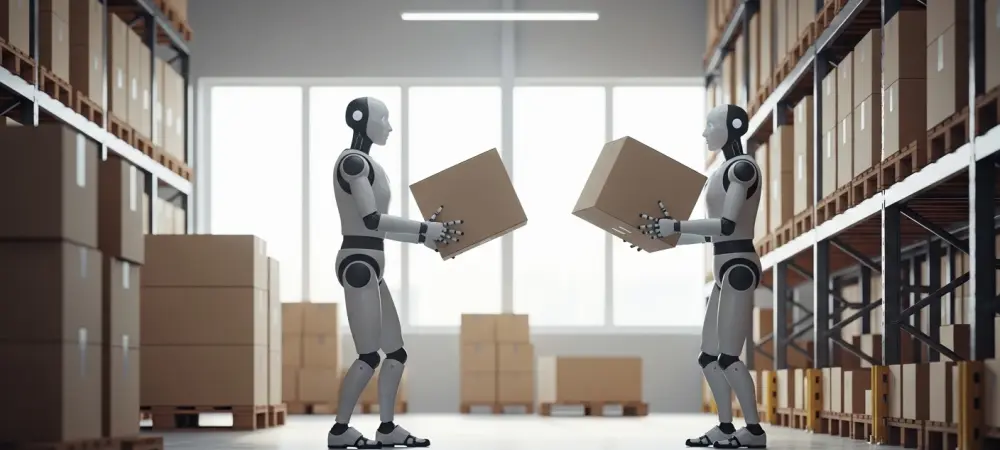
The quiet hum of assembly lines and the rhythmic clatter of warehouse conveyors are on the verge of being joined by the soft whir of bipedal machines, signaling a fundamental transformation in global labor and automation. The emergence of general-purpose humanoid robots represents a significant advancement in the automation and artificial intelligence sectors. This review will explore the evolution of this technology, the key players driving its development, critical performance metrics, and the potential impact it will have on various industries. The purpose of this review is to provide a thorough understanding of the technology’s current capabilities, the intense competition fueling its progress, and its potential future trajectory.
The Rise of the General-Purpose Humanoid
The concept of a general-purpose humanoid robot is a radical departure from the industrial automation that has defined the last century. Unlike their caged, single-task predecessors bolted to the factory floor, these new bipedal machines are engineered to navigate and operate within environments built for humans. Their core design principle is versatility; a single platform is envisioned to perform a multitude of tasks, from moving boxes in a warehouse to inspecting machinery on a manufacturing line, all without requiring costly and disruptive infrastructure modifications. This adaptability is what positions them as a potentially revolutionary force.
This rapid emergence is not a sudden breakthrough but rather the result of a powerful convergence of technological and economic forces. Decades of progress in artificial intelligence, particularly in machine learning and computer vision, now provide the “brains” for these complex machines. Simultaneously, the costs of sophisticated sensors, processors, and actuation hardware have decreased significantly, making the construction of these robots more economically feasible. This technological push has met a powerful market pull, as persistent global labor shortages in sectors like manufacturing and logistics create a compelling business case for automation that is flexible, mobile, and can be deployed with minimal friction into existing workflows.
Key Technological Battlegrounds
Advanced Actuation and Power Systems
The physical prowess of a humanoid robot is determined by its core hardware, and nowhere is the competition more intense than in the development of proprietary actuators. These components, which function as the robot’s muscles, dictate its strength, speed, and precision. Companies are investing heavily in creating unique actuator designs that offer a competitive edge in payload capacity and dynamic movement, enabling robots like Apptronik’s Apollo to handle heavy objects with a finesse that approaches human capability. The engineering of these systems is a delicate balancing act between power, weight, and efficiency, as every ounce added to the system demands more energy to move.
Equally critical to a robot’s utility is its endurance, which is governed by its power system. The ability to operate for a full eight-hour shift without requiring a lengthy recharge is a non-negotiable requirement for most industrial applications. Consequently, the development of high-density, swappable battery packs and efficient thermal management systems has become a central focus. Without a robust solution to store and manage energy, even the most advanced robot is little more than a powerful but short-lived novelty. Furthermore, these systems must be inherently safe, designed to function predictably and without risk alongside human colleagues in dynamic work environments.
AI-Driven Dexterity and Environmental Adaptability
A powerful body is ineffective without a sophisticated mind to control it. The true potential of humanoid robots is unlocked by the advanced AI and software platforms that enable them to perceive, understand, and interact with the world around them. Using a suite of sensors including cameras and lidar, these robots build real-time 3D maps of their surroundings, allowing them to navigate cluttered warehouses and busy factory floors autonomously. This level of environmental awareness is the foundation upon which all other capabilities, such as manipulation and task execution, are built.
The ultimate goal for these platforms is to serve as a “drop-in” labor solution, a vision that hinges on their ability to manipulate objects with human-like dexterity. Developing hands that can grasp a wide variety of tools and components, from delicate electronics to heavy boxes, remains one of the most significant challenges in robotics. The software driving these actions relies on complex machine learning models that allow the robot to learn new tasks and adapt its approach when faced with novel situations. This capacity for learning and adaptation is what separates general-purpose humanoids from traditional automation, promising a level of flexibility that could redefine industrial productivity.
The Capital Influx Fueling the Race
The technological race is being fueled by an unprecedented surge of private investment, transforming the humanoid robotics landscape from a niche research area into a high-stakes commercial battleground. Recent funding rounds have reached monumental scales, with Austin-based Apptronik securing a $935 million war chest and its rival Figure AI raising $675 million from a consortium of tech giants. These figures are not just investments; they are a powerful declaration of conviction from the financial community that humanoid robots are poised to become a transformative technology platform.
This influx of capital signals that the industry has entered a new, far more aggressive phase of competition. The money is underwriting a long-term thesis that the total addressable market for these machines will eventually measure in the hundreds of billions of dollars, spanning manufacturing, logistics, retail, and even elder care. With valuations soaring into the billions for companies that are still in the early stages of commercialization, investors are making a clear bet on which teams possess the technical acumen and strategic vision to dominate this nascent market. The capital provides a critical runway to scale production, attract top-tier engineering talent, and navigate the long road from prototype to mass deployment.
Real-World Applications and Early Deployments
The theoretical promise of humanoid robots is now being tested in real-world industrial settings. The automotive manufacturing sector has emerged as a key early adopter, with major players like Mercedes-Benz and BMW launching pilot programs to integrate humanoids into their production lines. In these initial deployments, robots are tasked with performing physically demanding, repetitive, and ergonomically challenging jobs, such as transporting parts to the assembly line and inspecting finished vehicles. These pilot programs serve as crucial proving grounds, providing invaluable data on the robots’ performance, reliability, and their ability to integrate seamlessly with human-led workflows.
Beyond the automotive industry, logistics and warehousing represent the largest immediate market opportunity. These sectors are characterized by a high volume of physically strenuous tasks—lifting, carrying, and sorting—and have historically struggled with high employee turnover and persistent labor shortages. Humanoid robots are being deployed to handle palletizing and depalletizing operations, package handling, and other tasks that are ideal for automation. By taking on these roles, the robots are not necessarily replacing human workers but are augmenting the existing workforce, freeing up their human counterparts to focus on more complex, value-added activities that require problem-solving and critical thinking.
The Gauntlet of Technical and Economic Hurdles
Despite the rapid progress and immense financial backing, the path to widespread adoption is fraught with significant technical hurdles. Ensuring robust, reliable operation in dynamic and unpredictable real-world environments remains an extraordinary engineering challenge. Key issues such as extending battery life to cover a full work shift, managing the heat generated by powerful motors, and developing software that can gracefully handle unexpected events are far from solved. A robot that freezes or fails when confronted with an unfamiliar obstacle offers little value in a fast-paced industrial setting, making the development of resilient AI a paramount concern.
Moreover, the most formidable challenge may be economic. For humanoid robots to become a ubiquitous presence in the global economy, their unit cost must decrease dramatically to a point where the return on investment is undeniable for potential customers. Analysts estimate that a commercially viable price point lies somewhere between $50,000 and $100,000 per unit, a steep reduction from the cost of current prototypes. Achieving this will require not only engineering breakthroughs but also massive investment in building efficient, high-volume manufacturing facilities and securing robust supply chains. The ultimate success of this technology hinges on crossing the chasm from an expensive, cutting-edge prototype to an affordable and reliable commercial product.
The Geopolitical Contest for Robotics Leadership
The race to develop the first commercially successful humanoid robot is not just a competition between companies but is also taking on geopolitical dimensions. U.S.-based firms like Apptronik, Figure AI, and Tesla are currently seen as leaders, benefiting from a robust venture capital ecosystem and deep pools of AI and robotics talent. Their strategy is heavily focused on developing highly advanced platforms and securing partnerships with major Western industrial players, establishing a first-mover advantage in high-value markets.
However, this leadership position is being vigorously challenged by a cohort of rapidly advancing Chinese competitors. Companies such as Unitree and Fourier Intelligence are iterating on their designs at an impressive pace, bolstered by strong government support and close integration with China’s vast manufacturing ecosystem. These firms are reportedly pursuing an aggressive pricing strategy, aiming to bring their robots to market at a fraction of the cost of their American counterparts. This dynamic sets the stage for a global contest for technological supremacy, where leadership in robotics could translate into significant economic and strategic advantages on the world stage.
Conclusion: A Transformational but Unproven Frontier
The humanoid robot industry has undeniably reached a critical inflection point, propelled by technological maturation and immense capital investment. The convergence of advanced AI, decreasing hardware costs, and clear market demand from labor-starved industries has created the perfect conditions for this technology to move from the lab into the real world. The leading companies have demonstrated impressive technical capabilities, and initial pilot programs in manufacturing and logistics have shown that these machines can perform useful work in complex, human-centric environments.
However, its ultimate commercial success is not yet guaranteed. The journey from a compelling prototype to a profitable, reliable, and affordable product line remains the final and most difficult challenge. The industry must still overcome significant technical hurdles related to power, durability, and AI robustness while simultaneously navigating the immense economic pressure to drive down unit costs to a level that enables mass adoption. While the potential for humanoid robots to transform the future of work is profound, the road ahead is long, and the true winners of this arms race have yet to be decided.