

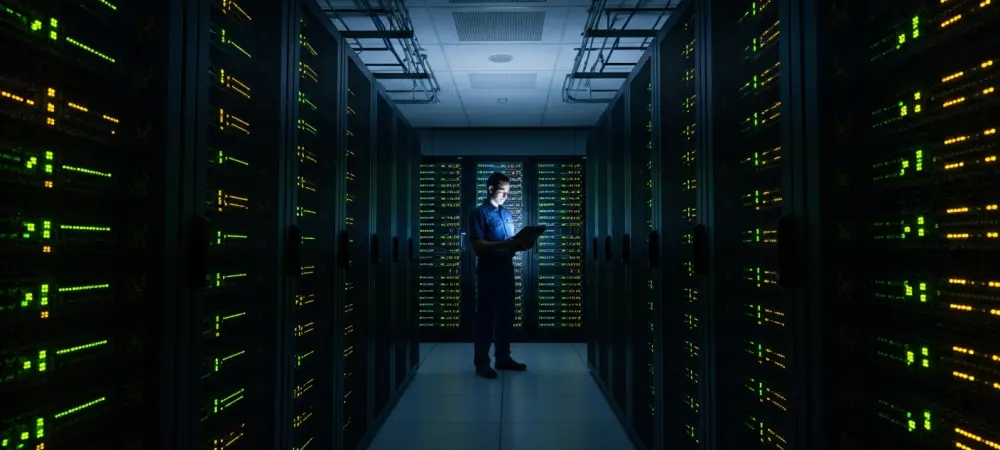
The sudden transition of generative artificial intelligence from an experimental novelty to a foundational daily utility for cybersecurity practitioners has fundamentally reshaped the operational landscape during the opening months of 2026. While the latest industry data indicates a massive surge in the integration of these tools across security operations centers, this widespread adoption is increasingly characterized by a profound sense of caution regarding performance in mission-critical scenarios. Security professionals now utilize these models for a broad spectrum of administrative tasks, including the automation of incident documentation and the initial triage of dense log files, yet a significant readiness gap remains evident. This disconnect exists because the speed of deployment has far outpaced the validation of these systems’ reliability when faced with sophisticated adversarial maneuvers. As organizations rely more heavily on these algorithms to filter the noise of modern networks, the necessity for human oversight becomes more pressing to ensure that automated efficiencies do not compromise systemic security.
Evaluating the Reliability Gap: Performance Challenges in Automated Detection
Security practitioners report a widening disparity between the perceived capabilities of automated systems and their actual performance during complex security events. While generative models offer remarkable speed, they frequently struggle with an unacceptable volume of false positives that can lead to alert fatigue among even the most seasoned analysts. Furthermore, the phenomenon of “hallucinations,” where a model generates inaccurate information with an authoritative tone, continues to plague the industry, posing a direct threat to the integrity of incident response efforts. These tools are currently most effective when dealing with structured data and predictable patterns, but they consistently falter when tasked with identifying novel zero-day threats or deciphering behavioral anomalies that lack a historical precedent. This lack of consistency prevents organizations from granting full autonomy to AI systems, as the consequences of an overlooked breach can be catastrophic for the enterprise.
In a crisis environment, the most critical decisions often depend on context and nuanced judgment, which current algorithmic models are simply not equipped to provide. Cybersecurity is rarely a binary discipline; it requires an understanding of business logic, user intent, and the specific risk tolerance of an organization, variables that are difficult to quantify for a machine. While an AI can process millions of data points to find a match, it lacks the situational awareness required to determine if a specific anomalous connection is a legitimate emergency or a benign administrative update. Consequently, the reliance on automated detection without human verification introduces a dangerous level of systemic risk, as defenders may become overly dependent on a system that is fundamentally blind to creative human adversaries. Vigilance is necessary because these tools predict sequences rather than truly understand the security implications of a sophisticated and multi-stage cyberattack.
Managing the Digital Intern: A Supervisory Framework for Security Teams
To address these persistent reliability concerns, industry leaders have adopted the digital intern model as a framework for integrating generative systems into the security workflow. This approach recognizes the technology as an incredibly fast and high-volume worker that nonetheless requires constant supervision and rigorous review by experienced staff members. By positioning AI in this subordinate role, organizations can leverage its ability to summarize large datasets and generate code snippets while ensuring that no critical action is taken without human approval. This supervisory layer is essential because evidence suggests that even experienced analysts can be misdirected by AI-generated guidance if they do not maintain a healthy level of skepticism. Treating the model as an assistant rather than a primary decision-maker allows the security team to scale their operations without sacrificing the accuracy and accountability that are required to protect modern digital assets.
The establishment of a formal verification process is the cornerstone of any successful implementation of the digital intern model within a security operations center. Analysts must be trained to treat every AI output as a draft that requires independent validation through traditional forensic techniques and established security protocols. This creates a redundant check that prevents automated errors from propagating through the incident response lifecycle and causing further disruption. Moreover, by insisting on a human-in-the-loop for every significant decision, organizations preserve the chain of custody and legal accountability that are often required for regulatory compliance and insurance purposes. The primary goal is to ensure that the speed of the AI does not come at the expense of the precision of the human defender, as the latter remains the final line of defense against attacks that are specifically designed to evade automated detection. This culture of verification ensures that the organization remains resilient.
Sustaining Resilience: Human Calibration and Architectural Controls
The urgency of maintaining human control is further underscored by the radical acceleration of the attack lifecycle, where adversaries now utilize AI to compress the timeline of a breach. Traditionally, defenders relied on a period of dwell time to identify and contain intruders, but modern attackers can now move from an initial compromise to full lateral movement across a network in a matter of minutes. By using automated tools to iterate scripts and deploy custom malware at unprecedented speeds, threat actors effectively eliminate the windows of opportunity that security teams once used to stage their responses. This higher tempo of operations necessitates a defense strategy that prioritizes rapid identification and immediate containment, yet this speed must be balanced with the accuracy that only human oversight can provide. In this environment, the margin for error is gone; an automated mistake can lead to a total compromise before an analyst even has the chance to review the initial alert. Focusing on resilient architectural controls proved to be the most effective way to manage these high-tempo threats as the landscape evolved. It became clear that prioritizing behavioral detection and Zero Trust frameworks over specialized AI-only security tools provided much better visibility into attacker movements. Organizations that maintained rigorous egress logging and managed a transparent software supply chain significantly limited the potential impact of successful intrusions. Furthermore, the practice of human calibration was established to help analysts recognize performance drift in their automated tools while maintaining a culture of skepticism. Training programs shifted their focus toward instilling an instinctual need for verification, ensuring that teams remained durable against automated offensive maneuvers. By measuring twice and acting with precision, security departments successfully turned the tide. These steps secured the infrastructure and ensured human ingenuity remained the central pillar.