

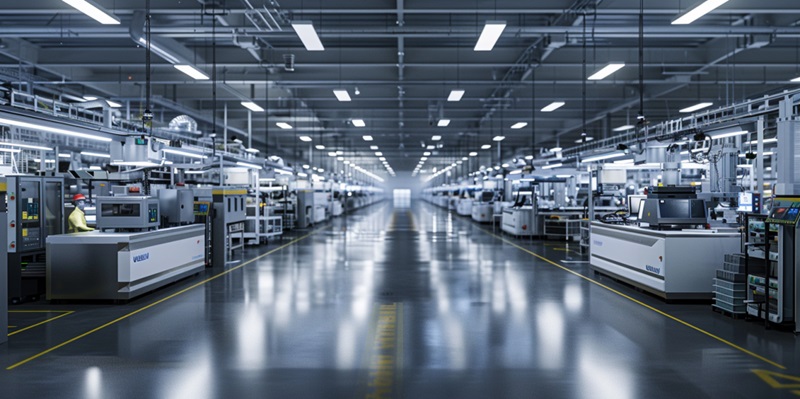
Huawei is at the forefront of a revolutionary transformation in manufacturing, steering the sector into the digital age with innovative and intelligent solutions. Embracing Industry 4.0, Huawei exemplifies the essential incorporation of digitalization for the industry’s future success and enduring viability. As digital advances cascade rapidly through the global economy, Huawei is instrumental in solidifying manufacturing’s evolutionary journey and competitive advantage through its smart factory endeavors. This evolution is not a transient phenomenon but a crucial pillar for ongoing growth, proving that Huawei’s commitment to integrating cutting-edge technologies in manufacturing is leading the charge towards a smarter industrial future. Digital transformation in the manufacturing sphere is a testament to Huawei’s visionary role in shaping a more efficient and sustainable industrial world.
Evolution of Manufacturing in the Digital Age
In this new digital epoch, the manufacturing sector is propelled by a quest for agility, efficiency, and continual innovation. The zeitgeist of the industry is captured by the startling push towards digital-first strategies, a shift corroborated by recent studies with almost all manufacturers embracing this transformation. To thrive amidst changing market demands and rigorous competition, integrating digital platforms and solutions is no longer optional but vital. Huawei’s endeavor to redefine operational efficiency aligns perfectly with this paradigm shift. Standing at the forefront, Huawei’s investments in 5G, AI, and Big Data are emblematic of its determination to lead the digital metamorphosis within the manufacturing realm. Partnerships with automotive giants and a strong focus on exhaustive R&D are vivid demonstrations that Huawei is not just participating in the industry’s future but actively shaping it.
Expanding on these foundations, Huawei’s ventures in intelligent factory solutions exhibit a flawless alignment with the emerging demands of the manufacturing industry. Their deployment of advanced ICT, exemplified by Fiber to the Machine (FTTM) with F5G technology, sets the stage for a transformation where production efficiency, speed, and quality reach unprecedented heights. Collaborating with industry leaders such as China’s FAW, Huawei’s technological prowess is at the forefront, redefining not just the processes but the benchmarks against which manufacturing innovation is measured.
Pioneering Intelligent Factory Solutions
Huawei is reshaping the manufacturing world with its cutting-edge digital infrastructure, offering solutions like FTTM and 5G to enhance data processing and connectivity. Companies such as FAW and BYD are leveraging these advancements for smarter industrial operations, aiming for greater efficiency, quality, and innovation. Huawei’s technology is bringing IT and operational tech together, ushering in an era of intelligent manufacturing ecosystems.
Moreover, Huawei’s innovations, like Wi-Fi 6, are not just elevating production efficiency; they’re enabling predictive maintenance and sustainable manufacturing. Global partners, including Kedali GmbH in Germany and Poland’s All Windows Factory, have seen significant improvements in their operations. These solutions don’t only optimize production lines but also ensure they are adaptable and resilient, crucial for staying competitive in today’s dynamic industrial landscape.
Championing Efficiency Through Innovation
The power of Huawei’s technological advancements is apparent when translated into real-world manufacturing efficiency and competitiveness. Automation, smart analytics, and robust data handling capabilities deliver a competitive edge that’s reshaping the industrial sector. Evidence of this transformation is seen across various manufacturing firms that have integrated Huawei’s solutions, gaining augmented operational efficiency and communication reliability. For instance, Kedali’s manufacturing floor now thrives on uninterrupted communication flows, thanks to Huawei’s Wi-Fi 6, while Poland’s All Windows Factory benefits from high-performance, secure data storage solutions. These are but fragments of a larger picture where Huawei is continually redefining industrial benchmarks through relentless innovation.
Envisioning a Connected Industrial Ecosystem
As Huawei crafts its narrative for the future of manufacturing, it envisions an ecosystem characterized by seamless integration, ongoing innovation, and powerful alliances. Bridging the divide between information and operational technologies is a cornerstone of Huawei’s approach, sculpting an industrial fabric where digital transformation fuels growth and resilience. The company is not only proposing intelligent factory solutions; it’s cultivating an industrial renaissance, empowering manufacturers worldwide to leverage interconnected, smart technologies. As more industries pivot towards Huawei’s intelligent solutions, the evidence of a paradigm shift in manufacturing becomes compellingly clear. It is in this transformative nature where Huawei’s role as a pioneer becomes unequivocally clear, heralding an age where global manufacturing prowess is invigorated by intelligence and connectivity.