

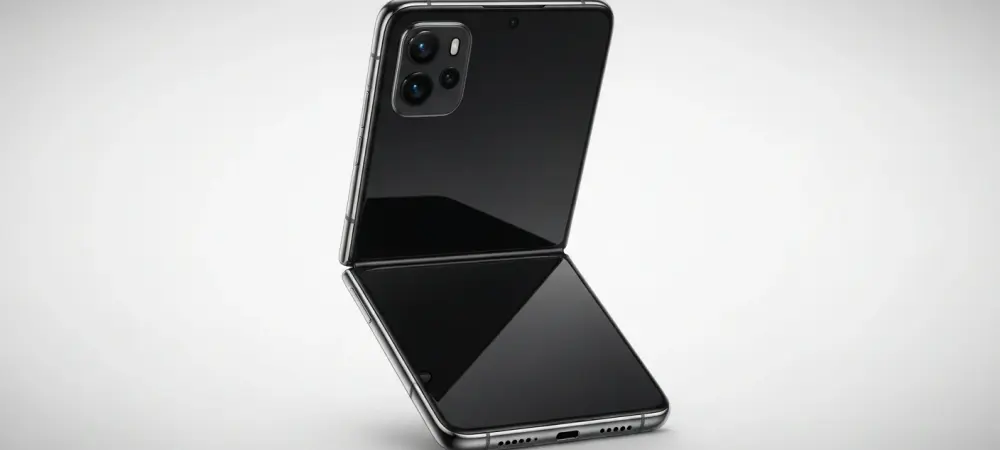
While the mobile industry has largely focused on expansive horizontal displays that transform phones into tablets, a recent patent filing suggests a shift toward extreme portability through a sophisticated vertical tri-fold mechanism. This development signals a significant departure from the established clamshell design, which typically employs a single hinge to bridge two display halves. By integrating two distinct hinges, this new architecture allows the device to fold twice, effectively compressing a long, narrow screen into a footprint no larger than a standard wallet. The concept relies on a Z-fold configuration where one segment folds inward and the other folds outward, leaving a portion of the screen accessible even when the device is fully collapsed. This structural innovation addresses the growing demand for larger displays that do not compromise on pocketability, pushing the boundaries of what consumers expect from the next generation of handheld electronics. The design reflects a commitment to architectural ingenuity, prioritizing a tall aspect ratio for modern content.
Structural Evolution: From Clamshells to Multi-Hinge Architectures
The engineering required to stabilize two separate hinges in a vertical orientation presents a formidable challenge that involves balancing tension, material fatigue, and component density. Unlike the horizontal tri-fold models that have appeared recently, this vertical approach necessitates a specialized internal layout to ensure that the battery and circuit boards remain functional across three interconnected sections. Materials like liquid metal alloys and advanced carbon fiber are likely being considered to reduce the overall thickness of the hinges, preventing the phone from becoming too bulky when stacked. Furthermore, the display itself must utilize an ultra-thin glass variant capable of withstanding the stress of folding in two different directions simultaneously. Such a design ensures that the middle section serves as a structural anchor while the top and bottom flaps provide the necessary expansion. This arrangement provides a unique tactile experience, allowing users to partially unfold the device for specific tasks or fully extend it for immersive media viewing. Expanding the vertical workspace provides a distinct advantage for scrolling-heavy activities such as social media feeds, long-form articles, and extensive coding environments. This ultra-tall aspect ratio could potentially reach beyond the standard 21:9 format, offering a cinema-like experience in the palm of one’s hand while maintaining a slim width that is easy to grip. However, the physical reality of a tri-fold device means that designers must solve the bulge problem that plagued early foldable prototypes. By utilizing a staggered hinge design, the patented model aims to keep the device flat when closed, ensuring it remains comfortable in a pocket. This focus on ergonomics suggests that the primary goal is to merge the compact convenience of the flip-phone era with the high-performance screen real estate required by modern applications. If successfully implemented, this design would redefine the standard for portable luxury, moving away from the tablet-replacement trend and focusing instead on the ultimate refinement of the traditional smartphone shape.
Strategic Integration: Software Optimization and Market Impact
The introduction of a triple-segmented vertical display necessitates a radical rethinking of mobile operating systems to handle dynamic window resizing across varying fold states. Software developers would need to create adaptive layouts that recognize whether the device is fully open, partially folded into a tent mode, or used in its compact form. For instance, the top segment could function as a dedicated viewfinder for photography while the bottom two segments provide controls and a gallery preview. This level of versatility requires seamless transitions with zero latency, placing a heavy burden on the processing unit and the software’s ability to manage background tasks efficiently. Beyond simple utility, the extended screen offers a canvas for advanced multitasking, where three separate applications could run simultaneously in a stacked configuration without feeling cramped. This potential for enhanced productivity positions the device as a serious tool for professionals who require constant access to data streams without the bulk of a larger tablet.
As manufacturers transitioned from conceptual patents to tangible prototypes, the focus shifted toward establishing a robust ecosystem of compatible accessories and developer tools. Industry leaders recognized that the hardware alone would not suffice; instead, they prioritized the creation of standardized APIs that allowed third-party apps to leverage the unique tri-fold geometry effectively. Looking forward, stakeholders should invest in flexible display durability testing to ensure long-term reliability for consumers who fold their devices hundreds of times daily. Component suppliers were encouraged to accelerate the production of high-density, split-battery systems to maintain weight balance across the three chassis sections. This strategic move provided a blueprint for future iterations of mobile hardware, suggesting that the path to market dominance lay in the intersection of extreme portability and expansive visual interfaces. Consequently, the emphasis remained on refining the user experience to ensure that the transition between folded and unfolded states felt intuitive rather than experimental.