

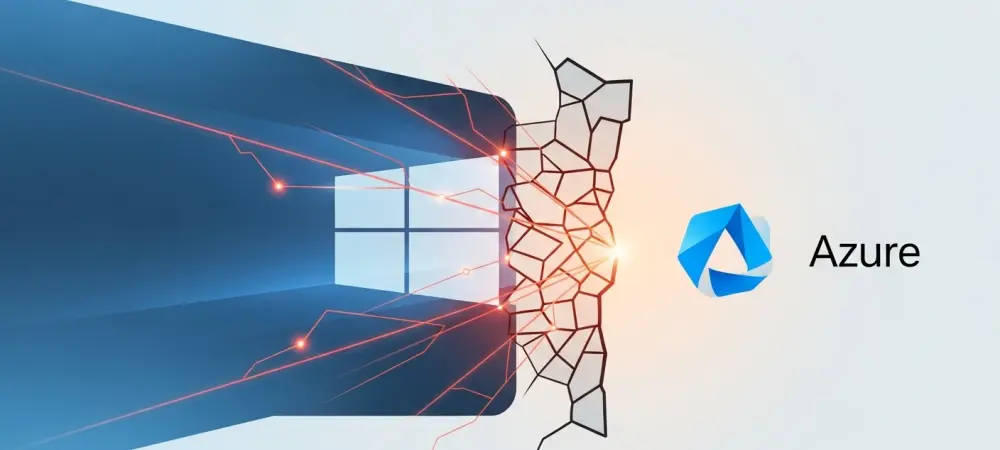
The subtle frustration of navigating a cluttered taskbar or enduring a forced artificial intelligence update might seem like a minor grievance for a single user, yet it represents a significant fracture in the foundation of Microsoft’s vast corporate empire. For decades, the ubiquitous presence of Windows on the enterprise desktop served as an unassailable fortress, ensuring that any subsequent shift toward server infrastructure or cloud services remained within the same ecosystem. However, as 2026 unfolds, the unsettling reality is that a sluggish Start menu or an intrusive system prompt is no longer just a personal annoyance; it has become a signal of systemic risk for the broader enterprise environment. This friction threatens to disrupt the long-standing “Strategic Gravity” that has traditionally pulled high-value Azure contracts toward the Redmond giant.
This concept of strategic gravity relies on the idea that the comfort and familiarity of the Windows endpoint act as the technical and psychological “front door” for Chief Information Officers. When the daily user experience is seamless, the decision to commit to a multi-year cloud agreement feels like a natural extension of a reliable partnership. In contrast, when the operating system begins to feel like a vehicle for corporate agendas rather than a high-performance tool, that gravity weakens. The current climate suggests a “Catching Cold” metaphor: a minor sneeze in user satisfaction at the desktop level is beginning to signal a looming flu for the long-term growth projections of the Azure cloud platform.
The Myth of Product Isolation: Why the Windows-to-Azure Pipeline Matters
Modern corporate structures often treat Windows and Azure as separate line items on a balance sheet, but this financial separation obscures the singular “Trust System” that actually governs IT procurement. Decisions regarding hyperscale infrastructure are rarely made in a vacuum; they are influenced by the cumulative reliability of a vendor across all touchpoints. When a desktop environment becomes unpredictable, it erodes the historical continuity that once made the “Microsoft Stack” a foregone conclusion. Traditionally, the flow from the user’s desk to the on-premises server and eventually to the cloud was a frictionless journey, but that pipeline is now facing unprecedented pressure from modern infrastructure standards that prioritize interoperability over brand loyalty.
The “Gateway Effect” remains the most potent weapon in Microsoft’s arsenal, yet it is also the most vulnerable. A positive daily experience with Windows facilitates a “default choice” status for Microsoft’s cloud services because it reduces the perceived risk of integration. If the endpoint software is stable, IT administrators assume the underlying cloud architecture will share that same standard of excellence. Conversely, when the desktop experience is marred by unnecessary complexity or forced feature updates, it prompts decision-makers to question whether the same lack of focus might eventually plague their cloud operations. This psychological link means that any degradation in the Windows brand directly impacts the perceived reliability of Azure’s hyperscale infrastructure.
The Triad of Friction: Identifying the Windows 11 Failure Points
The first major point of friction involves hardware gating and the conflict surrounding TPM 2.0 requirements. By enforcing strict hardware standards that rendered millions of functional, high-performance machines obsolete, Microsoft effectively breached an unspoken agreement with IT departments regarding software longevity. This forced transition necessitated massive capital expenditures on new PC fleets at a time when many organizations were looking to divert those same funds toward digital transformation and cloud-native development. The resulting resentment among budget-conscious executives has created a scenario where every new investment in the Microsoft ecosystem is now subjected to much more rigorous scrutiny than in previous upgrade cycles.
Furthermore, the coercive integration of Copilot and other artificial intelligence features has shifted the perception of Windows from “user utility” to “product agenda.” Pushing AI into every corner of the operating system—often without a clear opt-out path for enterprise users—feels more like an intrusion than a genuine innovation. Organizations prioritize workflow stability and data sovereignty, and when an OS begins to feel “agenda-obsessed” rather than “customer-obsessed,” brand loyalty begins to evaporate. This perception is particularly damaging among developers and system administrators who require a clean, predictable environment to manage the complex workloads that eventually feed into Azure.
Finally, the cumulative effect of quality churn and interface instability has led to a narrative of declining judgment within Microsoft’s leadership. Constant changes to the user interface, combined with the perception of feature bloat, signal a lack of focus on the core stability that enterprise environments demand. When C-suite executives witness frequent, unnecessary revisions to the desktop environment, it sows doubt about the broader strategic roadmap. This erosion of the “Invisible Utility”—the idea that an operating system should work perfectly in the background—has created a psychological opening for competitors to argue that Microsoft has lost sight of the foundational reliability required for hyperscale cloud growth.
Ecosystem Decoupling: The Real-World Consequences of a Weakened Anchor
Industry experts increasingly point toward a “Best-of-Breed” shift, where businesses are becoming comfortable moving away from a monolithic Microsoft environment. Historically, the difficulty of managing a heterogeneous fleet of devices kept companies tethered to a single vendor, but the rising normalization of Linux and browser-based productivity has changed the landscape. Hardware partners such as Dell and Lenovo are now facilitating a world where Windows is optional for many corporate roles, particularly as more enterprise applications migrate to platform-agnostic web environments. As the endpoint becomes less relevant, the automatic preference for Azure begins to fade, allowing for a more competitive selection process.
Competitive dynamics are shifting as AWS and Google Cloud capitalize on this desktop-level friction by positioning themselves as neutral, infrastructure-first alternatives. These providers do not have the “baggage” of a legacy operating system and can focus entirely on providing a streamlined cloud experience. When IT leaders feel frustrated by the forced upgrades or the intrusive AI prompts of Windows 11, they are more likely to conduct rigorous competitive reviews of their cloud contracts. This psychological opening is no longer just theoretical; anecdotal evidence suggests that desktop-level annoyance is a primary catalyst for organizations to explore multi-cloud strategies that reduce their reliance on a single, increasingly intrusive provider.
Strategies for Restoring the Trust Pyramid
To maintain its dominance, Microsoft must prioritize utility over strategy by refocusing on Windows as a high-performance tool rather than a vehicle for cross-selling. The path forward involves making advanced features, especially AI and deep cloud integrations, strictly opt-in for enterprise environments. By respecting the autonomy of IT administrators and allowing them to deploy “clean” versions of the operating system, Microsoft can rebuild the trust that has been damaged by coercive feature pushes. Stability must become the primary metric of success again, ensuring that the desktop environment serves the user’s needs without distracting from the task at hand.
Protecting the distribution advantage also requires a reduction in “UX churn” to provide the predictable environment necessary for deep work. When an operating system remains stable over several years, it reinforces the perception of Microsoft as a steady and reliable partner. This reliability is the bedrock upon which the cloud business is built. If the company can successfully view Windows as a brand interface that directly impacts the perceived value of Azure, it can stop the erosion of its strategic gravity. Maintaining a sharp focus on core functionality will ensure that Windows remains the preferred gateway to the cloud, rather than a barrier that drives customers toward more neutral alternatives.
The strategic landscape of 2026 required a fundamental shift in how desktop software was managed to protect the hyperscale cloud business. Decision-makers eventually realized that the “Strategic Gravity” of the brand was tied to the daily satisfaction of the end user. Efforts were made to decouple the aggressive marketing of new AI features from the core stability of the enterprise operating system. This move successfully mitigated the resentment that had built up during the early years of hardware gating and forced updates. By restoring the “Trust Pyramid,” the company ensured that the perceived reliability of its endpoint software continued to support the massive, long-term growth of the Azure ecosystem. Competitive threats from neutral providers were neutralized not through coercion, but through a renewed commitment to providing a clean, efficient, and stable environment for professional work. This shift in perspective allowed the corporate cloud to thrive without the weight of desktop-level friction dragging down its expansion.