

Imagine a world where humanoid robots handle dangerous factory tasks, while AI seamlessly integrates into daily life, making vehicles safer and smarter. Tesla, once known primarily for its electric vehicles, is steering toward this very future with its ambitious shift into AI and robotics. This roundup dives into diverse perspectives from industry leaders, analysts, and tech enthusiasts to explore how Tesla’s pivot, led by its visionary CEO Elon Musk, could redefine the company’s trajectory. The purpose is to gather a spectrum of opinions on the potential, challenges, and implications of this bold move, offering a balanced view of what lies ahead for Tesla in an increasingly automated landscape.
Exploring Tesla’s Shift: Diverse Opinions on AI and Robotics
The Promise of Optimus: Revolutionary or Overhyped?
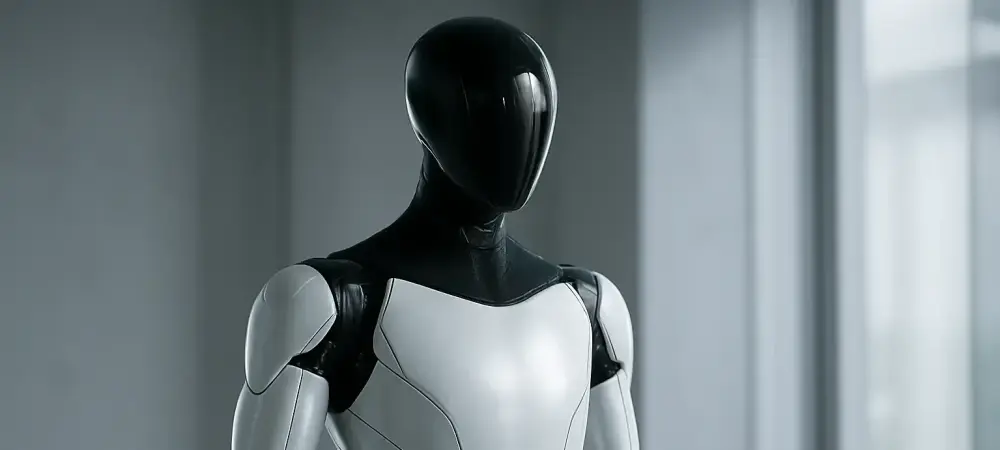
A significant focus of Tesla’s strategy is the Optimus humanoid robot, designed to tackle mundane and hazardous tasks. Many industry observers see this as a groundbreaking step, with some suggesting that automation at this level could transform labor-intensive sectors. They point to Tesla’s ambitious production goals—starting with 5,000 units in the current year and scaling to 1 million annually by 2029—as evidence of a serious commitment to reshaping industrial workflows with robots priced between $20,000 and $30,000.
However, not all feedback is glowing. A segment of tech analysts expresses caution, noting that Optimus currently performs only basic assembly tasks. Doubts linger about whether the robot can evolve into a versatile tool for broader applications within the projected timelines. This skepticism highlights a divide between those who view Tesla’s robotics push as a game-changer and others who see it as a risky, unproven venture.
Further complicating the narrative, some business strategists argue that the success of Optimus hinges on market readiness. They emphasize that while the concept is innovative, businesses may hesitate to adopt such technology without clear proof of reliability and cost-effectiveness. This perspective underscores a practical barrier that Tesla must overcome to turn vision into reality.
AI Beyond Robots: Transforming Vehicles and Everyday Life
Tesla’s integration of AI into its vehicles and systems garners equally varied reactions. Enthusiasts in the tech community praise the company’s efforts to enhance autonomous driving features and improve safety through intelligent automation. They argue that this represents a broader “technological renaissance,” positioning Tesla as a leader in making everyday technology smarter and more intuitive for users.
On the flip side, some industry watchers caution against over-optimism. They highlight the technical challenges of scaling AI across diverse platforms, pointing to potential glitches and the high costs of development. Competition from other tech giants, who are also advancing AI solutions, adds another layer of complexity, raising questions about whether Tesla can maintain a distinct edge in this crowded space.
A third viewpoint comes from safety advocates who, while supportive of AI’s potential to reduce accidents, stress the need for rigorous testing. Their concern centers on ensuring that these systems are foolproof before widespread adoption. This balanced take reflects a broader consensus that while AI holds immense promise for Tesla, execution and accountability remain critical hurdles.
Market Challenges: Can Tesla Balance Innovation with EV Struggles?
Tesla’s core electric vehicle business faces headwinds, with global deliveries down 13% in recent reports, including a sharp 40% drop in Europe and a 5.4% decline in China. Financial analysts are split on how this impacts the company’s pivot to AI and robotics, with some arguing that declining EV sales necessitate diversification, viewing the focus on automation as a smart hedge against market volatility and a way to sustain investor interest.
Conversely, a group of market experts warns that heavy investment in unproven technologies like robotics could distract from stabilizing the EV foundation. With Tesla’s stock dipping 19% to $329.37 per share in the current climate, they question whether the company risks spreading resources too thin. This perspective paints Tesla’s innovation as a double-edged sword, potentially jeopardizing short-term stability for long-term gains.
Another angle comes from regional market specialists who note that performance varies widely by geography. They suggest that Tesla must tailor strategies to address specific declines, such as in Europe, while leveraging AI and robotics to rebuild consumer trust. This nuanced take emphasizes the need for a multi-pronged approach to navigate current challenges without losing sight of futuristic goals.
Musk’s Vision: Long-Term Disruption or Risky Gamble?
Elon Musk’s Tesla Master Plan IV, which prioritizes long-term technological upheaval over immediate results, sparks intense debate. Visionary thinkers in the tech sphere applaud this bold direction, believing that aiming for “sustainable abundance” through automation could redefine industries. They see Musk’s strategy as a necessary push toward a future where AI and robotics are integral to human progress.
Critics among investment circles, however, find the plan lacking in detailed milestones. They argue that without granular timelines or concrete deliverables, Tesla risks alienating stakeholders who prioritize quicker returns over distant promises. This concern reflects a broader tension between Musk’s disruptive ambitions and the pragmatic demands of the financial world.
A middle-ground opinion emerges from strategic consultants who suggest that while the vision is inspiring, Tesla must communicate incremental progress to maintain credibility. They propose that showcasing tangible advancements in projects like Optimus could bridge the gap between lofty goals and investor expectations. This balanced viewpoint highlights the importance of transparency in sustaining confidence during a transformative shift.
Key Takeaways from the Roundup
Synthesizing these perspectives reveals a complex picture of Tesla’s journey into AI and robotics. The Optimus robot stands as a symbol of potential, with supporters seeing it as a catalyst for industrial change, while skeptics question its readiness. AI integration in vehicles draws similar divides, with excitement tempered by concerns over execution and competition. Meanwhile, Tesla’s EV struggles add urgency to the debate, as opinions clash on whether innovation should take precedence over stabilizing core markets.
Another critical insight is the polarizing nature of Musk’s long-term vision. While some celebrate the focus on disruption, others demand more immediate clarity to justify the risks. Across all views, there’s agreement that Tesla stands at a pivotal moment, with the ability to shape automation’s role in society—if it can navigate the inherent uncertainties and market pressures.
Reflecting on Tesla’s Path Forward
Looking back, the discussions around Tesla’s strategic pivot revealed a landscape of hope, caution, and pragmatic critique. The insights gathered painted a company at a crossroads, balancing groundbreaking aspirations with real-world challenges. Each perspective contributed to a fuller understanding of how AI and robotics could redefine Tesla’s legacy.
Moving forward, Tesla could benefit from prioritizing small, visible wins in its robotics and AI projects to build momentum. Stakeholders should keep an eye on production updates for Optimus over the next couple of years, as these will serve as key indicators of progress. Additionally, exploring partnerships to bolster EV sales while advancing automation could provide a dual-path strategy. For those intrigued by this evolving story, delving into broader industry reports on automation trends offers a valuable next step to contextualize Tesla’s role in shaping tomorrow’s technology.