

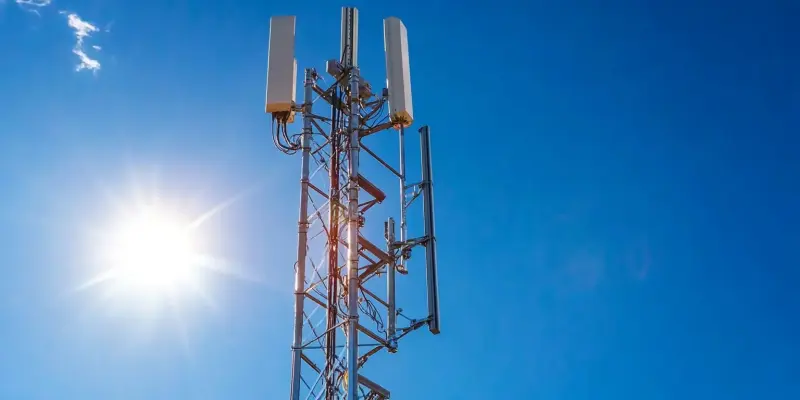
In the ever-evolving landscape of enterprise networking, businesses constantly seek ways to boost performance while managing costs. One promising solution for enhancing network capabilities is the convergence of Private 5G and Wi-Fi technologies. The Wireless Broadband Alliance’s recent “Private 5G and Wi-Fi Convergence Report: Phase 2 – Technical Considerations” delves into this very topic, offering strategic insights into how these two technologies can work together for a more efficient and streamlined operation.
Architectural Strategies for Network Integration
Leveraging RADIUS-Based AAA Infrastructure
Among the key strategies recommended, the utilization of RADIUS-based AAA (Authentication, Authorization, and Accounting) infrastructure stands out as a fundamental approach to unifying identity management and policy enforcement. This method of network integration offers a streamlined way to control user access across both 5G and Wi-Fi networks. By using a consistent set of credentials for multiple access points, businesses can significantly simplify network management. Additionally, a unified infrastructure reduces the complexity of maintaining separate access policies, thereby improving overall user experience and decreasing the likelihood of security lapses.
A particular advantage of RADIUS-based AAA infrastructure is its capacity to offer enhanced security and efficient session management. When combined with Private 5G, this system enables administrators to apply uniform access policies, regardless of the access technology. The resulting uniformity facilitates simpler scaling of network resources and ensures that security protocols remain consistent across different connectivity scenarios. As enterprises aim to create more robust and flexible network environments, leveraging this infrastructure will be critical in establishing a cohesive and secure network experience for end-users.
Implementing Wi-Fi Fast Transition Domain with Private 5G
Another pivotal architectural solution put forward by the Wireless Broadband Alliance emphasizes the integration of Wi-Fi Fast Transition Domain with Private 5G. This approach is particularly beneficial in reducing the access connection times significantly, enhancing the efficiency of Wi-Fi networks by up to 90%. The seamless mobility this integration offers is crucial for supporting uninterrupted connectivity for users who move between different network coverage areas within a business premise.
Furthermore, retaining IP addresses during transitions between Wi-Fi and Private 5G networks aids in maintaining device configurations. This capability is instrumental in optimizing user application experiences, as it supports application-binding, ensuring that devices do not require reconfiguring each time they switch networks. As more enterprise environments necessitate consistent and rapid connectivity, the benefits of a Wi-Fi Fast Transition Domain in conjunction with Private 5G cannot be overstated. This robust integration ultimately leads to a more agile and responsive network that meets the dynamic needs of modern businesses.
Future Opportunities and Industry Standards
The Role of RAT Roaming and ATSSS
Looking forward to 2025, the Wireless Broadband Alliance aims to set new industry standards to further enhance network interoperability and user services. Central to these future developments are RAT Roaming and Access Traffic Steering and Switching (ATSSS). RAT Roaming facilitates seamless connectivity across different access technologies, allowing devices to switch between 5G and Wi-Fi networks without experiencing drops in service quality. This standard ensures users experience consistent connectivity, which is particularly beneficial for applications requiring reliable real-time communication.
ATSSS, on the other hand, focuses on directing network traffic in a way that maximizes efficiency and performance. This approach steers traffic based on predefined policies, ensuring optimal network utilization and improving overall service quality. The synergy between RAT Roaming and ATSSS will be fundamental in achieving a higher level of integration between Private 5G and Wi-Fi, ultimately setting the stage for more advanced and reliable enterprise networks in the coming years.
Streamlining Network Management and User Control
In the fast-paced world of enterprise networking, companies are always on the lookout for methods to enhance performance while maintaining control of expenses. A notable approach to improving network functionality is through the convergence of Private 5G and Wi-Fi technologies. This fusion allows businesses to leverage the strengths of both to create a more efficient infrastructure. The Wireless Broadband Alliance has explored this topic extensively in their latest publication, the “Private 5G and Wi-Fi Convergence Report: Phase 2 – Technical Considerations.”
This report offers crucial guidance on how these two technologies can complement each other to deliver superior network performance. By combining the speed, capacity, and security of Private 5G with the ubiquity and cost-effectiveness of Wi-Fi, businesses can achieve a more robust and flexible networking solution. The document outlines technical strategies and best practices for integrating these systems seamlessly. In essence, it provides a roadmap for enterprises aiming to optimize their network operations, ensuring they can meet the demands of an increasingly digital world while keeping costs in check.