

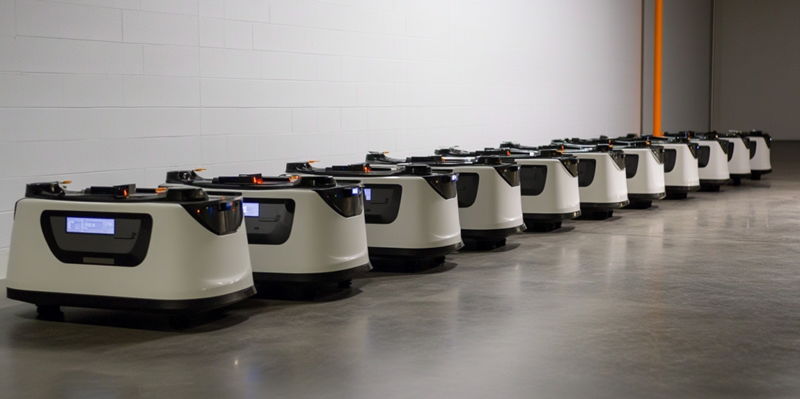
Rockwell Automation’s acquisition of OTTO, a subsidiary of Clearpath Robotics, in 2023 has brought significant advancements, with the latest update, Version 2.32, spotlighting the transformative capabilities of OTTO’s Autonomous Mobile Robots (AMRs). One of the most noteworthy enhancements is the improvement in speed, especially for the OTTO 1500 model, which can now operate at double its average speed. These speed improvements enable the robots to navigate more efficiently in congested areas, greatly benefiting industries that rely on swift and reliable material handling solutions. Furthermore, this update introduces an advanced sensing technology that helps the robots operate faster while maintaining safety and precision, crucial for high-stakes environments like automotive manufacturing plants.
The integration of an advanced security framework is another key element of Version 2.32, reflecting OTTO’s commitment to safeguarding user data and operational integrity. The inclusion of new authentication options reinforces user control access, ensuring that only authorized personnel can manage the robots. This is particularly beneficial for industries requiring high levels of security, such as food and beverage or pharmaceuticals. The updated OTTO App further enhances this security by incorporating multi-factor authentication and encrypted communications. Consequently, businesses can now rely on a more secure AMR system, mitigating risks related to unauthorized access and data breaches, which can have catastrophic effects on operations.
Advanced Traffic Control and Operational Efficiency
The advanced traffic control capabilities introduced in Version 2.32 promise to revolutionize how AMRs navigate through complex industrial environments. The new Yield Line function optimizes route planning by reducing the frequency of stop-and-go actions. This function ensures smoother transitions and more efficient navigation paths, ultimately reducing downtime and increasing productivity. The streamlined movement not only conserves energy but also minimizes wear and tear on the robots, potentially prolonging their operational life. These aspects are critical in industrial settings where any inefficiency can lead to significant economic losses.
Another significant upgrade includes the opportunistic charging algorithm, which intelligently manages battery life by charging the AMRs between jobs. This feature is designed to ensure that the robots are always ready for operation, thus decreasing the likelihood of unexpected downtimes due to low battery. The inclusion of high-quality safety measures, such as LiDAR sensors, 3D cameras, and safety switches, continues to prioritize operator safety while maintaining high performance. These safety features, combined with the enhanced traffic control capabilities, make Version 2.32 a comprehensive upgrade that addresses multiple facets of AMR operation, from efficiency to longevity and safety.
Versatile Applications Across Industries
Rockwell Automation’s acquisition of OTTO, a subsidiary of Clearpath Robotics, in 2023 has led to substantial progress, with Version 2.32 showcasing the potential of OTTO’s Autonomous Mobile Robots (AMRs). A standout upgrade is the speed enhancement for the OTTO 1500 model, which can now operate at twice its usual speed. These speed boosts allow the robots to maneuver more effectively in crowded spaces, benefiting industries that depend on fast and reliable material handling. Additionally, the update introduces cutting-edge sensing technology that allows the robots to maintain both speed and safety, critical for high-stakes settings like automotive manufacturing plants.
Another key feature of Version 2.32 is the integration of an advanced security framework, reflecting OTTO’s focus on protecting user data and operational integrity. New authentication options strengthen user access control, ensuring only authorized personnel can operate the robots. This is especially crucial for sectors like food and beverage or pharmaceuticals that require stringent security. The updated OTTO App enhances security further by incorporating multi-factor authentication and encrypted communications. This upgrade ensures a more secure AMR system, reducing risks related to unauthorized access or data breaches, which can severely impact operations.