

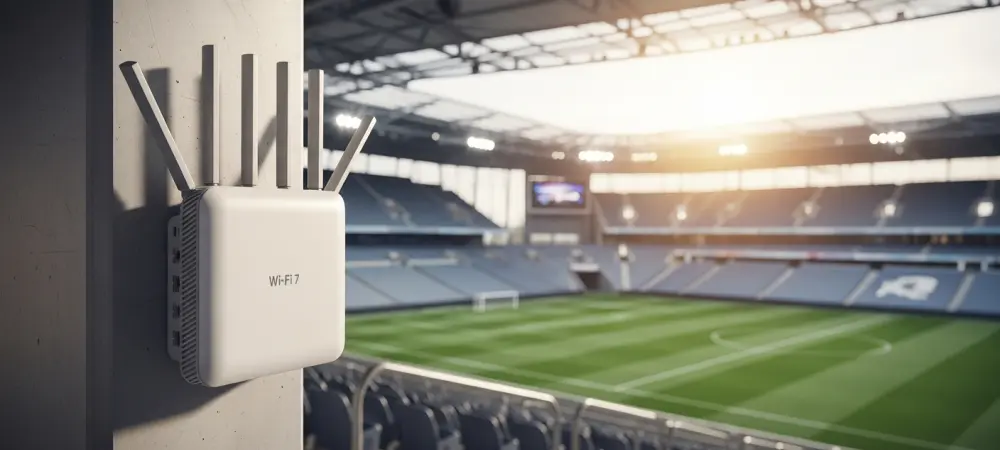
Multi-beam Wi-Fi 7 represents a fundamental shift in how radio frequency energy is managed within these cavernous spaces, moving away from broad coverage patterns that cause excessive interference. By utilizing narrow, focused beams of data, venues can finally provide the throughput necessary for augmented reality overlays and instant-replay streaming without the typical lag. This technological leap ensures that every seat in a sixty-thousand-person arena receives a dedicated, high-speed connection, effectively turning the entire facility into a cohesive, high-performance local network.
Precision Engineering for High-Density Environments
Strategic Spatial Reuse and Beamsteering Dynamics
The core innovation driving this transformation involves sophisticated beamforming algorithms that allow access points to direct signals toward specific clusters of users with surgical precision. Unlike conventional antennas that radiate energy in wide arcs, multi-beam systems create highly directional pathways that maximize signal strength while minimizing noise for neighboring devices. This capability is crucial in stadium bowls where thousands of smartphones compete for the same spectrum within a confined physical area. By narrowing the focus of each transmission, engineers can implement aggressive spatial reuse strategies, allowing the same frequency to be used multiple times across different sections of the stands without overlap. This efficiency is further bolstered by the 6 GHz band, which provides the wider spectral highway necessary for these narrow beams to carry massive amounts of data. The result is a network that remains stable at all times.
Mitigating Spectrum Congestion Through Intelligent Filtering
Beyond simple directionality, multi-beam Wi-Fi 7 integrates 4096-QAM modulation to pack significantly more data into every radio wave compared to previous generations. This increase in bit density, combined with the massive 320 MHz channel widths available in the 6 GHz spectrum, creates a pipe large enough to handle the most demanding broadcast-grade traffic. For venue operators, this means the network no longer acts as a bottleneck for innovative fan engagement tools like interactive betting apps or multi-camera angle selection features. The precision of multi-beam technology also allows for better battery life on mobile devices, as handsets do not have to struggle through high levels of background noise to maintain a handshake with the access point. As the system intelligently steers these beams in real-time, it compensates for the movement of the crowd, ensuring that connectivity remains consistent whether fans are seated or moving.
Operational Evolution: Enhancing Fan Engagement
Digital Immersion: Enabling Next-Generation Immersive Experiences
The introduction of multi-beam Wi-Fi 7 enables a suite of immersive technologies that were previously relegated to controlled laboratory settings or small-scale pilot programs. With the massive throughput and ultra-low latency provided by focused beams, stadiums can now support thousands of simultaneous augmented reality sessions. Fans can point their devices at the field to see real-time player statistics, heat maps, and speed tracking overlaid directly onto their view of the game. This level of interaction requires a constant, high-speed data stream that traditional Wi-Fi simply could not sustain for a full-capacity crowd. Because multi-beam technology reduces the latency to the sub-ten-millisecond range, these digital overlays sync perfectly with the live action, preventing the motion sickness or frustration associated with delayed data. This capability effectively turns the live game into a personalized broadcast for every fan.
Network Deployment: Strategic Directions for Wireless Infrastructure
The transition toward multi-beam Wi-Fi 7 necessitated a comprehensive reevaluation of how wireless spectrum was allocated and managed within high-capacity environments. Venue owners who prioritized the integration of these advanced spatial filtering techniques successfully eliminated the persistent connectivity dead zones that once plagued the stadium experience. It became clear that the successful deployment of this technology required not only a hardware upgrade but also a deep understanding of the unique electromagnetic profile of each individual arena. To prepare for continued growth in data demand, organizations began auditing their existing cabling and power infrastructure to ensure it could support the higher throughput of the latest access points. Stakeholders also established new protocols for multi-band coordination, ensuring that legacy devices remained functional. These steps ensured that the investment in multi-beam technology delivered a measurable return.