

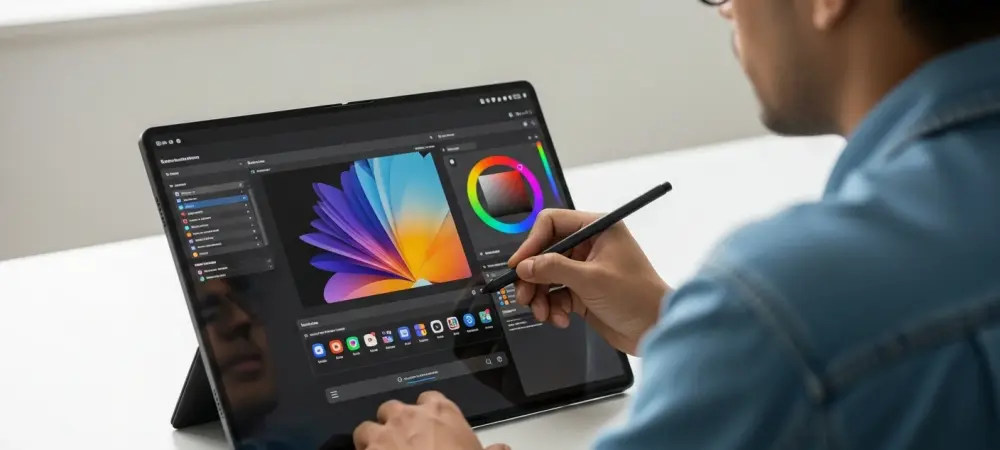
The Unexpected Shift in the Galaxy Evolution
The silicon landscape has shifted toward a future where the hardware itself acts as a mere vessel for a proactive operating system capable of predicting human intent before a single touch occurs. While traditional cycles favored the standard flagship, recent industry insights suggest the Galaxy Z Fold 8 and Z Flip 8 will debut Google’s Gemini Intelligence this July. This transition redefined the foldable category from a luxury aesthetic choice into the premier stage for the most sophisticated autonomous software ever deployed on a mobile device.
This departure from the expected release of the Pixel or the Galaxy S series highlights a pivot in mobile strategy. By prioritizing foldables, developers established these devices as the ultimate proving ground for high-stakes software performance. The move suggests that the future of mobile dominance no longer relies on camera megapixels alone but on the deep integration of a system that manages digital life with minimal human friction.
Why the Foldable Canvas Matters for Next-Gen Software
Integrating high-level AI into foldables addresses the long-standing friction of managing complex tasks on dual-screen interfaces. The expansive real estate of the Z Fold series often felt daunting to casual users, yet the arrival of One UI 9 transformed this space into an intuitive workspace. By leveraging the dual-screen form factor, the system bridged the gap between hardware potential and utility, ensuring the operating system served as a proactive assistant rather than a static platform for applications.
Software testing phases indicated that the larger canvas provided the necessary “breathing room” for AI agents to operate in the background while users remained engaged in the foreground. This synergy allowed for a more natural distribution of processing power and screen utility. Consequently, the foldable became the only form factor capable of showcasing the true depth of multitasking that Gemini Intelligence offered.
From Basic Chatbots to Actionable Cross-App Automation
Gemini Intelligence moved beyond the standard query-and-response dynamic to embrace what experts called “actionable AI.” This system navigated the internal framework of the device to execute workflows that previously required tedious manual intervention. For instance, the software scanned handwritten lists in a notes application and autonomously populated a shopping cart in a delivery service, managing the logistics through to the final payment screen without a single manual copy-paste.
Creative professionals utilized new tools like Masking Tape, which provided granular S Pen customization, and Creative Studio for managing digital identities. These features allowed the foldable to handle multiple variables across separate applications simultaneously, making split-screen multitasking more powerful than any previous iteration. This shift positioned the device as a centralized hub for both high-end professional output and personal digital logistics.
A Strategic Alliance in the Rapidly Evolving AI Landscape
The alliance between Samsung and Google reflected a strategic maneuver to maintain dominance against a rising tide of AI-native hardware competitors. Following the summer launch on the Z series, Google scaled this intelligence across a vast spectrum of Android devices, including automotive systems and wearable glasses. This roadmap signaled a commitment to making actionable AI a universal standard, ensuring that the foldable remained the tip of the spear in computing innovation.
Industry analysts observed that this partnership solidified a unified ecosystem that transcended the smartphone. By integrating Gemini so deeply into the One UI architecture, Samsung ensured that its users remained locked into a superior functional experience that rivals could not easily replicate. This collaboration was not merely about adding features but about redefining the fundamental relationship between a user and their mobile environment.
Strategies for Integrating Actionable AI Into Your Workflow
Early adopters optimized their digital efficiency by automating logistical chains through the extraction of data from messages to create calendar events and navigation routes. The Masking Tape feature refined how the S Pen interacted with various OS layers, turning the stylus into a precision navigation tool for complex AI-driven edits. This approach allowed users to bypass repetitive menus, focusing instead on creative direction while the software handled the underlying technical execution.
Digital identities were centralized via Creative Studio, ensuring the intelligence maintained the correct context for all automated professional outreach and personal task management. Users established a workflow where the AI predicted scheduling conflicts and suggested resolutions before they manifested. By treating the foldable as an active collaborator rather than a passive tool, the workflow became a streamlined process of oversight rather than manual labor.