

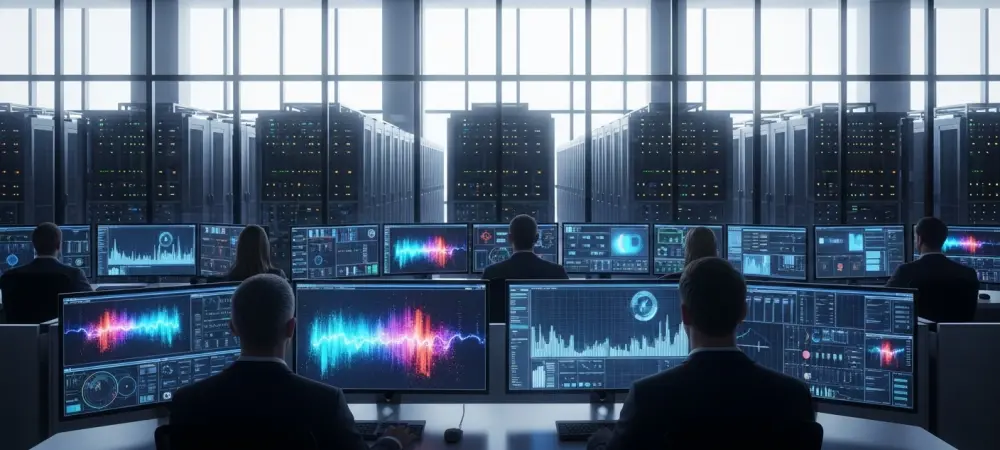
The sheer velocity of the artificial intelligence revolution has transformed the global energy landscape from a predictable utility market into a volatile frontier where silicon and electricity collide with unprecedented force. For decades, the data center existed as a quiet background utility, a necessary but largely invisible support system for corporate emails and static web pages. However, the rise of large language models and neural networks shifted these facilities into the role of primary engines for the global economy. This evolution moved the sector from the periphery of industrial planning to the center of national energy policy discussions, where the ability to secure power now dictates the pace of technological progress. The sudden explosion of generative AI fundamentally broke previous energy consumption models that relied on gradual, predictable growth. Traditional cloud computing followed a steady trajectory of efficiency gains that kept power demand relatively flat despite increasing workloads. AI changed this paradigm overnight, requiring a surge in electricity that legacy infrastructure was never designed to handle. As a result, the industry reached a critical juncture where survival depends on a new operational framework. This roadmap for resilience transitions away from static, manual power management toward a future of dynamic, machine-led optimization that attempts to balance massive computational growth with the limitations of a strained and aging electrical grid.
The High-Stakes Collision of Silicon and the Power Grid
Data centers have undergone a radical identity shift, moving from back-room server closets to high-density powerhouses that effectively function as the heartbeat of modern commerce. This transition means that facility health is no longer just an IT concern; it is a geopolitical and economic priority. National governments now view the availability of data center capacity as a strategic asset, leading to new policies that prioritize energy allocation for high-performance computing. This shift placed immense pressure on operators to prove they can manage their footprints without destabilizing the public utilities that surrounding communities rely on for daily life.
The emergence of generative AI acted as a catalyst that accelerated the obsolescence of traditional cooling and power distribution strategies. Unlike standard web hosting, AI training sessions create intense, concentrated heat signatures that can fluctuate wildly in seconds. These “hot spots” often exceed the capabilities of older air-cooled systems, creating a desperate need for specialized infrastructure. Industry leaders recognize that the old ways of simply building more floor space are over; the focus shifted toward maximizing the efficiency of every watt delivered to the server rack.
To navigate this high-stakes environment, the industry is adopting a more fluid approach to facility management. The goal is to move beyond the limitations of the physical grid by using software to bridge the gap between demand and supply. By integrating real-time intelligence into the very core of the building, operators hope to create a resilient system that thrives on complexity rather than being overwhelmed by it. This strategy focuses on agility, allowing a facility to scale its energy use up or down in response to both internal computational needs and external grid conditions.
Bridging the Gap Between Exponential Growth and Physical Limits
The TWh Explosion: Quantifying the Massive Electricity Surge
Projections for global data center energy use reached a staggering 945 TWh for the year 2030, a figure that places the digital infrastructure on par with the total energy output of an industrial nation like Japan. This surge is not merely a matter of more servers, but rather a fundamental shift in how those servers consume power. High-performance AI chips require significantly more cooling and electricity per square foot than traditional cloud hardware. This density problem means that many legacy facilities reached their physical breaking point, as they simply cannot extract heat fast enough or provide enough amperage to keep the latest hardware operational.
The expansion of these facilities also faces a “gridlock” challenge where aging utility networks cannot keep up with the demands of modern developers. In many regions, the time required to upgrade local substations or install new high-voltage lines stretched into years, creating a bottleneck for AI deployment. This delay forced a rethink of site selection and energy sourcing, as proximity to fiber-optic lines became less important than proximity to reliable, high-capacity power sources. The physical limits of the existing grid now serve as the primary throttle on the global AI race.
Overcoming the Data Deluge Within Facility Management
A persistent paradox exists within the data center world: these hubs of world information often struggle to manage their own internal data. Facility managers frequently deal with “data silos” where power distribution units, HVAC systems, and IT hardware do not communicate with each other. This fragmentation results in a high cost of inefficiency, as cooling systems might run at full blast in areas where server loads have already dropped. These optimization gaps lead to massive energy waste and significantly reduced profit margins for companies that fail to integrate their monitoring systems.
The traditional reactive maintenance model, where equipment is fixed only after a fault is detected, is no longer viable in a high-density AI environment. Industry experts emphasize the necessity for a unified, real-time visibility layer across entire global portfolios. Without a single pane of glass to view how power flows through a facility, operators remain blind to the subtle inefficiencies that accumulate into millions of dollars in wasted electricity. Closing these gaps requires a move toward a holistic view of the building where every sensor contributes to a larger picture of operational health.
The Rise of Autonomous Infrastructure and Machine-Led Cooling
The shift toward AI-driven cooling optimization represents a major breakthrough in facility management. Rather than relying on fixed schedules or manual adjustments, modern software uses machine learning to adjust HVAC outputs in real-time based on fluctuating server heat signatures. This allows the facility to breathe in sync with the computational load, providing cooling only when and where it is needed. Such autonomous systems can detect a sudden spike in AI training activity and preemptively adjust the airflow, preventing thermal throttling before it ever begins.
Predictive analytics also plays a crucial role in maintaining uptime by identifying equipment fatigue before a catastrophic failure occurs. By analyzing vibration, temperature, and power draw patterns, these systems can alert managers to a failing fan or a faulty transformer weeks in advance. Furthermore, innovations in load balancing allow data centers to sync their heaviest non-urgent workloads with the availability of renewable energy. This “grid-aware” computing ensures that the most power-intensive tasks are performed when the local wind or solar output is at its peak, reducing both costs and carbon footprints.
From Facility Manager to Energy Orchestrator
Operators are gaining a significant competitive edge by treating energy as a strategic asset rather than a fixed utility cost. This change in perspective transformed the role of the facility manager into that of an energy orchestrator who balances internal demand with external market conditions. By using unified management platforms, a breakthrough in cooling efficiency achieved at a site in Texas can be instantly analyzed and scaled across a global footprint in Europe or Asia. This level of institutional intelligence allows large-scale operators to outpace smaller competitors who lack the software infrastructure to standardize their improvements.
There is a growing realization that sustainability and profitability are no longer at odds; instead, they are deeply intertwined. Aggressive energy management became a prerequisite for securing both investment capital and local building permits. In many jurisdictions, the right to build a new data center is now contingent on the operator’s ability to prove they will use the latest efficiency technologies. Consequently, those who master power density and cooling efficiency are the ones most likely to secure the resources needed to lead the AI-driven market.
Strategic Frameworks for an AI-First Energy Era
Modern strategy requires a transition toward unified integration, where IT and facility data are consolidated into a single source of truth. This approach eliminates the visibility gaps that previously hid energy waste, allowing for a more granular understanding of how power moves from the substation to the silicon. By breaking down the walls between the people who manage the servers and the people who manage the building, organizations can identify specific areas where airflow is blocked or where power supplies are underperforming. This level of detail is essential for maintaining the sub-second stability required by modern AI hardware. Automation is also becoming an aggressive requirement rather than an optional upgrade. Human operators simply cannot move fast enough to manage the thermal spikes generated by modern high-density hardware. Machine learning algorithms must be deployed to handle the thousands of micro-adjustments required every hour to keep a facility running at peak efficiency. Furthermore, grid-interactive operations are emerging as a vital strategy for long-term survival. By acting as “virtual power plants,” data centers can feed stored energy back into the grid during peak demand or reduce their own load to prevent local blackouts, turning a potential liability into a community asset.
Securing the Digital Frontier Through Intelligent Power
The industry recognized that the era of passive energy management had finally come to an end. It became clear that continuous optimization was no longer a luxury but the new industry benchmark for excellence. Operators discovered that the mastery of power density and cooling efficiency served as the primary divider between the leaders of the AI era and those who were left behind. As computational demands grew, the focus transitioned away from mere capacity toward the intelligent orchestration of every kilowatt.
Data center leaders successfully implemented predictive models that transformed how facilities interacted with the local environment. They moved toward a model where the data center functioned as a responsive participant in the global energy ecosystem. This shift did not just solve the immediate energy crisis; it provided a blueprint for a more automated and resilient digital world. The pressure of the AI surge ultimately acted as the catalyst that forced the global digital infrastructure to become more efficient and sustainable than ever before.