

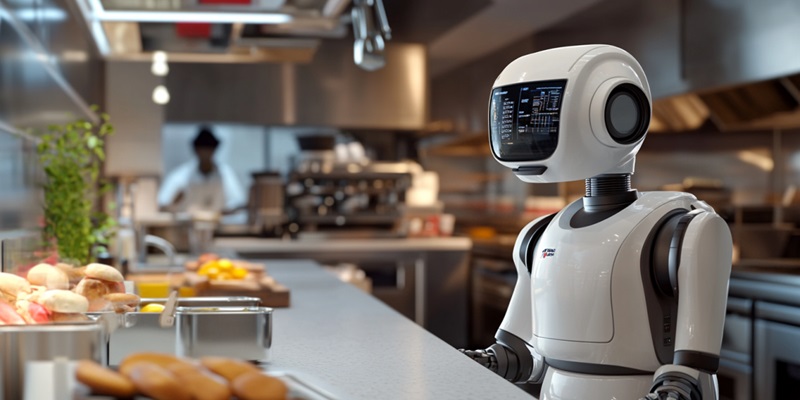
In a groundbreaking move poised to transform the food service industry, Circus SE has announced a partnership with a prominent global high-tech manufacturing firm. This strategic collaboration is focused on facilitating the high-volume production of the Circus Autonomy One (CA-1) robots, with operations set to begin in December 2024. By leveraging their partner’s advanced manufacturing capabilities, Circus SE aspires to be the pioneer in mass-producing AI robots tailored for the food service sector, aiming to address widespread labor shortages and efficiency challenges.
The Importance of the Circus CA-1 Robot
Redefining Efficiency and Hygiene Standards
The Circus CA-1 is an autonomous robot designed to revolutionize the food service industry by taking over labor-intensive tasks such as ingredient dispensing, cooking, cleaning, and packaging without human intervention. Driven by CircusAI, a comprehensive AI software developed by Circus SE, the CA-1 robot is engineered to boost efficiency, reduce costs, minimize food waste, and uphold high standards of quality and hygiene. The introduction of the CA-1 comes at a critical time for the $2.6 trillion food service industry, which is grappling with labor shortages and operational inefficiencies.
As labor shortages continue to plague the food service industry, restaurants and food service providers are increasingly turning to technology to fill the gap. The CA-1 robot offers a promising solution by automating repetitive and laborious tasks, allowing human workers to focus on more complex and customer-centric activities. This shift not only enhances productivity but also contributes to a more sustainable and streamlined operation. Additionally, the CA-1’s ability to maintain consistent quality and hygiene levels makes it an invaluable asset in an industry where these factors are paramount.
The Role of CircusAI in CA-1’s Performance
CircusAI, the end-to-end AI software powering the CA-1 robot, is a critical component that sets this technology apart. Developed specifically to address the unique challenges of the food service industry, CircusAI enables the CA-1 to perform complex tasks with precision and efficiency. The software’s advanced algorithms optimize ingredient usage, cooking times, and cleaning processes, ensuring that each task is executed flawlessly. By minimizing human error and variability, CircusAI helps maintain high standards of quality and consistency.
Furthermore, CircusAI’s adaptability allows the CA-1 robot to be easily integrated into various food service environments, from fast food chains to gourmet restaurants. This versatility makes the CA-1 an attractive option for a wide range of food service providers looking to enhance their operations. As the demand for automation in the food service industry continues to grow, the combination of Circus SE’s robotic technology and CircusAI software positions the CA-1 as a pioneering solution for the sector’s evolving needs.
Strategic Partnership with High-Tech Manufacturing Firm
Leveraging Expertise for Mass Production
The unnamed North American partner collaborating with Circus SE is globally recognized for their expertise in high-tech contract manufacturing across multiple sectors, including Industrial, HealthTech, Automotive, and Aerospace. This strategic partnership is expected to accelerate Circus SE’s efforts in scaling their technology and managing supply chain complexities. By leveraging the partner’s extensive manufacturing capabilities, Circus SE aims to produce CA-1 robots in triple-digit volumes by 2025, enabling global deliveries to both existing and prospective clients.
The ability to produce CA-1 robots at scale is a crucial factor in Circus SE’s strategy to revolutionize the food service industry. High-volume production will not only make the technology more accessible but also drive down costs, making it a viable option for a larger number of food service providers. This partnership, therefore, represents a significant milestone in Circus SE’s journey toward mainstream adoption of their autonomous robots. The collaboration underscores the importance of combining advanced robotics with high-tech manufacturing expertise to achieve industry-wide impact.
Global Rollout and Market Opportunity
Nikolas Bullwinkel, CEO and Founder of Circus SE, emphasized the significance of this partnership as a major step toward mass production and global rollout. He highlighted the immense market opportunity and technological disruption that this collaboration aims to achieve in the food service industry. By merging advanced robotics with their proprietary AI software, Circus SE seeks to establish a network of autonomous kitchens that operate more efficiently than traditional labor-driven kitchens. This vision aligns with the industry’s growing demand for automation solutions that can address both economic and operational challenges.
The global rollout of CA-1 robots is poised to create a ripple effect across the food service market, encouraging other industry players to explore automation technologies. As Circus SE and their manufacturing partner work together to bring this vision to life, the potential for widespread adoption of the CA-1 robot becomes increasingly tangible. The successful deployment of autonomous kitchens powered by CA-1 robots could set a new standard for efficiency, quality, and sustainability in the food service industry, ultimately benefiting businesses and consumers alike.
Conclusion
In a groundbreaking initiative set to revolutionize the food service industry, Circus SE has partnered with a leading global high-tech manufacturer. This strategic alliance is dedicated to the high-volume production of the Circus Autonomy One (CA-1) robots, with production operations slated to commence in December 2024. By leveraging their partner’s advanced manufacturing capabilities and expertise, Circus SE aims to be the first to mass-produce AI robots specifically designed for the food service sector. These CA-1 robots are poised to address significant labor shortages and efficiency challenges commonly faced in the industry.
Circus SE envisions that these innovations will not only improve service speed and reliability but also enhance customer experiences by performing repetitive tasks, allowing human staff to focus on more complex, personalized interactions. This collaboration is expected to set new standards in operational efficiency, thereby driving growth for businesses in the food service domain. The integration of AI technology, backed by high-tech manufacturing, underscores a pivotal shift toward more automated and efficient food service solutions.