

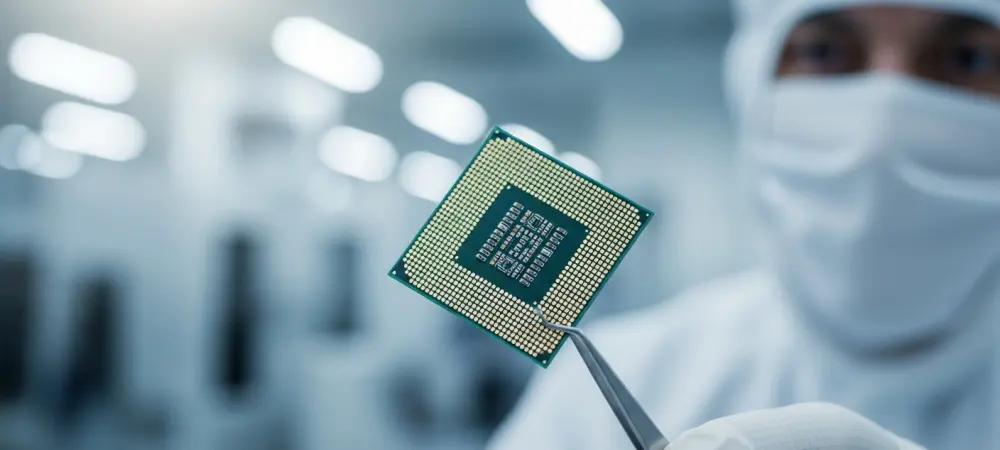
As the demand for agentic AI reaches a fever pitch, data centers are facing a critical bottleneck in both power consumption and physical space. Dominic Jainy, a seasoned expert in high-performance computing and semiconductor infrastructure, joins us to discuss how AMD is breaking these barriers with its upcoming 2nm Epyc Venice processors. We explore the architectural shift from FinFET to nanosheet technology, the massive leap to a 256-core ceiling, and the strategic implications of moving high-end chip production to domestic soil.
With the industry hitting the physical limits of traditional transistor designs, how does the shift from FinFETs to nanosheet gate-all-around transistors on TSMC’s N2 node fundamentally change what is possible for high-performance server chips?
The transition to nanosheet gate-all-around transistors is a watershed moment for the industry, effectively overcoming the leakage and scaling issues that have begun to plague FinFET designs at smaller geometries. By wrapping the gate around the channel on all sides, engineers gain much finer electrical control, which directly translates into the 10% to 15% performance boost or the substantial 25% to 30% reduction in power consumption reported for the N2 node. For data center operators, this isn’t just a technical curiosity; it is a vital relief that allows them to increase compute capacity without immediately blowing through their cooling and power budgets. Seeing a massive 256-core server die enter production on this node proves that the technology has matured enough to handle the most complex silicon ever designed.
AMD is pushing the boundaries of density with the Venice platform, targeting up to 256 cores. Beyond just the raw core count, what does the 70% overall performance improvement tell us about the maturity of the Zen 6 architecture?
A 70% generational leap in overall performance and efficiency is a staggering figure that suggests Zen 6 is a deep, holistic architectural overhaul rather than a simple refresh. By increasing thread density by more than 30%, AMD is enabling a 256-core, 512-thread monster that effectively lifts the previous core ceiling of 192 cores by a full third. This tells us that the Zen 6 design has successfully optimized the core and uncore interactions to ensure that such a high density doesn’t result in thermal throttling or data starvation. It’s an exciting time for cloud providers who can now pack significantly more virtual machines into the same rack footprint while enjoying better performance-per-watt than ever before.
Feeding a 256-core processor requires an immense amount of data throughput. How do the new SP7 socket and the introduction of PCIe 6.0 address the “data starvation” issues that often plague high-core-count systems?
The new SP7 socket is a powerhouse, exposing up to 16 memory channels to deliver an incredible 1.6 TB/s of aggregate memory bandwidth, ensuring those hundreds of cores are never left waiting for data. By doubling the CPU-to-GPU bandwidth through the inclusion of PCIe 6.0, AMD is also solving the connectivity bottleneck that often slows down complex AI training clusters. This focus on I/O is a game-changer for agentic workloads, where the speed at which a processor can communicate with external accelerators is just as important as its internal clock speed. It’s a sensory relief for system architects to see a platform that finally balances extreme core counts with a wide enough highway to keep them fully utilized.
The mention of “Verano” as an AI-focused spin on the Venice platform suggests a more specialized approach to server hardware. What role do you see these performance-per-dollar-per-watt optimized chips playing in the rise of agentic AI?
Verano represents a strategic shift toward specialized silicon, where the priority is maximizing efficiency for the specific, iterative nature of agentic AI workloads. By incorporating newer memory standards like LPDDR, this variant aims to drive higher bandwidth in dense AI racks where traditional memory might be too power-hungry or bulky. This tailored approach allows companies to deploy massive AI models with a much better return on investment, focusing on the specific “performance-per-dollar-per-watt” metric that keeps CFOs and engineers on the same page. It’s a pragmatic solution to the skyrocketing costs of AI infrastructure, offering a path to sustainable growth as these AI agents become more integrated into our daily digital lives.
The decision to eventually manufacture Venice at TSMC’s Arizona site adds a layer of geographic diversity to the supply chain. How significant is this move for the stability of the global high-performance computing market?
Producing a cutting-edge 2nm chip like Venice on American soil is a monumental milestone for supply chain resilience, especially given the geopolitical tensions surrounding semiconductor manufacturing. While consumer companies often claim the first waves of a new node, qualifying a high-performance compute part for the Arizona site signals that the domestic production lines are ready for the world’s most complex silicon. This move provides a sense of security for enterprises and government agencies who require a guaranteed, localized pipeline for the chips that power their most sensitive cloud and AI services. It’s a bold step toward a more diversified manufacturing map, ensuring that a single regional disruption cannot bring the global AI economy to a standstill.
What is your forecast for the future of 2nm-class server chips?
I expect that the 2nm era will be defined by the total normalization of hyper-dense, 256-core processors as the baseline for any competitive data center. Over the next few years, the 15% increase in transistor density will likely be used to integrate more specialized on-die accelerators, further blurring the line between general-purpose CPUs and dedicated AI hardware. As bandwidth standards like 1.6 TB/s become the new minimum, we will see a shift toward “system-in-a-package” designs that prioritize interconnect speed above all else. Ultimately, the success of the Venice and Verano lines will pave the way for a future where compute power is no longer the primary constraint, but rather how intelligently we can manage the massive data flows these 2nm chips enable.