

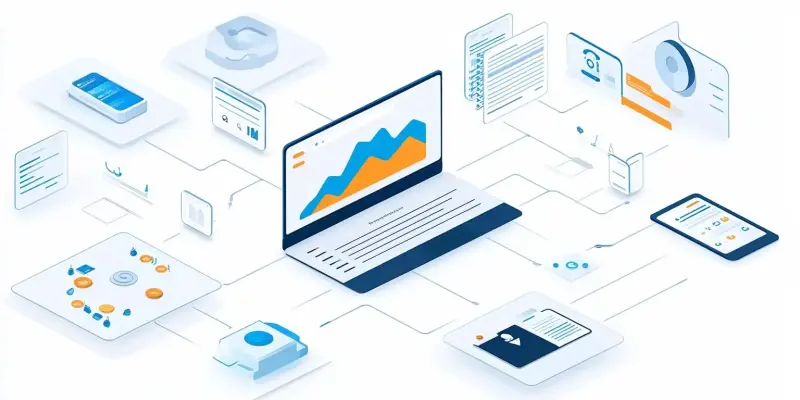
In 2024, ERP vendors made significant advancements by integrating AI, real-time data management, and other modern technologies into their platforms. These advancements transformed ERP systems into more intelligent and autonomous platforms, enhancing their capabilities well beyond traditional functions. ERP systems connect all facets of an organization, standardizing and automating processes aimed at improving operational efficiency. The focal point for 2024 was the introduction of AI-based functionalities that contributed to immense changes in ERP systems, improving the systems’ ability to centralize data management and offer comprehensive analysis across operations.
The Rise of Generative AI in ERP Systems
In 2024, generative AI enabled ERP systems to offer more sophisticated natural language interactions, automated content generation, and new analyses. This advancement allowed ERPs to transition from systems supporting human judgment to autonomous platforms capable of real-time decision-making. The integration of generative AI facilitated predictive analytics in areas such as production scheduling and supply chain optimization, transforming ERP systems into intelligent platforms that drive business processes and strategy autonomously.
AI agents emerged as a key development within ERP systems in 2024. These agents handle complete business tasks across different parts of an ERP system, representing a shift from simple automation to context-aware actions. The introduction of generative AI has also made ERP systems more intuitive, allowing for improved user interfaces that support natural language processing.
Generative AI’s ability to learn from vast amounts of data and generate contextually relevant information has significantly impacted decision-making. Business leaders can now rely on real-time insights and automated content reports generated by AI, reducing the time traditionally spent on data analysis. With these capabilities, ERP systems have evolved from mere transaction processors to strategic tools that offer actionable insights, streamline operations, and drive organizational growth.
Market Growth and Technological Enablers
Looking ahead into 2025, the ERP market is expected to grow significantly, expanding from $81.15 billion in 2024 to $238.79 billion by 2032, with a CAGR of 14.4%. This growth is driven by increasing business complexity, the need for global operational continuity, stricter regulatory requirements, and shifting customer expectations. AI, machine learning, and cloud technologies are enablers in this market, allowing ERP vendors to improve automation, scalability, and adaptability to meet market demands.
Several prominent ERP vendors made notable advancements in 2024. Oracle Cloud ERP introduced AI-powered tools for real-time financial planning, project management, and procurement optimization. SAP S/4HANA leveraged machine learning for demand forecasting and production scheduling, while the company’s RISE and GROW with SAP program facilitated unique approaches to cloud migrations. Microsoft Dynamics 365 ERP Finance and Supply Chain joined Microsoft’s Copilot ecosystem, an AI-powered natural language interface that simplifies workflows and improves user experiences across several key operational functions.
These advancements underscore the essential role of AI as a technological enabler. The ability to process massive datasets in real-time and provide actionable insights is transforming ERP systems from back-office tools to central elements of strategic planning. In this evolving landscape, cloud technologies ensure that ERP systems remain scalable, secure, and accessible from anywhere, accommodating the demands of increasingly globalized business environments.
Hyperautomation and User Experience
Hyperautomation, a combination of robotic process automation, AI, and machine learning, remains a key focus for ERP vendors such as Infor and Epicor in 2025. Infor integrated AI capabilities across its cloud-based ERP solutions to enhance demand planning and inventory optimization. Epicor introduced the Epicor Grow Portfolio, which includes AI features to improve insights and efficiency. The convergence of these technologies enables ERP systems to automate more complex tasks and adapt to changing business needs with greater agility.
User experience and accessibility continue to be priorities for vendors like Acumatica and Zoho. Acumatica introduced an AI-powered user interface allowing for personalized and simplified screen layouts. Zoho expanded its AI offerings across its product suite, including Zoho ERP, to improve process automation and data insights. These improvements in user experience make ERP systems more accessible to a broader range of users, enhancing their ability to derive value from the system.
The focus on hyperautomation is pivotal as it empowers organizations to achieve higher levels of operational efficiency. By automating repetitive and high-volume tasks, businesses can redirect resources to strategic initiatives, fostering innovation and growth. Meanwhile, improving user experience ensures that ERP systems remain user-friendly, encouraging wider adoption and better utilization across different organizational levels.
Sustainability and Real-Time Monitoring
In 2024, ERP vendors integrated new sustainability features due to growing pressure on enterprises to manage their carbon footprints. Enhanced data integration and analytical capabilities enabled real-time monitoring of energy usage, transportation, and production processes. These tools support greater sustainability planning and optimization, aligning operational activities with both business and environmental goals.
SAP, for instance, delivered its Sustainability Data Exchange, integrated into its cloud-enabled ERP, to standardize emissions accounting and data sharing. Other vendors, like Oracle and Infor, also introduced sustainability functions augmented with AI and advanced analytics to automate carbon footprint calculations and optimize resource efficiency. These features help organizations not only meet regulatory requirements but also contribute to broader global sustainability initiatives.
The inclusion of sustainability features in ERP systems reflects a growing recognition of the importance of corporate social responsibility. By providing tools for real-time environmental impact monitoring, ERP systems enable businesses to make data-driven decisions that enhance sustainability. This not only improves an organization’s reputation but also ensures long-term operational resilience by reducing resource consumption and waste.
Change Management and Data Integration
To address the challenges of change management and data integration in ERP systems, many vendors offer tailored support programs. Microsoft Dynamics 365’s FastTrack program, Oracle’s Customer Success program, and Infor’s Deployment Accelerator are designed to simplify adoption and mitigate risks. These programs provide structured guidance to ensure that businesses can smoothly transition to new ERP systems while minimizing disruptions.
The concepts of Industry 4.0 and Industry 5.0 continue to influence ERP evolution, aiming to create more personalized and sustainable production processes. Industry 4.0 focuses on automation and connected enterprises, driving efficiencies through technologies such as IoT and robotics. Industry 5.0, meanwhile, anticipates more collaborative efforts between humans and AI agents, leveraging both human creativity and machine precision. This represents a paradigm shift in how businesses approach production and operational efficiency.
Effective change management is crucial for the successful implementation of new ERP systems. By offering comprehensive support programs, ERP vendors help organizations navigate the complexities of integration, ensuring that new systems align with existing processes and business goals. This collaborative approach between vendors and businesses fosters a smoother adoption process and maximizes the benefits of advanced ERP technologies.
Future Trends and Human-AI Collaboration
In 2024, ERP vendors made substantial strides by merging AI, real-time data management, and cutting-edge technologies into their systems. These enhancements have evolved ERP platforms into highly intelligent and autonomous systems, significantly extending their functionalities beyond conventional roles. Traditionally, ERP systems have been the backbone of organizational operations, linking all departments and standardizing as well as automating processes to boost operational efficiency.
The key focus in 2024 was the rollout of AI-driven features that brought groundbreaking changes to ERP systems. These AI capabilities fortified the systems’ proficiency in centralizing data management, offering in-depth analyses, and automating complex workflows. By integrating real-time data management, ERP platforms now provide instant insights and facilitate rapid decision-making, which is crucial in today’s fast-paced business environment.
This transformation is not just about adding smarter features; it’s about creating a cohesive ecosystem within organizations where every facet—from finance and HR to supply chain and customer relationship management—operates more synergistically and efficiently. As ERP systems continue to evolve with advanced technologies, they are set to play an even more pivotal role in shaping the future of business operations.