

The Twin Revolutions: Navigating the Intersection of Digital Intelligence and Environmental Responsibility
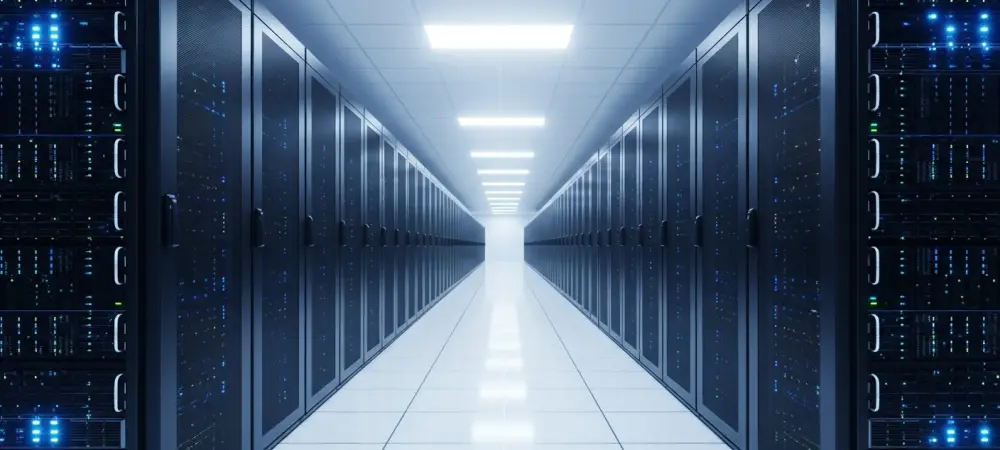
The data center industry stands at a pivotal crossroads, simultaneously driven by two powerful and seemingly contradictory forces: the insatiable computational appetite of artificial intelligence and the urgent global mandate for environmental sustainability. This dynamic is not merely an incremental shift but a fundamental reshaping of how digital infrastructure is designed, built, and operated. The industry’s future in 2026 and beyond is being defined by five interconnected trends: the symbiotic relationship between AI and energy demand, the dominance of hyperscale facilities, the pursuit of ambitious sustainability goals, the critical adoption of advanced liquid cooling, and the strategic expansion of edge computing. This article will explore how these forces are converging to create a new paradigm for data centers, one where unprecedented scale and efficiency must coexist with profound environmental responsibility.
The End of an ErWhy Traditional Data Center Models Are Becoming Obsolete
For decades, the growth of data centers was a story of linear expansion. As the digital economy boomed, the solution to rising demand was straightforward: build more facilities, add more servers, and consume more power. This model, while effective for a time, has reached its breaking point. The sheer scale of modern data requirements, supercharged by the proliferation of AI and the Internet of Things (IoT), has exposed the unsustainability of this approach. Traditional air-cooling methods are proving inadequate and inefficient against the heat generated by high-density servers, while the corresponding energy consumption places an immense strain on national power grids. The old paradigm of scaling without consequence is no longer economically or environmentally viable, creating an urgent need for the innovative technologies and strategic rethinking that are now redefining the industry.
The Evolving Blueprint: Core Trends Defining the Next Generation of Digital Infrastructure
The AI Energy Paradox: A Catalyst for Unprecedented Demand and Intelligent Management
The impact of artificial intelligence on data centers is a study in contrasts. On one hand, the rapid adoption of AI platforms and Large Language Models (LLMs) is the primary driver behind a monumental surge in energy consumption. The immense computational power required for AI workloads is pushing existing infrastructure to its limits. Projections from the Berkeley Lab’s “2024 United States Data Center Energy Usage Report” are stark, forecasting that data centers could account for between 6.7% and 12% of total U.S. electricity consumption by 2028, largely due to AI. This escalating demand makes the integration of renewable energy sources a critical necessity to avoid overwhelming the grid. On the other hand, AI is also emerging as a crucial tool for mitigating this impact. AI-powered monitoring systems are now widely used to provide real-time analytics on energy use, enabling operators to pinpoint inefficiencies and optimize operations. This intelligent automation not only reduces the facility’s carbon footprint but also frees human operators to focus on more strategic initiatives, such as long-term sustainability planning.
Scaling for the Future: The Rise of Hyperscale and the Push for Global Sustainability
To meet escalating demand, the industry is consolidating around hyperscale data centers—massive, ultra-efficient facilities operated by tech giants like AWS and Google. A single hyperscale campus can house over 5,000 servers and span hundreds of acres, dwarfing traditional centers. This trend is backed by immense capital, with leading tech firms projected to invest approximately $600 billion in their hyperscale infrastructure in 2026 alone, a 38% increase from 2025. This investment funds not just construction but also hardware upgrades and the development of more advanced AI. However, this growth is increasingly governed by stringent sustainability mandates. Driven by frameworks like the United Nations’ net-zero commitment plan, operators are aggressively adopting renewable energy. The Global Cooling Watch 2025 Report’s target to cut cooling-related emissions by 64% by 2050 is further accelerating the use of natural refrigerants and the strategic placement of data centers in colder climates. The industry is also embracing a circular economy, focusing on recycling and refurbishing hardware to recover valuable resources like gold and silver, thereby reducing e-waste and the environmental cost of new material extraction.
Engineering the Solution: From Advanced Cooling to Decentralized Architectures
The intense heat generated by next-generation AI chips has rendered traditional air cooling obsolete, forcing a pivot to more effective solutions. Liquid cooling has become essential, with two primary methods gaining prominence: direct-to-chip cooling, which applies a liquid-circulating plate directly onto the heat source, and immersion cooling, which submerges entire servers in a non-conductive dielectric fluid. To maximize the efficiency of these systems, operators are leveraging Data Center Infrastructure Management (DCIM) software and AI-enabled smart cooling. These AI systems use predictive analytics to anticipate thermal fluctuations and optimize cooling in real time, potentially improving energy efficiency by up to 40%. Concurrently, edge computing is experiencing strategic growth as a decentralized alternative to the centralized cloud. By processing data locally, close to its source, edge computing delivers lower latency and faster response times. This architecture also offers significant environmental benefits by reducing the energy required for long-distance data transmission and enabling more efficient operation of smaller, distributed facilities. Propelled by the needs of IoT and AI, the global edge computing market is projected to grow from $168 billion in 2025 to $249 billion by 2030.
A Glimpse Into Tomorrow: Emerging Innovations and Future Trajectories
Looking ahead, the fusion of AI and sustainability will continue to accelerate innovation within the data center industry. We can anticipate the rise of fully autonomous “lights-out” data centers, where AI systems manage nearly all operational tasks, from workload balancing to predictive maintenance, further optimizing efficiency and reducing human error. The integration with energy grids will also deepen, with data centers potentially acting as “virtual power plants” that can store and release renewable energy to help stabilize the grid during peak demand. The push for a circular economy will mature, leading to standardized, modular server designs that simplify repairs, upgrades, and recycling. Furthermore, as regulatory pressure mounts, we will likely see the development of standardized, transparent metrics for sustainability, allowing for clearer comparisons of the environmental performance of different facilities and operators. These future developments point toward a data center landscape that is not just more powerful, but also more intelligent, resilient, and symbiotic with its environment.
Charting the Course: Actionable Strategies for a Sustainable Digital Future
The transformation of the data center industry presents both challenges and opportunities. For industry leaders and operators, the path forward requires a multi-faceted strategy. First, prioritize the integration of AI-driven management tools to optimize energy consumption and operational efficiency in real time. Second, when planning new facilities or upgrading existing ones, commit to advanced liquid cooling solutions as a default for high-density racks, as this will be essential for managing the thermal output of future hardware. Third, actively pursue a circular economy model by establishing robust processes for refurbishing and recycling equipment, and by favoring suppliers who design for longevity and reparability. For businesses that rely on data services, it is crucial to evaluate cloud and colocation providers based not only on performance and cost but also on their documented sustainability commitments, including their use of renewable energy and their Power Usage Effectiveness (PUE) ratings. By making sustainability a key criterion in procurement decisions, enterprises can help drive the entire industry toward a more responsible future.
The New Imperative: Building the Backbone of a Smarter, Greener World
The convergence of artificial intelligence and sustainability has fundamentally redefined the purpose and practice of the data center industry. No longer simply warehouses for data, these facilities have evolved into highly intelligent, dynamically optimized ecosystems that form the critical backbone of our digital world. The core themes of efficiency, scale, and environmental stewardship became inextricably linked, creating a new imperative: to build infrastructure that could support the exponential growth of AI while actively contributing to a sustainable global future. The trends that reshaped the industry were not isolated developments but components of a holistic evolution toward a smarter, more responsible digital age. The ultimate measure of success was the industry’s ability to innovate not just for greater computational power, but for the collective well-being of the planet.