

The anticipated surge in global data center demand by 2025 paints a compelling picture of how technology and energy innovations will shape this critical industry. It is estimated that 10GW of data center capacity will commence globally by 2025, with 7GW scheduled for completion. This surge, driven mainly by advancements in Artificial Intelligence (AI), emphasizes the need for robust data center infrastructure, especially considering the increased power demands of evolving semiconductor technology. Future Graphics Processing Units (GPUs) are projected to consume up to 250kW per rack while the rise of liquid and immersion cooling solutions underscores the tech-intensive requirements fueling this expansion. Despite AI’s significance, it is anticipated to account for less than half of overall data center demand by 2030. Traditional needs such as data storage and cloud computing will continue to represent a substantial portion of demand. This combination of innovations highlights the intricate web of technological advancements and their direct impact on data center growth.
Powering the Future: AI’s Role in Data Centers
As AI technology evolves, it significantly enhances data center management through predictive maintenance applications, which contribute to extending equipment lifespan and reducing downtime. This becomes even more critical as developers strive to meet the massive power requirements of modern data centers while simultaneously improving energy efficiency. An essential challenge is that future GPUs, integral to AI computations, are predicted to consume considerable power of up to 250kW per rack, necessitating innovative cooling solutions such as liquid and immersion cooling. These solutions are not merely innovative but essential in sustaining the operational integrity of data centers while maintaining energy efficiency.
Furthermore, while AI’s influence is substantial, the traditional needs of data storage and cloud computing services continue to drive considerable demand in the data center market. AI accounts for only around half of this sector’s anticipated growth by 2030. Therefore, while AI garners much of the spotlight, operators must focus on a holistic approach that includes upgrading traditional infrastructure and services. This diversified demand ensures that data centers must cater to various technological needs, ranging from basic storage solutions to cutting-edge AI applications. As a result, the infrastructure must be adaptable, efficient, and capable of handling diverse operational demands.
Renewable Energy: Essential to Meeting Data Center Energy Needs
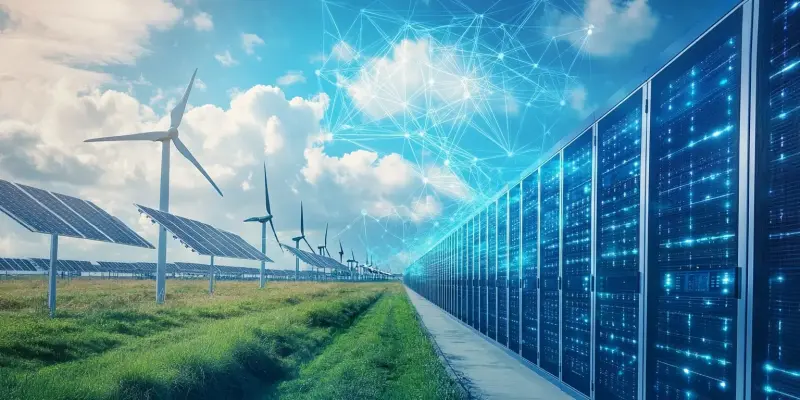
Due to the anticipated doubling of global data center energy demand in the next five years, developers are increasingly exploring alternative energy sources. The growing integration of renewable energy into data center operations aims to address the notable power consumption, which is projected to constitute around two percent of global electricity by 2025. Given the uneven global distribution of data centers, the challenge becomes even more pronounced in regions where these facilities make up a large share of total electricity consumption. To counteract this, adopting sustainable energy solutions becomes not just a strategy but a necessity for the future.
Nuclear power, particularly Small Modular Reactors (SMRs), emerges as a scalable and green energy solution, potentially revolutionizing the power sourcing for data centers. Several high-profile data center operators have already initiated significant SMR supply agreements. For instance, companies like Oklo have agreements with various undisclosed data center providers, while other firms such as Equinix, Prometheus, and Switch have entered agreements as well. Notably, Google has also engaged with Karios Power for SMR electricity, expected by 2030. However, despite these advancements in agreements, the commercial deployment of SMRs in the United States is not anticipated until 2030. This timeline illustrates the proactive steps being taken within the industry to ensure future power sustainability ahead of imminent energy demands.
Investors’ Continued Interest in Data Centers
The projected increase in worldwide data center demand by 2025 illustrates how technology and energy advancements will shape this essential industry. According to JLL, it’s estimated that 10GW of data center capacity will start globally by 2025, with 7GW slated for completion. This growth, largely propelled by breakthroughs in Artificial Intelligence (AI), highlights the necessity for strong data center infrastructure, given the higher power needs of advancing semiconductor technology. Future Graphics Processing Units (GPUs) are expected to require up to 250kW per rack, and the emergence of liquid and immersion cooling solutions underscores the technical demands driving this growth. Despite AI’s significant impact, it is predicted to make up less than half of the total data center demand by 2030. Traditional uses, including data storage and cloud computing, will still represent a large portion of demand. This blend of innovations emphasizes the intricate network of technological developments and their direct influence on the growth of data centers.