

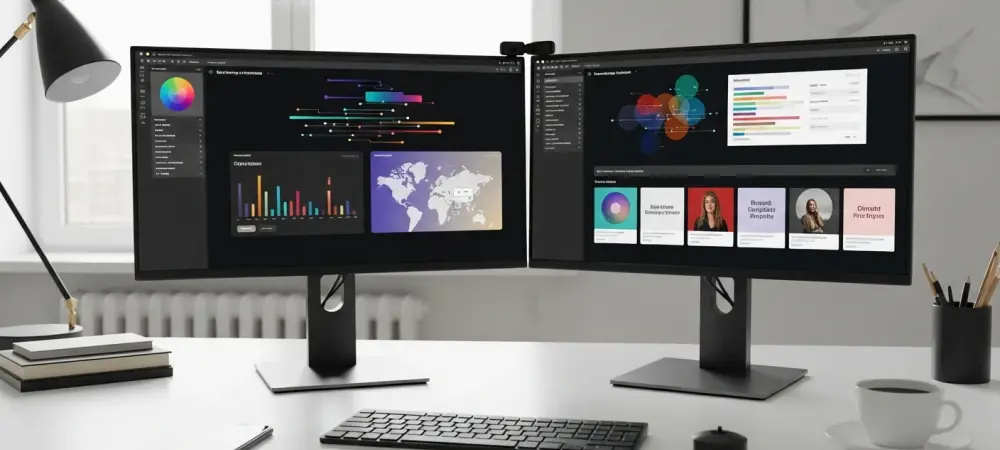
The contemporary creative professional often spends significantly more time navigating a fragmented digital landscape of disconnected software tabs than actually engaging in the high-level act of artistic innovation and strategic brand development. While a single artificial intelligence prompt can generate a visually arresting image in a matter of seconds, the grueling labor of transforming that single asset into a functional, multi-channel marketing campaign remains a manual marathon. Designers today find themselves acting as “human glue,” stuck in a relentless cycle of exporting files, resizing components for various social media platforms, and manually copying hex codes across siloed browser environments. This friction creates a pervasive coordination tax—a hidden cost of time and cognitive energy that drains the creative potential of even the most experienced professionals.
The emergence of agentic systems promises to dissolve this coordination tax by shifting the burden of technical execution away from the human user. By moving beyond simple prompts to autonomous streams of work, these advanced platforms are redefining the production pipeline. In this new landscape, the goal is no longer just to generate a piece of content, but to manage the entire workflow through to completion. As specialized AI agents take over the logistical drudge work, the primary challenge for creators is shifting from the mechanics of production to the clarity of strategic vision.
The Death of the “Creative Middleman” Mentality
The modern creative process currently finds itself trapped in a high-speed paradox where generative tools produce assets instantly, yet the broader infrastructure of production remains stubbornly manual. This disconnect forces talented individuals to dedicate their mental bandwidth to administrative minutiae rather than conceptual breakthroughs. When the technical labor of resizing, reformatting, and distributing assets takes up the majority of a workday, the creative spark is often extinguished by the sheer volume of procedural tasks. The industry is witnessing the slow collapse of the traditional middleman role, where human intervention was required at every minor junction of the design process.
As a result, the “creative middleman” mentality has become an unintentional standard that limits efficiency. Designers are no longer just artists; they act as the essential connective tissue between software applications that cannot communicate with one another. This “human-as-the-glue” model is increasingly unsustainable in an era where speed to market is a primary competitive advantage. By automating the hand-offs between different stages of a project, the focus shifts back to the original intent of the work, allowing the professional to reclaim the time previously lost to file management and technical troubleshooting.
Understanding the Coordination Tax in a Fragmented Market
The current creative software landscape is more crowded than ever, yet productivity is frequently stifled by the siloed nature of these specialized tools. Professionals often juggle a diverse array of platforms, such as Midjourney for visual generation, ChatGPT for copywriting, and various layout tools for final assembly. This paradox of abundance means that while individual tools are more powerful, the lack of integration creates a massive inefficiency where technical management outweighs actual creative thought.
Furthermore, the high cost of context switching results in a significant loss of creative momentum and an increased likelihood of technical errors. Moving between disparate applications forces the brain to reset its focus, which can lead to brand inconsistency and the erosion of fine details. The burden of data integration rests entirely on the user, who must ensure that the color palette from the AI generator matches the typography in the layout tool and the tone of the generated copy. This constant fragmentation is the primary driver of the coordination tax, making the production process feel like a series of isolated events rather than a cohesive professional stream.
Transitioning from Passive Prompts to Autonomous Agents
The solution to these systemic inefficiencies lies in a fundamental shift from AI that waits for instructions to agentic systems that anticipate the next step in the production chain. Unlike traditional generative AI that stops after a single task is completed, agentic systems are designed for continuity. These systems can execute complex sequences of related actions without constant human intervention, effectively bridging the gap between ideation and final output. This evolution represents a move away from the prompt-response loop toward a model where the AI understands the ultimate objective of the project.
Agentic AI streamlines the creative process by handling the procedural drudge work—such as formatting, file conversion, and versioning—that typically clogs the pipeline. By reducing the number of interaction points required to finish a project, these systems free the user to focus on the initial spark of an idea. Platforms like Supercool treat a project as a single, integrated flow rather than a collection of separate files. This integrated creative stream allows for a seamless transition from the first brainstorm to the final campaign assets, ensuring that the creative vision remains intact through every automated step.
Consolidation: The Strategy of the “Pocket Creative Suite”
As the market moves toward execution-oriented systems, the competitive advantage is shifting from feature-rich specialization to unified, all-in-one ecosystems. Integrated platforms act as a powerful force multiplier, allowing small business owners and solo creators to achieve production levels that previously required a full-service agency. This democratizing effect means that high-end production is no longer gated by the need for a large team of specialists. By centralizing design, video, and documentation within a single pocket-sized suite, the technical barriers to entry are effectively lowered for everyone.
The impact of workflow compression is best observed in real-world applications where multi-week cycles are reduced to single sessions. For instance, designing complex vehicle wraps or multi-channel branding campaigns often involves dozens of feedback loops and technical adjustments. In a consolidated agentic environment, these tasks are handled by AI agents that ensure brand consistency and technical accuracy across all formats simultaneously. This reclamation of the “strategy hour” allows users to redirect their energy away from creative logistics and toward high-level business growth and long-term brand vision.
The Future of Creative Labor: From Maker to Director
The role of the creative professional is undergoing a profound transformation as the technical barriers to execution continue to dissolve. In an era of nearly instantaneous production, the value of human intuition—specifically the ability to understand cultural nuance and audience emotion—becomes the ultimate differentiator. As the AI handles the pixels and the code, the human professional is elevated to the role of a director. This shift requires a new set of skills focused on editorial judgment and the ability to define a clear, compelling intent for the machine to execute.
Ultimately, the new constraint of creativity is no longer the ability to use complex software, but the clarity of the vision behind the work. The professional of tomorrow will function as a high-level curator, setting the standards and providing the final stamp of approval while the agentic systems manage the heavy lifting. With execution becoming a commodity, the challenge for creators moved from the mechanics of how to create to the strategic vision of what should be created. This evolution promised a future where human ingenuity was no longer buried under the weight of administrative tasks.
As the industry moved toward these autonomous systems, the primary focus for organizations became the integration of human intuition with machine efficiency. Leaders recognized that the removal of the coordination tax was not just a technical upgrade but a cultural shift that demanded more from their creative teams in terms of strategy and emotional resonance. The transition required a commitment to rethinking the entire production pipeline to prioritize final outcomes over individual tasks. Professionals who embraced this change found themselves empowered to lead projects with a level of agility that was previously impossible. The final objective was to ensure that technology served as a bridge to better ideas rather than a barrier to their realization. In the end, the successful implementation of agentic tools allowed the creative spirit to flourish by providing a clear path from a simple concept to a polished, professional reality.