

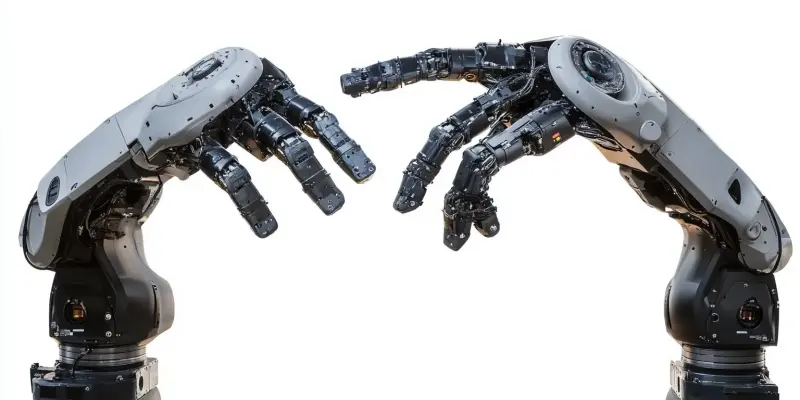
ABB Robotics recently revealed the winners of its 2024 AI Startup Challenge, T-Robotics and Mbodi, chosen from over 100 global applicants. This competition emphasizes ABB’s commitment to enhancing artificial intelligence solutions specifically in the realm of industrial robotics, aimed at refining how robots understand, learn, and adapt to intricate manufacturing settings. The initiative demonstrates ABB’s vision of integrating sophisticated AI technologies to streamline and revolutionize the manufacturing process.
Revolutionizing Industrial Robotics with AI
T-Robotics: A Leap Forward in Physical AI
Marc Segura, president of ABB Robotics, is an advocate for solutions that marry simplicity with cutting-edge AI capabilities, and T-Robotics is an exemplary showcase of this principle. T-Robotics has developed a pioneering physical AI model that enables users to program robots through natural conversation, drastically slashing programming time while retaining performance accuracy across various manufacturing scenarios. The founder, Asad Tirmizi, strongly believes in the transformative potential of intertwining robotics with physical AI, heralding a future where robots can serve as intelligent assistants to humans.
This innovative approach not only simplifies the programming process but also opens up new avenues for deploying robots in environments that were previously challenging due to programming complexities. The ability of robots to be programmed via natural conversation means that a wider range of individuals, even those without extensive technical backgrounds, can interact and instruct these machines efficiently. This empowerment significantly broadens the adoption of robotic automation, as it lowers the entry barrier for implementing such advanced technologies across different industries.
Mbodi: Real-Time Skill Acquisition
On the other hand, Mbodi’s AI platform brings a revolutionary change in the landscape of industrial robotics by facilitating real-time skill acquisition. This technology enables robots to learn and adapt to new tasks through natural language and demonstrations, making robotic automation significantly more accessible, especially in high-mix, low-volume production settings. CEO Sebastian Peralta underscores the critical role of ABB’s support in advancing such disruptive technologies, highlighting the importance of collaboration between large corporations and innovative startups.
Mbodi’s platform democratizes the implementation of robotic automation, allowing smaller factories and businesses to leverage AI-driven robots without needing extensive technical expertise. The capacity for robots to learn new tasks in real time through simple demonstrations ensures rapid adaptability and flexibility, which is crucial in today’s fast-paced manufacturing environment. The reduction in setup time and ease of use means that companies can quickly pivot their production lines to accommodate new products or changes in demand, enhancing overall productivity and efficiency.
Looking Towards A Future of AI-Driven Robotics
Investment and Collaboration for Market-Ready Solutions
As victors of the 2024 AI Startup Challenge, both T-Robotics and Mbodi are awarded $30,000 in project funding. They will also collaborate closely with ABB’s tech experts to refine and develop their technologies into market-ready solutions expected to launch in 2025. Additionally, the startups will benefit from a six-month membership in ABB’s startup accelerator, SynerLeap, providing them with invaluable resources and support to scale their operations.
Such initiatives underscore ABB’s strategic focus on fostering innovation through its Robotics & Automation Ventures initiative, which actively engages, collaborates with, and invests in pioneering early-stage companies. This approach ensures a continuous pipeline of groundbreaking technologies that can be integrated into ABB’s broader vision for the future of industrial automation.
Generative AI’s Role in Future Developments
By fostering innovations from startups, ABB aims to push the boundaries of what can be achieved with AI in robotics, creating more efficient, adaptable, and intelligent automation systems. This vision is essential as industries increasingly seek smarter solutions to improve productivity and reduce downtime. The recognition of T-Robotics and Mbodi reflects ABB’s strategy to leverage cutting-edge technologies to stay ahead in the competitive field of industrial automation and robotics, ensuring that the future of manufacturing is more intelligent and responsive.