

Introduction
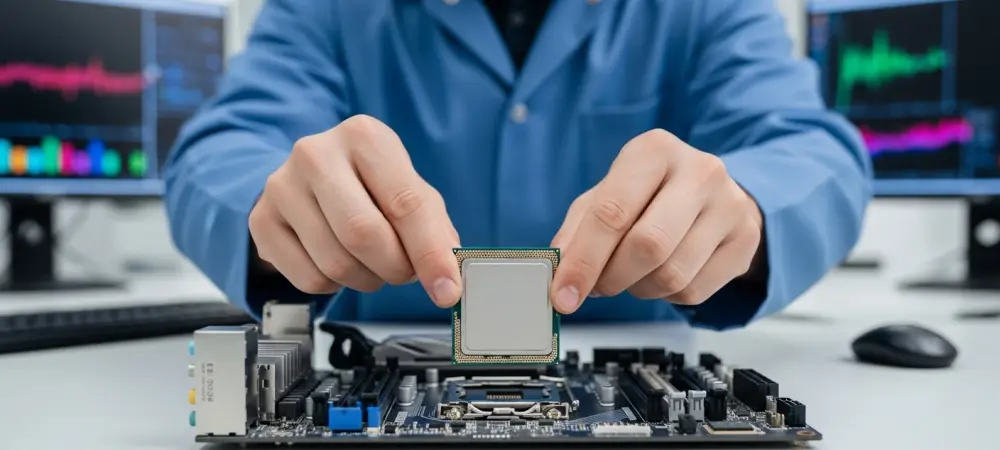
The modification of high-end silicon often remains the exclusive domain of corporate engineers, yet a recent breakthrough has proven that determined enthusiasts can still dismantle artificial barriers. This specific technical milestone involved the successful initialization of an Intel Core 9 273PQE processor on a consumer-grade Z790 motherboard. While the hardware physically fits the socket, the software environment was never intended to support such a union.
The objective of this exploration is to understand how firmware limitations were bypassed to run a chip from the Bartlett Lake family. This lineup is particularly interesting because it features a specialized architecture consisting of 12 Performance cores and 24 threads. Unlike mainstream chips, it entirely omits Efficiency cores, making it a highly sought-after variant for those who prioritize raw, uniform power over hybrid efficiency.
Key Topics: The Breakthrough and Its Implications
What makes the Bartlett Lake architecture distinct from standard hybrid chips?
Most modern Intel processors utilize a hybrid design that mixes Performance cores for heavy tasks and Efficiency cores for background management. Bartlett Lake deviates from this trend by offering a pure P-core configuration, which simplifies the resource allocation process within the operating system. This specific Core 9 273PQE model was originally designed for industrial and embedded applications where stability and predictable performance are paramount. The absence of E-cores eliminates the need for complex scheduling algorithms that sometimes struggle to balance loads across different core types. Enthusiasts view this 12-core/24-thread layout as a cleaner alternative to the flagship i9-14900K, which relies on a more fragmented architecture. Even though these chips use the LGA 1700 socket, Intel kept them separated from the consumer market through strict firmware lockdowns.
How did the enthusiast community overcome the firmware restrictions on consumer boards?
The primary challenge in booting these processors on Z790 boards is the lack of official microcode support in the motherboard BIOS. Without this support, the hardware fails the Power-On Self-Test process, frequently halting with a specific 5F error code. An enthusiast known as Kryptonfly managed to navigate this hurdle by implementing custom BIOS patches that altered how the motherboard identifies the incoming silicon.
These modifications essentially tricked the firmware into treating the Bartlett Lake chip as if it were a standard Raptor Lake CPU during the early initialization phases. By masking the unique identity of the processor, the system was able to proceed past the boot hurdles and successfully load the Windows environment. Evidence revealed the chip running at approximately 3,418 MHz, proving that the hardware limitations were purely artificial rather than physical.
Summary: Recap of Technical Achievements
The successful boot of Bartlett Lake on a Z790 platform highlights a significant achievement in hardware modding. This experiment demonstrates that consumer-grade motherboards possess the latent electrical and physical capabilities to host industrial-grade silicon. By bypassing BIOS restrictions, users gain access to a unique 12-core P-core configuration that remains officially unavailable. The project serves as a testament to the ingenuity of the PC community in expanding the lifespan and utility of the LGA 1700 socket.
Final Thoughts: Future Considerations
This breakthrough suggested that the enthusiast market remained eager for high-core-count designs that favored uniformity over hybrid complexity. While Intel maintained a strict separation between consumer and industrial lines, the community proved that these barriers were largely defined by software. This experiment encouraged a broader discussion about the potential for future custom firmware to unlock even more hidden features in existing hardware. It reminded everyone that the hardware owned by a consumer might have had untapped potential waiting for the right modification to emerge.