

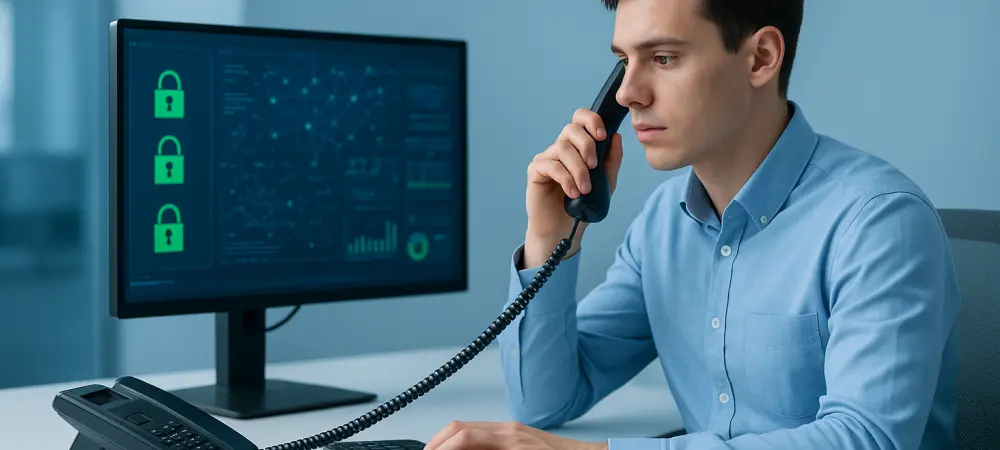
The absence of primary decision-makers often leads to a lowered scrutiny threshold, where a sense of artificial urgency discourages temporary staff from seeking verification. During holiday seasons, organizations experience a thinning of the workforce, creating systemic vulnerabilities that threat actors exploit. This period is characterized by a reliance on interim managers who may lack the deep institutional knowledge required to spot subtle anomalies in internal communications. Cybercriminals recognize that the usual barriers to unauthorized data access are lowered when personnel responsible for oversight are enjoying leave. This environment fosters a dangerous combination of operational fatigue and reduced vigilance, allowing malicious activities to bypass standard defense mechanisms. As a result, businesses must recognize that cybersecurity is a dynamic challenge that fluctuates with the calendar. Preparing for these predictable shifts in human behavior is essential for maintaining a secure and resilient digital infrastructure.
Managing Information Leakage and Impersonation
Automated out-of-office replies frequently provide intelligence to external observers, often inadvertently detailing internal reporting lines and project timelines. When an employee lists the exact dates of their absence alongside the contact details of a colleague covering their duties, they provide a blueprint for a targeted attack. Adversaries utilize these details to construct convincing narratives, contacting the substitute staff member while claiming to have been in the middle of a high-priority deal with the absent manager. These messages often arrive with a tone of familiarity that disarms the recipient, who might feel pressured to help a trusted client in their colleague’s stead. The specificity of information gathered from multiple auto-responses can allow a hacker to map the organizational chart, identifying the most vulnerable links in the chain of command. This intelligence gathering phase is a critical component of successful business email compromise schemes. Establishing a rigorous framework for secondary verification is essential for protecting a business when leadership is unavailable. Companies should define written protocols that designate specific backup authorities for financial transactions, ensuring these individuals have the proper training to recognize impersonation attempts. A robust pause policy mandates that any request involving a change in payment details or the distribution of confidential files must be verified through a second, independent communication channel, such as a phone call or secure internal messaging. This process effectively neutralizes the threat of a compromised email account, as the attacker cannot easily manipulate a real-time voice conversation. Moreover, organizations must empower their staff to prioritize security over speed, fostering a culture where asking questions and delaying a transaction for verification purposes is rewarded rather than penalized, even during the busiest work cycles.
Countering Artificial Intelligence Threats and Technical Vulnerabilities
The evolution of artificial intelligence has significantly elevated the sophistication of cyber threats, making it difficult for employees to distinguish between legitimate and fraudulent communications. Generative AI tools can now analyze a company’s public content to perfectly mimic the writing style and tone of a specific executive, creating phishing emails that lack the usual red flags. During the out-of-office period, these AI-generated messages can be timed to coincide with a manager’s departure, making the arrival of a special project request seem plausible. Beyond simple text, AI can also be used to create deepfake audio recordings that sound exactly like a known colleague, further complicating the verification process for junior staff. This technological leap means that traditional security awareness training must include strategies for identifying AI-driven manipulation, moving beyond simple visual checks toward a skepticism-based approach to all digital interactions.
Technological risks are further magnified when employees access corporate resources from unmanaged networks while traveling or working remotely. Public Wi-Fi connections in airports and hotels remain prime targets for man-in-the-middle attacks, where hackers intercept sensitive login credentials or proprietary data transmitted over insecure links. To address this, organizations must mandate the use of company-managed devices equipped with pre-configured virtual private networks and endpoint protection software. Multi-factor authentication serves as a critical layer of defense, ensuring that even if a password is stolen during a traveler’s transit, the attacker cannot gain access without a second form of verification. Furthermore, restricting the use of personal devices for business tasks reduces the likelihood of malware jumping from a personal application into the corporate ecosystem, maintaining a clean perimeter even when employees are hundreds of miles from the office environment.
Securing the Supply Chain and Strategic Frameworks
A company’s security posture is linked to the resilience of its external vendors, who are equally susceptible to staffing shortages during holiday periods. When a third-party IT provider has its primary security engineers out of the office, the response time for critical patch management or incident investigation can slow down significantly. This delay creates a window of opportunity for attackers to exploit known vulnerabilities before the vendor can deploy a fix. It is vital for businesses to understand the contingency plans of their critical partners, ensuring that service level agreements include provisions for continuous monitoring regardless of the time of year. Gaps in communication between a business and its suppliers during the summer months can lead to overlooked security alerts, making it imperative that both parties maintain updated contact lists for secondary personnel who can take immediate action when an emergency arises, ensuring continuity across the entire business ecosystem.
The implementation of a centralized oversight committee proved instrumental in bridging the gap between departing employees and those remaining on-site. By assigning specific accountability for third-party vendor logs and software patch management, organizations ensured that the digital infrastructure remained robust. These entities often integrated automated monitoring solutions that flagged unusual data exfiltration patterns, providing a safety net when human eyes were elsewhere. The transition to a zero-trust architecture further solidified these defenses, requiring identity verification for every access attempt regardless of the user’s location. This shift successfully minimized the attack surface and reduced the impact of stolen credentials. Ultimately, the proactive integration of these advanced security layers transformed the organization’s defense posture, making resilience a permanent feature of the business model rather than a temporary fix for seasonal shifts.