

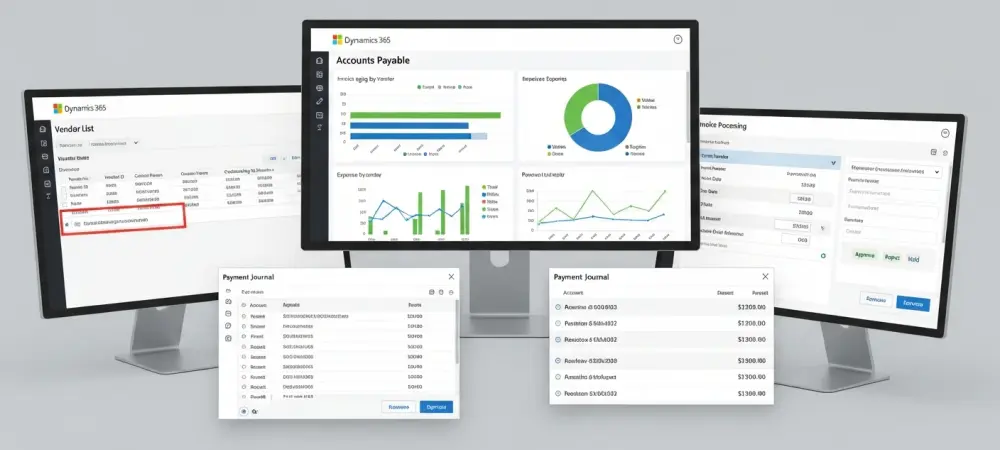
The global landscape of corporate finance is currently undergoing a radical transformation as organizations discard traditional, labor-intensive administrative models in favor of hyper-automated, intelligent systems that process thousands of transactions with minimal human oversight. This shift is particularly evident within the Microsoft Dynamics 365 Finance ecosystem, where the pressure to optimize working capital and maintain rigorous compliance has elevated accounts payable from a back-office function to a primary focus of digital strategy. In this market analysis, we evaluate how sophisticated automation methodologies are reshaping financial operations, providing enterprises with the agility required to navigate increasingly volatile global markets while reducing the operational friction inherent in manual bookkeeping.
Streamlining Enterprise Finance through Intelligent Automation
The modernization of financial operations within large-scale enterprises has moved beyond simple digitization toward sophisticated automation. For organizations utilizing Microsoft Dynamics 365 Finance and Supply Chain Management, the accounts payable function represents a critical frontier for efficiency gains. This analysis explores the complexities of accounts payable within these environments, evaluates the leading methodologies for automation, and synthesizes the overarching trends shaping the future of finance departments. By transitioning from manual workflows to automated systems, businesses can transform a traditionally labor-intensive cost center into a streamlined, data-driven strategic asset.
Modern finance leaders recognize that the sheer volume of data generated by global supply chains requires a more robust approach than traditional spreadsheets or basic accounting software. The integration of advanced algorithms allows for the real-time processing of invoices, which in turn facilitates a more accurate reflection of a company’s financial position at any given moment. Furthermore, the push toward automation is driven by a need for better resource allocation, allowing skilled finance professionals to move away from mundane data entry and toward high-value activities such as financial planning and analysis.
The Evolution of Accounts Payable and the Digital Imperative
Historically, accounts payable was a straightforward administrative task defined by paper trails and manual data entry. However, as companies scale in the current fiscal environment, they encounter multi-layered complexities including multi-entity management, diverse currency requirements, varying international tax laws, and intricate approval hierarchies. In this evolving landscape, manual entry has become more than just a bottleneck; it is now a source of significant financial risk and operational opacity. While Dynamics 365 provides a robust foundational Enterprise Resource Planning system, its native features may not always meet the high-velocity needs of global businesses, necessitating a shift toward specialized automation strategies that address these foundational shifts in the market.
The move toward digital sovereignty has made it clear that organizations cannot afford to ignore the inefficiencies of legacy processes. With the rise of global commerce, the ability to manage transactions across different jurisdictions with varying regulatory requirements has become a competitive necessity. Consequently, the adoption of automated accounts payable systems is no longer a luxury but a fundamental component of a modern digital infrastructure. This evolution highlights a broader trend where every administrative function is being re-evaluated through the lens of technological efficiency and long-term scalability.
Strategic Approaches to AP Automation in Dynamics 365
Specialized Third-Party Integration: AI-Driven Capture
A critical aspect of modernizing accounts payable is the integration of specialized tools that utilize artificial intelligence and machine learning to handle invoice capture. Modern solutions prioritize user-centric design, offering “zero-code” configurations that allow the software to adapt to specific business rules without heavy intervention from IT departments. By combining optical character recognition with machine learning, these systems structure raw invoice data into actionable information. For organizations operating in high-volume shared services environments, this level of automation reduces the training burden on staff and increases processing speed through standardized, intuitive workflows that handle both header- and line-item level data.
The market for these specialized tools has expanded rapidly as businesses seek to minimize the margin for error. By leveraging sophisticated neural networks, these capture engines can learn to recognize different invoice formats from thousands of global vendors, significantly reducing the need for manual corrections. This proactive approach to data management ensures that the information flowing into the ERP system is accurate from the start, which is essential for maintaining the integrity of financial reporting across the entire organization.
The Native-Embedded Advantage: Data Integrity
Another essential angle involves the use of “native” automation solutions, which are built directly inside the Dynamics 365 environment. This approach is significant because it eliminates the need for external middleware or separate data silos, ensuring higher data integrity and avoiding synchronization issues. Operating within the ERP allows for advanced three-way matching and AI-assisted coding within a unified work queue. This provides a “single pane of glass” for all accounts payable activities, which is particularly effective for teams managing multiple legal entities who require a seamless connection between their automation tools and their core financial records.
By maintaining all data within the Microsoft ecosystem, enterprises can also benefit from enhanced security protocols and simplified compliance auditing. Since the automation logic resides within the ERP itself, there is no risk of data loss during transmission between disparate systems. This architecture also simplifies the upgrade process, as the automation tools are designed to evolve in tandem with the core Dynamics 365 platform, ensuring that the finance department is always operating with the most current technology available.
Maximizing Built-In ERP Functionality: Customization
Beyond external add-ons, many organizations find success by maximizing the existing native features within Dynamics 365 Finance. This methodology appeals to businesses seeking a lower-friction path to automation without introducing new software vendors. By focusing on native purchase order invoice handling—such as entering invoices before receipts are posted and utilizing built-in optical character recognition that learns layouts—companies can achieve significant productivity gains. This approach addresses common misconceptions that automation always requires third-party software, demonstrating that significant multi-entity routing and productivity improvements are possible using the Microsoft stack alone, provided the organization’s needs align with the system’s core capabilities.
Leveraging the native stack allows for a more cohesive user experience, as staff members do not need to learn a new interface or manage multiple sets of login credentials. For smaller or less complex organizations, this route provides a cost-effective way to achieve meaningful automation without the overhead of additional licensing fees. It highlights a pragmatic approach to digital transformation, where existing investments are fully utilized before seeking external solutions, ensuring a higher return on the initial ERP investment.
Future Trends: The Shift Toward Predictive Finance
Emerging trends suggest that accounts payable automation is moving toward a model where visibility and control are prioritized over mere processing speed. Artificial intelligence is evolving from a data-capture tool into a predictive engine capable of identifying cash flow trends and potential compliance risks before they manifest. We are likely to see an increase in “payments-as-a-service” integrations, bridging the gap between invoice approval and actual fund disbursement. As regulatory requirements for digital invoicing increase globally, Dynamics 365 users can expect tighter integration between tax compliance engines and automated workflows, making real-time liability reporting a standard expectation rather than a luxury.
The next generation of financial tools will focus on prescriptive analytics, offering suggestions on when to pay certain invoices to maximize early payment discounts or manage cash reserves more effectively. This shift toward strategic intelligence means that the accounts payable department will play a more central role in corporate strategy. By providing real-time insights into supplier performance and spending patterns, these automated systems will enable organizations to negotiate better terms and build more resilient supply chains in an unpredictable global economy.
Implementation Best Practices: Strategic Recommendations
To successfully automate accounts payable, businesses should first conduct a nuanced evaluation of their specific invoice mix and long-term strategy. Organizations with a high volume of purchase order-based invoices may find native Dynamics 365 features sufficient, while those with complex, non-purchase order spending should consider AI-driven external platforms. A key strategy is to prioritize solutions that offer robust “exception handling,” allowing the system to manage invoices that do not match purchase orders without manual intervention. Professionals should look for opportunities to observe these tools in side-by-side demo environments to ensure the chosen technology can handle real-world scenarios like multi-entity routing and complex approval hierarchies effectively.
Furthermore, the implementation process must involve cross-departmental collaboration to ensure that the automation workflow aligns with the needs of procurement, treasury, and IT. Setting clear benchmarks for success, such as a reduction in cost-per-invoice or an increase in touchless processing rates, will help justify the investment and guide continuous improvement efforts. It is also vital to provide comprehensive training for the staff who will interact with these systems daily, ensuring that they understand how to manage the exceptions and insights generated by the new technology.
Conclusion: Transforming AP into a Strategic Asset
The transition to automated accounts payable within the Dynamics 365 ecosystem proved to be a decisive factor for organizations seeking to maintain a competitive edge. Finance leaders who prioritized these integrations successfully mitigated the risks associated with manual data silos and decentralized processing. This technological shift highlighted the importance of data transparency as a prerequisite for more advanced treasury management and forecasting. Moving forward, the focus moved toward refining these automated pipelines to support environmental, social, and governance reporting, ensuring that every transaction aligned with broader corporate responsibility goals. This evolution established a foundation for a completely autonomous finance office where human expertise focused exclusively on high-level strategic growth. Ultimately, the adoption of these tools secured a company’s ability to scale efficiently while maintaining the rigorous oversight required by modern global finance standards.