

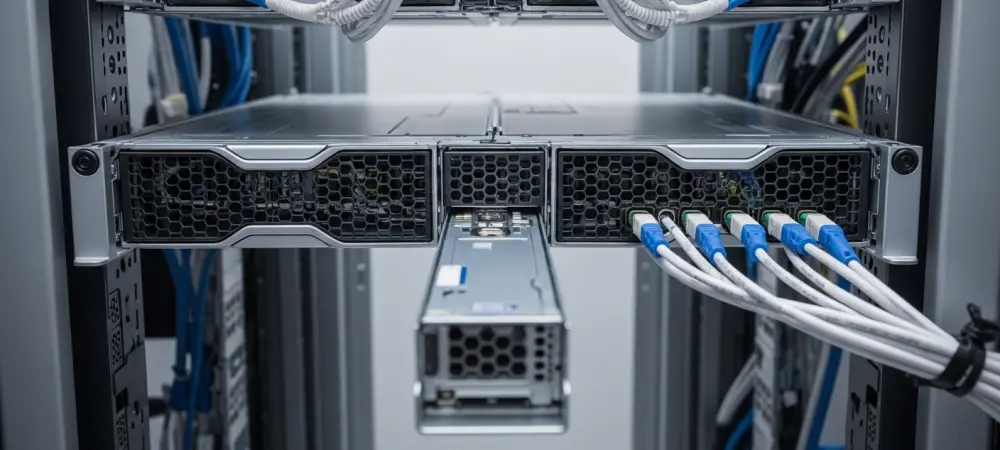
The ongoing integration of sophisticated cloud-based infrastructure into the core of modern enterprise operations has created a landscape where the vast majority of critical data now exists within highly complex, shared digital environments. In this environment, often referred to as a multi-tenant architecture, several independent users or organizations utilize a common pool of physical hardware while remaining logically separated from one another. This model has become the backbone of the global digital economy because it offers unprecedented scalability and cost-efficiency that traditional localized data centers simply cannot match. However, the shift from owning physical servers to renting space in a shared cloud environment brings about a fundamental question regarding the safety and isolation of proprietary information. Businesses are essentially trusting that the digital walls built by their cloud providers are just as impenetrable as the steel and concrete barriers of a private facility. The reliance on sophisticated software layers to maintain privacy across a shared substrate remains a central concern for IT leaders navigating this complex landscape.
Shifting Paradigms: From Physical Air Gaps to Logical Virtualization
The transition from traditional on-premises environments to the cloud necessitated a complete rethinking of how data separation is achieved in a high-density computing scenario. Historically, security was synonymous with physical “air gaps,” where separate servers were physically disconnected from one another to prevent any unauthorized cross-talk or data leakage. In the contemporary multi-tenant cloud, this physical separation has been replaced by logical isolation, which relies on complex software known as a hypervisor to manage resource allocation. This software creates a virtual machine for each tenant, ensuring that even though two competing companies might have their data processed by the same physical central processing unit, their operating systems remain completely unaware of each other’s existence. This abstraction layer is the primary defense mechanism that allows providers to maximize hardware utility while maintaining a facade of private ownership for each customer.
Despite the impressive efficiency of logical isolation, the shared nature of the hardware introduces a unique category of risks known as cross-contamination or side-channel attacks. If a vulnerability exists within the hypervisor or the orchestration layer, a malicious tenant might theoretically find a way to “escape” their virtual sandbox and gain access to the underlying host memory. This could allow an attacker to observe the activities of other tenants or even exfiltrate sensitive cryptographic keys that are being processed by shared hardware resources. Furthermore, the “noisy neighbor” effect represents a different kind of risk where one tenant’s excessive resource consumption might degrade the performance and availability of services for others on the same host. To combat these issues, providers have implemented rigorous hardware-level isolation features and real-time monitoring to detect anomalous behavior that suggests a breach of the virtual boundaries.
Defining Boundaries: The Realities of the Shared Responsibility Model
Navigating the security landscape of a multi-tenant cloud requires a deep and practical understanding of the Shared Responsibility Model, which serves as the legal and technical blueprint for protection. Under this framework, the cloud service provider is exclusively responsible for the “security of the cloud,” which encompasses the physical protection of data centers and the integrity of the underlying hardware. This includes everything from the biometric locks on server cages to the patching of the firmware that runs the virtualization platform. By offloading these massive infrastructure burdens to a specialized provider, organizations can focus their internal resources on higher-level strategic goals. However, the provider’s diligence at the physical level does not exempt the tenant from maintaining their own security protocols. If the foundation is secure but the house is left unlocked, the data remains at significant risk from external threats or internal negligence within the client’s own virtual space. Conversely, the customer bears the full burden of “security in the cloud,” which involves protecting the actual data, applications, and access points that reside within the rented infrastructure. This distinction is where many organizations falter, often assuming that a provider’s compliance certifications automatically translate to the security of the customer’s specific workloads. In reality, a tenant is responsible for managing identity and access controls, ensuring that only authorized personnel can view or modify sensitive records. They must also manage the encryption of their data and the configuration of virtual firewalls to prevent unauthorized network traffic. A single misconfigured storage bucket or an overly permissive user account can lead to a catastrophic data breach, even if the cloud provider’s underlying systems are perfectly secure. Therefore, the security posture of an organization in a multi-tenant environment is only as strong as its ability to fulfill its specific obligations.
Advanced Safeguards: Encryption and Micro-segmentation Strategies
To maintain effective isolation, modern cloud architectures employ a multi-layered defense strategy that goes beyond simple virtualization to include granular control over every aspect of the environment. Compute isolation is the cornerstone of this approach, utilizing hardware-assisted virtualization to ensure that memory and processing power are strictly partitioned among different tenants. This ensures that a process running in one tenant’s virtual machine cannot read or write to the memory space allocated to another, preventing most forms of direct data theft at the hardware level. Furthermore, network segmentation via virtual private clouds allows organizations to create isolated network islands that are completely invisible to other users sharing the same provider infrastructure. By using virtual firewalls and security groups, businesses can enforce a zero-trust model where every packet of data must be authenticated and authorized before it is allowed to travel between different parts of the cloud network. Beyond basic isolation, the emergence of confidential computing has added a critical layer of protection by enabling the encryption of data while it is actively being processed in memory. Traditionally, data was only encrypted while at rest on a disk or in transit across a network, leaving it vulnerable to memory-scraping attacks during execution. With the widespread adoption of trusted execution environments, such as those found in current hardware architectures, tenants can process sensitive workloads in a hardware-secured enclave that is inaccessible even to the cloud provider’s own administrators. This technology ensures that the most sensitive computations, such as financial transactions or medical data processing, remain private in a multi-tenant setting. When combined with advanced identity management systems that strictly govern who can interact with these enclaves, the level of data privacy achieved in the cloud can actually exceed what was possible in many traditional private data centers.
Strategic Oversight: Mitigating Human Error and Configuration Risks
While the architectural integrity of the cloud is robust, security professionals consistently highlight that the most significant vulnerability in any multi-tenant environment remains the potential for human error. Misconfigurations, such as failing to rotate access keys or leaving administrative ports open to the public internet, account for the vast majority of cloud-related security incidents observed today. Because the responsibility for data privacy is shared rather than fully outsourced, organizations must act as proactive stewards of their own digital assets through rigorous governance and automated oversight. This involves implementing cloud security posture management tools that continuously scan for deviations from best practices and automatically remediate high-risk settings. Relying on manual checks is no longer sufficient in a world where cloud environments are constantly changing and scaling. Maintaining a secure presence requires a cultural shift toward automation and the principle of least privilege.
In the final analysis, successful organizations recognized that data security in a shared environment was not a static goal but a continuous process of verification and adaptation. They moved away from a passive reliance on provider promises and instead implemented a robust framework of internal audits and automated policy enforcement. It became evident that combining hardware-level isolation with pervasive encryption and disciplined access management provided the only reliable path toward protecting sensitive information. They prioritized the use of advanced monitoring systems to track every interaction within their virtual networks, ensuring that any anomaly was addressed before it could escalate into a major breach. By embracing a proactive stance, they transformed the inherent risks of multi-tenancy into a strategic advantage, leveraging the scale of the cloud without sacrificing the privacy of their data. The path forward required a firm commitment to the technical and operational rigors of a shared digital world.