

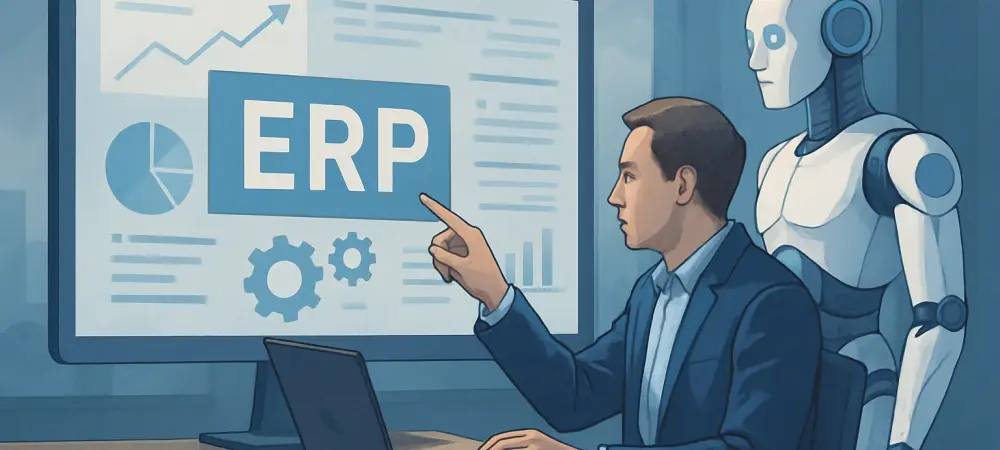
In a rapidly evolving enterprise software landscape, where automation and intelligent decision-making are becoming paramount, one company is making bold strides to reshape the very foundation of enterprise resource planning (ERP). Workday, a leading provider of cloud-based HR and financial applications, has unveiled a transformative vision that goes beyond traditional software boundaries. At a recent conference in Barcelona, the company announced its pivot toward becoming an agentic AI platform, a move that could disrupt a market long dominated by legacy giants. This strategic shift signals a departure from conventional ERP systems, focusing instead on creating adaptive, autonomous solutions that empower businesses to manage people, money, and workflows with unprecedented efficiency. As industries grapple with complex regulatory demands and the need for real-time insights, Workday’s approach offers a glimpse into a future where technology acts not just as a tool, but as an intelligent partner in driving organizational success.
Unveiling a New Vision for Enterprise Software
Pioneering an AI-Driven Paradigm
Workday’s leadership has articulated a clear ambition to transform into an enterprise AI platform, redefining how businesses interact with their core systems. During the keynote address at the Barcelona event, CEO Carl Eschenbach described this vision as creating a “front door to work,” a concept that extends far beyond the company’s historical focus on HR and finance solutions. This shift is powered by agentic AI—systems designed to act autonomously on behalf of users, streamlining processes and enhancing decision-making. A key enabler of this transformation is the acquisition of Sana, a Sweden-based firm specializing in AI-driven knowledge management. By integrating Sana’s capabilities, Workday is expanding its platform to deliver intelligent workflows that anticipate user needs, marking a significant evolution from static software to dynamic, proactive solutions that could challenge the status quo of traditional ERP frameworks.
Expanding Capabilities with Strategic Innovations
Complementing this AI-driven approach, Workday has introduced a suite of innovative tools aimed at addressing diverse business challenges. Among these is Workday GO, a solution tailored for mid-size companies to manage global teams through a unified AI platform, simplifying complex operations across borders. Additionally, the Pay Transparency Analyzer, developed in collaboration with Kainos, tackles regulatory compliance issues such as the EU Pay Transparency Directive while promoting equitable compensation practices. These advancements reflect a commitment to not only technological progress but also social responsibility, ensuring that businesses can navigate intricate legal landscapes with ease. By embedding such tools within its ecosystem, Workday positions itself as a versatile partner capable of meeting both operational and ethical demands, setting a new benchmark for what enterprise software can achieve in an era of heightened scrutiny and accountability.
Building a Future-Ready Ecosystem
Empowering Users through Accessible Development
A cornerstone of Workday’s strategy lies in democratizing innovation through accessible tools that enable customization and scalability. The introduction of Workday Build, a developer network featuring the Flowise Agent Builder, allows users to create custom AI agents using low-code platforms, reducing the barrier to entry for tailored solutions. This initiative empowers organizations of varying technical expertise to harness AI for specific needs, fostering a culture of creativity and adaptability. Partnerships with tech leaders like Google BigQuery, alongside existing collaborators such as Snowflake and Databricks, further enhance this ecosystem by enabling seamless integration of HR and finance data with advanced analytics. Such collaborations ensure that businesses can leverage a “zero-copy” data cloud, minimizing redundancy and maximizing efficiency in data handling, which is crucial for real-time decision-making in competitive markets.
Strengthening Regional Presence and Compliance
Beyond technological advancements, Workday is making significant investments to address regional needs and regulatory concerns, particularly in the European market. The launch of the Workday EU Sovereign Cloud, hosted on AWS infrastructure, guarantees data residency within EU borders, aligning with stringent privacy laws and building trust among regional customers. This move is accompanied by a broader global expansion, including a substantial AI Centre of Excellence in Dublin and new offices in strategic locations like Dubai. With over 4,250 employees across 19 countries in the EMEA region, the company is also bolstering its sales and marketing efforts in areas like Central and Eastern Europe. These localized initiatives demonstrate a nuanced understanding of diverse market dynamics, ensuring that AI-driven solutions are not only cutting-edge but also culturally and legally relevant to the regions they serve, thereby reinforcing Workday’s role as a trusted partner in global enterprise transformation.
Reflecting on a Transformative Journey
Lessons from a Bold Strategic Shift
Looking back, Workday’s journey at the Barcelona conference showcased a pivotal moment in the evolution of enterprise software, as the company transitioned from a niche HR and finance provider to a comprehensive AI platform. The emphasis on agentic AI marked a departure from rigid ERP systems, offering instead a vision of adaptive, intelligent technology that autonomously supported business operations. Announcements like Workday GO and the Pay Transparency Analyzer highlighted a dual focus on innovation and regulatory alignment, addressing immediate customer needs while laying the groundwork for long-term industry change. This strategic pivot, supported by acquisitions like Sana and partnerships with tech giants, underscored a commitment to redefining workplace automation in a way that prioritized user empowerment over direct competition with legacy players.
Charting the Path Ahead with Innovation
As the dust settled on these groundbreaking revelations, the next steps for businesses and industry watchers became clear: embracing agentic AI could be the key to staying competitive in a fast-changing landscape. Companies might consider exploring tools like Workday Build to tailor solutions to their unique challenges, while keeping an eye on how regional investments, such as the EU Sovereign Cloud, could safeguard data integrity. The future of ERP appears poised to hinge on flexibility and intelligence, with platforms like Workday’s leading the charge in creating ecosystems that anticipate rather than react to business needs. Stakeholders are encouraged to monitor how these AI-driven advancements unfold, potentially reshaping operational strategies and setting new standards for what enterprise software can accomplish in fostering growth and resilience across global markets.