

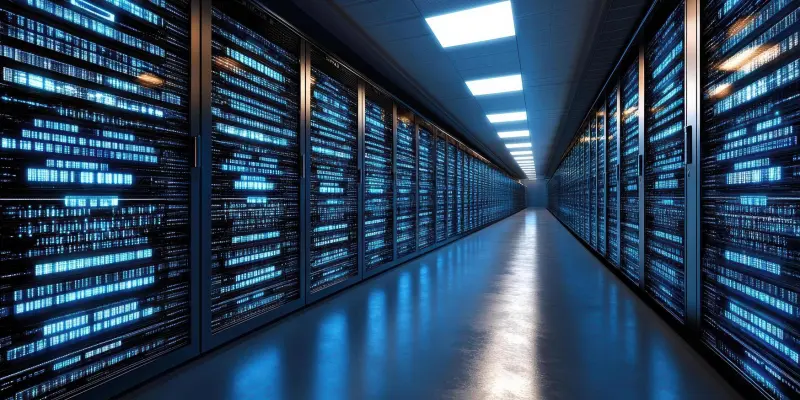
As data centers become increasingly integral to modern technology infrastructure, the demand for innovation has never been higher. Vertiv, a leading provider of critical digital infrastructure and continuity solutions, has stepped up to this challenge with impressive advancements. They recently unveiled two significant innovations aimed at optimizing data center operations: the PowerDirect Rack high-density power shelf and the Liebert EFC free cooling unit. These products are designed to address the escalating demands of artificial intelligence (AI) and high-performance computing (HPC) environments, ensuring efficient and sustainable practices.
PowerDirect Rack: Enhancing Power Efficiency
Meeting Demands for AI and HPC
The PowerDirect Rack is a groundbreaking addition to Vertiv’s portfolio, specifically designed to meet high-density power needs in AI and HPC environments. This 1U-height 50V DC power shelf demonstrates remarkable scalability, capable of supporting up to 132kW per rack. This scalability is achieved by integrating multiple shelves within a single rack, which minimizes the required space while offering the resilience necessary for demanding applications. It is particularly well-suited to the Open Compute Project (OCP) ORv3 High Power Rack setups, which are known for their rigorous performance standards. Vertiv’s global availability of the PowerDirect Rack signifies its versatility, supporting both AC and HVDC inputs. This flexibility is a crucial feature, enabling seamless integration into various data center configurations worldwide. Kyle Keeper from Vertiv emphasized that the product effectively addresses the growing need for efficient power delivery in increasingly power-dense data centers. By doing so, it helps operators meet the demanding requirements of modern applications while maintaining operational efficiency.
Benefits and Features
One of the standout features of the PowerDirect Rack is its ability to reduce power consumption and enhance operational efficiency. By integrating multiple shelves, it optimizes space utilization, which is a critical consideration for data centers dealing with space constraints. Moreover, the system’s high power density ensures reliable performance even in the most demanding scenarios, providing a robust solution for AI and HPC applications. The PowerDirect Rack’s design also focuses on resilience, making it suitable for environments that require continuous uptime. Its advanced thermal management capabilities prevent overheating, ensuring stable operation. This resilience is complemented by Vertiv’s commitment to sustainability; the power shelf’s efficient use of energy aligns with global efforts to reduce environmental impact. These factors collectively underscore the PowerDirect Rack as a significant innovation in data center power management.
Liebert EFC: Advancing Sustainability
Utilizing Low-GWP Refrigerant
In the realm of thermal management, Vertiv has introduced the Liebert EFC free cooling unit. This state-of-the-art cooling solution incorporates a low-Global Warming Potential (GWP) refrigerant, which represents a significant stride toward sustainability. The unit’s design aligns with stringent environmental regulations, including the EU F-Gas regulation 2024/573 and the Intergovernmental Panel on Climate Change (IPCC) Assessment Report 4. Available across Europe, the Middle East, and Africa, it offers capacities ranging from 150 to 450kW. The Liebert EFC combines indirect air-to-air heat exchange and evaporative cooling, leading to a remarkable improvement in efficiency—up to 19% over previous technologies. This design enables a partial Power Usage Effectiveness (pPUE) as low as 1.05, indicating substantial energy savings. The unit’s deployment helps data centers comply with emerging environmental standards while optimizing cooling performance. Sam Bainborough from Vertiv highlighted the system’s operational flexibility and resilience, furthering sustainability goals by maximizing the use of natural cooling methods.
Operational Excellence
The integration of the Liebert EFC into data center operations demonstrates Vertiv’s commitment to achieving operational excellence alongside environmental responsibility. Indirect air-to-air heat exchange, combined with evaporative cooling, not only enhances energy efficiency but also ensures reliable performance under varying environmental conditions. This dual approach allows for effective temperature management without compromising on sustainability. The unit’s advanced controls offer exceptional flexibility, allowing operators to tailor cooling strategies to specific requirements. This adaptability is crucial for data centers operating in diverse climates and environments. By leveraging natural cooling methods, the Liebert EFC reduces dependency on traditional refrigerants, thereby lowering greenhouse gas emissions. Vertiv’s focus on this aspect of thermal management illustrates their proactive stance towards creating greener, more efficient data center solutions.
Unified Control with Vertiv Unify
Streamlining Management
Further solidifying Vertiv’s innovative approach, the company introduced Vertiv Unify, a comprehensive control platform designed to enhance visibility, management, and reporting of critical power and thermal infrastructure. Vertiv Unify represents an integrated solution addressing modern data center challenges, providing operators with a unified dashboard to monitor and control various components seamlessly.
This platform simplifies comprehensive management tasks, enabling real-time monitoring and adjustments to optimize operations. Data center managers can oversee power distribution, cooling systems, and other critical infrastructure from a single interface. Such centralization not only improves operational efficiency but also aids in rapid response to any issues, thereby enhancing overall resilience. Vertiv Unify streamlines workflows, ensuring that data centers run smoothly and efficiently.
Ensuring Comprehensive Oversight
Vertiv Unify’s robust reporting capabilities empower data center operators with actionable insights, facilitating informed decision-making. Operators can leverage historical data and real-time analytics to enhance operational strategies, mitigate risks, and predict future needs. This level of oversight is essential for maintaining peak performance and ensuring continuity in environments where uptime is paramount.
Moreover, Vertiv Unify supports strategic planning by providing detailed visibility into infrastructure health. This oversight allows for proactive maintenance and upgrades, preventing potential disruptions. The platform’s ability to integrate with existing systems and technologies further enhances its value, offering a seamless transition for data centers looking to modernize their operations. Vertiv’s dedication to innovation in control and management platforms highlights their commitment to addressing diverse data center needs comprehensively.
Future Implications and Takeaways
As data centers become increasingly central to modern technology infrastructure, the need for innovation continues to surge. Vertiv, a leading provider of critical digital infrastructure and continuity solutions, has responded to this demand with remarkable advancements. They have recently introduced two groundbreaking products designed to enhance data center operations: the PowerDirect Rack high-density power shelf and the Liebert EFC free cooling unit. These innovative solutions are tailored to meet the growing requirements of artificial intelligence (AI) and high-performance computing (HPC) environments. The PowerDirect Rack high-density power shelf optimizes power distribution, ensuring that the high energy demands of AI and HPC applications are met efficiently. Meanwhile, the Liebert EFC free cooling unit enhances cooling systems by utilizing ambient air, significantly reducing energy consumption and promoting more sustainable data center practices. Through these innovations, Vertiv not only addresses current challenges but also sets a new standard for efficiency and sustainability in data center operations.