

Dominic Jainy stands at the forefront of the modern industrial revolution, where the cold precision of code meets the heavy machinery of global trade. As an IT professional specializing in the intersection of artificial intelligence, machine learning, and blockchain, he has spent years deciphering how digital infrastructure can revitalize physical spaces. Today, we sit down with him to discuss the landmark completion of the Thames Freeport private 5G project, a massive undertaking that has transformed five major sites in southeast England into a living laboratory for “Physical AI.” This project is not merely about faster internet; it represents a fundamental shift in how ports, manufacturing plants, and logistics hubs operate in a real-time, data-driven economy.
In this conversation, we explore the intricate logistical challenges of deploying a network across 1,700 acres of industrial landscape and the move toward data sovereignty through independent network cores. We also delve into the specific applications—from AI-driven vehicle inspections to digital twins—that are setting a new standard for industrial efficiency. Dominic provides his perspective on the strategic partnership between Verizon and Nokia, the transition of hardware divisions to private equity, and what this massive investment means for the future of work and automation in the region.
Large-scale private 5G deployments often span across diverse environments like ports, logistics parks, and manufacturing plants. How did the unique geography of the Thames Freeport project shape the technical architecture and the coordination between stakeholders?
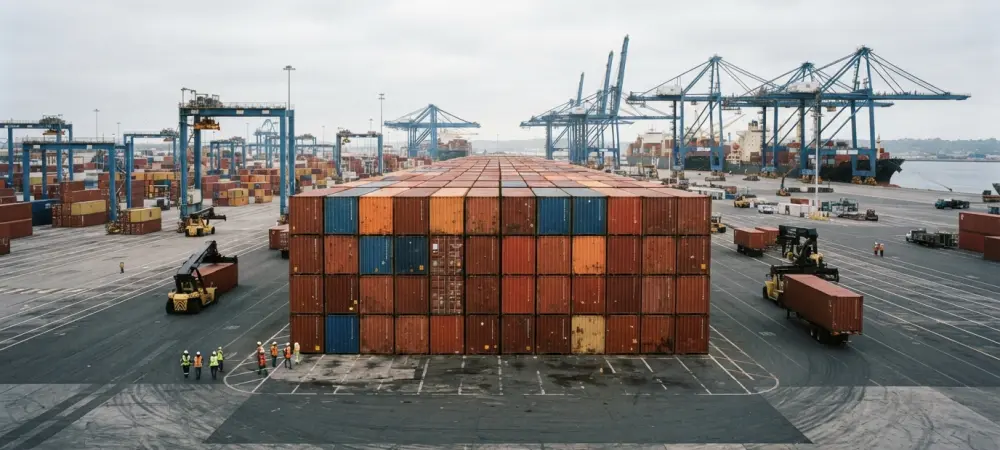
The sheer scale of the Thames Freeport project is staggering, covering roughly 1,700 acres across five distinct locations, including DP World London Gateway, Ford Dagenham, and the Port of Tilbury. To manage this, we had to look beyond a one-size-fits-all solution and instead coordinate a complex web of tenants, each with their own operational realities and safety protocols. We deployed approximately 80 private 5G radio units to ensure seamless coverage across these geographically dispersed sites, which was no small feat considering the metallic interference typical of container yards and manufacturing floors. The 17-month journey from the initial 2025 announcement to the current full operational status in 2026 required a massive re-synchronization of resources within Verizon Business to accommodate the different needs of port operators and automotive manufacturers simultaneously. It wasn’t just about putting up antennas; it was about building a unified digital fabric that could withstand the harsh, salty air of the ports while providing the low-latency response times required for precision engineering at the Ford site.
Beyond providing basic wireless coverage, this project emphasizes the concept of “Physical AI.” Could you elaborate on how specific applications like digital truck processing and AI-based vehicle-damage detection are actually changing the daily workflow for terminal operators?
We are moving away from the era of manual checklists and human error toward a system where the network itself acts as a vigilant supervisor. For instance, the AI-based detection system now identifies structural damage that human inspectors might miss during high-volume vehicle handovers, using high-definition cameras and edge computing to flag issues in real-time. Digital truck processing has effectively eliminated the “blind spots” that used to cause bottlenecks at terminal gates, connecting drivers, depots, and terminals into a single synchronized flow. You can feel the difference on the ground; the chaotic queues of idling trucks are being replaced by a digital map of the container yard that updates every second. Even safety has been elevated through mission-critical field communications that integrate video and location data, ensuring that if an emergency alert is triggered, the response team knows the exact coordinates of the incident within centimeters.
The deployment utilizes Nokia’s Digital Automation Cloud and MX Industrial Edge computing platform. Given the transition of Nokia’s Enterprise Campus Edge business to Aurelius, how does this hardware evolution impact the long-term stability and data sovereignty of these industrial networks?
The decision to provide each tenant with an independent network core was a strategic masterstroke for data sovereignty, ensuring that a company like Ford doesn’t have its operational data mingling with a third-party logistics provider. Nokia’s MX Industrial Edge (MXIE) provides the heavy lifting for local data processing, which is essential because sending massive AI video streams to a distant cloud would create unacceptable lag. While the Enterprise Campus Edge unit is transitioning to Aurelius from 2026 to 2027, the underlying technology remains the gold standard for these types of “campus” environments. This transition is actually designed to give the business more dedicated focus, allowing for faster iterations of the Digital Automation Cloud (DAC) software. For the operators at Thames Freeport, this means they are running on a platform that is built for the long haul, backed by a hardware ecosystem that prioritizes local control over sensitive industrial telemetry.
This project opted for a 5G-only design on the 3.8-4.2GHz spectrum rather than a hybrid Wi-Fi approach. What are the strategic advantages of committing to a pure 5G environment for such a massive industrial and logistics district?
When you are dealing with a mission-critical environment where a three-second delay can mean a collision between multi-ton automated vehicles, Wi-Fi simply doesn’t cut it due to its unpredictable handovers and interference issues. By utilizing the 3.8-4.2GHz spectrum, we’ve created a clean, dedicated highway for data that isn’t fighting for space with consumer devices or office equipment. This 5G-only architecture allows us to implement “Physical AI” at scale, supporting a pipeline of future applications like digital twins and autonomous drones that require a rock-solid connection. It provides a level of predictability and security that allows port directors to sleep at night, knowing their entire estate monitoring system is on a private, encrypted frequency. The success of this deployment serves as a template, proving that for high-stakes industrial OT systems, the move to pure 5G is not just a luxury, but a operational necessity.
With over £2.13 billion already invested and the potential for a further £4.9 billion by 2045, how does this digital foundation transform the economic outlook for the thousands of workers in the Thames region?
This investment isn’t just about buying expensive radios; it’s about future-proofing the livelihoods of the 28,000 people who will eventually work in this revitalized economic zone. By laying this 5G foundation in 2026, we are attracting high-value businesses that wouldn’t have considered this region five years ago because they require advanced automation to stay competitive. We are seeing a shift in the labor market where traditional dock work is being augmented by roles in natural-language processing for operational decision-making and predictive maintenance management. The infrastructure is acting as a magnet for private investment, turning a traditional transit hub into a high-tech manufacturing and logistics powerhouse. It’s a long-term play that ensures the Thames Freeport remains a vital artery of global trade for the next two decades, rather than becoming a relic of the analog past.
What is your forecast for industrial 5G?
I expect that from 2026 to 2030, we will see the total disappearance of the “trial” phase in industrial 5G, as these networks become as standard as electricity in every major port and factory across the globe. We will witness the rise of fully autonomous “dark warehouses” and terminals where Physical AI manages the entire lifecycle of a product without human intervention, all coordinated over private slices of spectrum. My prediction is that the success of the Thames Freeport will trigger a massive wave of similar multi-tenant deployments, where data sovereignty and edge computing become the primary drivers of corporate real estate value. Ultimately, the network will stop being a separate utility and will instead become the central nervous system of the global supply chain, making our industrial processes significantly greener, safer, and more resilient to disruption.