

The once-insurmountable wall separating a simple conceptual sketch from a fully functional three-dimensional digital asset has finally begun to crumble as generative technologies evolve into intuitive production partners. For years, the digital creation space remained bifurcated, with a vast ocean of 2D images on one side and a highly specialized, technical 3D modeling world on the other. This gap meant that even the most brilliant character concepts often died in the sketchbook, simply because the cost and skill required to bring them into a spatial environment were too high. Tripo AI has emerged as the definitive bridge in this landscape, providing a pathway for independent developers, students, and seasoned professionals to manifest their visions with unprecedented speed.
The transition from a two-dimensional idea to a three-dimensional geometric structure is no longer a purely manual labor. In the current production environment of 2026, the traditional fear of the “empty scene”—that paralyzing moment when an artist stares at a blank 3D viewport—is being replaced by a generative starting point. This shift represents more than just a change in tools; it is a fundamental democratization of high-end digital content. Small-scale teams that previously lacked the budget for a dedicated modeling department can now compete with larger studios by leveraging AI to handle the foundational geometry. This creates a more level playing field where the quality of the original concept, rather than the size of the technical budget, defines the success of a project.
By moving beyond the limitations of manual modeling, Tripo allows creators to focus on the expressive and functional aspects of their work. Instead of spending hours pushing individual vertices, an educator can generate a historical artifact for a virtual classroom in minutes. This acceleration of the creative cycle transforms the workflow from a series of technical hurdles into a fluid process of refinement. The integrated AI environment does not just generate an object; it fosters a collaborative space where the initial 2D inspiration is preserved and translated into a usable 3D asset without losing its artistic essence.
The End of the Digital Barrier: Moving Beyond the Empty Scene
Breaking the transition from 2D concepts to functional 3D geometry has historically been the most significant bottleneck in the creative industry. For most people, the process of looking at a drawing and imagining it from all angles is intuitive, but translating that intuition into a digital space requires a mastery of complex spatial mathematics and software navigation. Tripo AI eliminates this technical friction by serving as an intelligent intermediary. It interprets the visual language of a 2D reference and constructs the underlying geometry automatically, allowing the user to bypass the initial, most tedious stages of digital construction.
Furthermore, this platform serves as a vital bridge for independent creators and educators who may not have the time to master traditional modeling suites. In academic settings, the ability to rapidly produce 3D visualizations can make the difference between a static lesson and an immersive experience. For the solo indie developer, it provides a means to populate a digital world without being bogged down by the sheer volume of assets required for modern standards. The movement away from labor-intensive manual modeling toward integrated AI workflows is not merely a convenience; it is a systemic shift in how digital worlds are conceived and populated.
Democratizing high-end digital content creation ensures that the digital economy remains vibrant and diverse. When small-scale teams have access to the same quality of asset generation as multinational corporations, the focus shifts toward narrative innovation and unique art styles. This low-friction entry point enables a broader range of voices to participate in the “maker movement,” turning the 3D space from an exclusive club of technicians into a wide-open field for global storytelling. By simplifying the foundational steps, the platform allows the artistic vision to remain the primary driver of the creative process.
The Steep Price of Traditional 3D Production
To understand the value of simplification, one must consider the technical phases traditionally required for a single 3D asset: sculpting, texturing, retopology, and rigging. Sculpting involves defining the high-resolution shape, while retopology is the painstaking process of creating a clean, efficient mesh that a computer can render smoothly. Texturing adds the visual detail, and rigging provides the digital skeleton necessary for movement. Each of these steps is a specialized discipline, and a single mistake in the early stages can lead to catastrophic failures during animation, forcing artists into a loop of costly late-stage revisions. The investment of time and capital for small businesses is often prohibitive when following these traditional paths. Hiring a team of specialists to bring a single character to life can cost thousands of dollars and take weeks of work. Traditional workflows are famously “unforgiving,” meaning that the path from concept to completion is linear and rigid. If a client or director decides to change a character’s proportions after the rigging phase, the team often has to start nearly from the beginning. This lack of flexibility creates a high-risk environment where innovation is stifled by the fear of expensive errors. In contrast, the AI-driven approach offers a “low-friction” entry point that mitigates these risks through rapid iteration. If a generated model does not meet the requirements, a user can simply adjust the text prompt or the reference image and generate a new version in seconds. This allows for a “fail-fast” methodology where different designs can be tested in a 3D environment before any significant resources are committed. By lowering the cost of experimentation, the technology encourages a more adventurous approach to design, where the financial consequences of a creative pivot are virtually eliminated.
Deciphering the “Hidden Data” Problem in 3D Synthesis
A primary challenge in 3D synthesis is the reconstruction of depth and volume from a single static photograph. When an AI looks at a 2D image, it sees a flat projection of a three-dimensional object, meaning it must “hallucinate” the parts of the object that are not visible, such as the back of a character’s head or the underside of a vehicle. Traditionally, static inputs often lead to distorted geometry or texture “guesses” that look awkward when viewed from anything other than the original camera angle. Solving this spatial puzzle is the core technical achievement of modern synthesis tools. Tripo addresses this by moving from a simple one-click conversion to a system of active, editable 2D components. Instead of forcing the AI to guess blindly, the system allows the user to refine the visual information before the 3D generation takes place. By identifying key features and using advanced algorithms to predict missing perspectives, the platform ensures that the generated output meets professional-grade standards. This refinement process turns the AI into a partner that asks for clarification, rather than a black box that provides a final, unalterable result.
Ensuring consistency across front, back, and side perspectives is the ultimate goal of this synthesis. Professional digital assets must be coherent from every possible angle to be usable in games or films. The platform uses refined visual information to fill in the gaps of “hidden data,” creating a comprehensive map of the object’s surface. This methodology transforms a single photograph into a high-fidelity source of truth, allowing the AI to construct a balanced and symmetrical model that maintains the integrity of the original design while providing the necessary depth for a 3D environment.
The Integrated Workflow: From Concept to Refinement
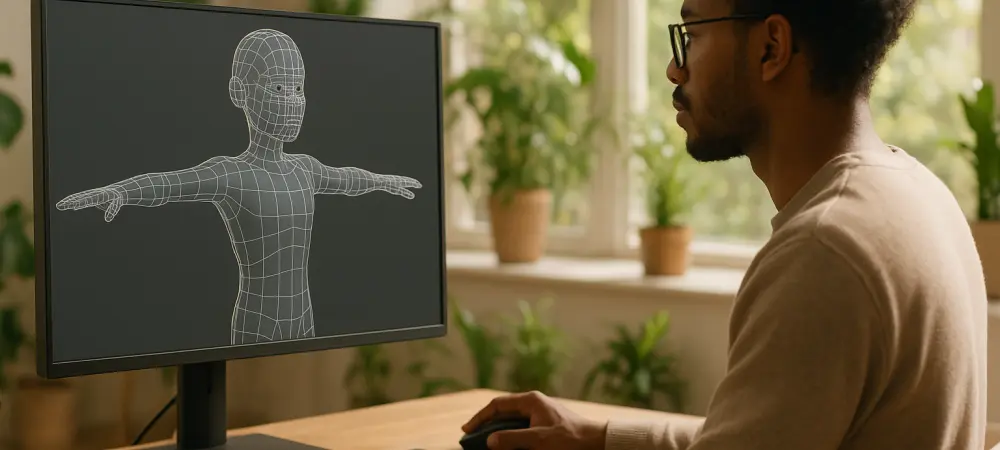
The current workflow within Tripo Studio begins with template-based preparation designed for character and asset extraction. Tools like “Character Extraction” and “Head Extraction” allow users to isolate their subjects from cluttered backgrounds, providing the AI with a clean silhouette to analyze. For those moving toward animation, the “T-Pose” template is essential. It automatically adjusts a character’s stance into the standard neutral position required for digital skeletons, saving animators the grueling task of manually repositioning a mesh before they can even begin the rigging process.
Generative refinement is further enhanced through the GPT-Image-2.5 Sunburst model, which serves as the intellectual engine of the image-editing phase. This model allows for automated multi-view synthesis, generating front, side, and rear views from a single reference image. By creating these extra perspectives, the system provides a holistic view of the asset, solving the spatial puzzle before the first polygon is even placed. This ensures that the final model is not just a facade, but a solid object with consistent proportions and details across all surfaces.
Consistency remains the priority throughout this integrated pipeline. Once the multi-view images are generated, the user can inspect them to ensure the AI has correctly interpreted the back of a jacket or the curve of a weapon. If the synthesis is slightly off, the “Edit Image” function provides a way to correct these errors at the 2D stage. It is much easier to fix a drawing than it is to fix a complex 3D mesh, and by front-loading the refinement process, the platform ensures that the resulting 3D asset is high-quality and ready for implementation.
Industry Applications: From Indie Games to E-commerce
In the realm of game development, the ability to accelerate pre-production prototyping is a significant advantage. Indie teams can use these tools to populate entire levels with diverse assets, testing the visual layout of a world before a single final model is commissioned. This speed allows for a more organic development process where the environment can evolve alongside the gameplay mechanics. Moreover, the efficiency of AI generation means that developers can produce a wider variety of “background assets,” making the game world feel lived-in and detailed without draining the studio’s resources.
The impact extends to animation and visual effects, where previsualization is a critical step in the filmmaking process. Directors can transform product sketches into interactive 3D previews to plan camera movements and lighting setups. In the e-commerce sector, digital storefronts are increasingly moving toward 360-degree previews that allow customers to inspect products from every angle. By converting 2D product photos into 3D models, businesses can provide a more engaging shopping experience that reduces the likelihood of returns and increases consumer confidence. Streamlining the maker movement and 3D printing is another vital application of this technology. By utilizing solid geometry templates, the platform helps hobbyists turn their digital art into physical objects. The automated generation of clear silhouettes and watertight meshes makes it possible for someone with no CAD experience to create custom figurines or replacement parts for home repairs. This bridge between the digital and physical worlds empowers individuals to take control of the manufacturing process, turning their desks into small-scale production facilities where a sketch becomes a physical reality in a matter of hours.
The Essential Role of Human Oversight in the AI Pipeline
Despite the incredible advancements in automation, human oversight remains a fundamental requirement for production-ready environments. AI-generated models, while impressive, often require “cleanup” to meet the strict technical requirements of modern rendering engines. This might involve optimizing the polygon count for better performance on mobile devices or fixing small mesh errors that could interfere with realistic lighting. Using Tripo as a sophisticated starting point rather than a total replacement allows professional artists to spend their time on these high-level refinements rather than the repetitive task of initial modeling.
The synergy between AI efficiency and professional digital content creation software represents the future of the industry. Artists can take a base mesh generated by the AI and bring it into traditional tools like Blender or Maya for final fine-tuning. This hybrid approach combines the speed of generative technology with the artistic nuance and precision of a human expert. Human intervention defines the final quality, ensuring that the character has the right emotional weight or that the texture has the specific weathered look required for a gritty game environment.
To successfully integrate these tools, creators adopted specific strategies for auditing meshes before final engine implementation. Setting up a cohesive pipeline involves more than just clicking a button; it requires a framework for evaluating the AI’s output at every step. Best practices include using the “Edit Image” functions to prevent geometry errors from the outset and conducting thorough inspections of the generated skeletons. By combining rapid prototyping with traditional fine-tuning techniques, the industry established a new standard where human creativity and artificial intelligence worked in tandem to produce higher quality work at a fraction of the previous cost.
The landscape of 3D creation underwent a profound change as these generative tools became standard in most professional pipelines. The integration of multi-view synthesis and automated rigging significantly reduced the time required to bring a concept to life, allowing creators to explore more daring designs. Independent studios reported that the reduction in technical barriers enabled them to allocate more of their budgets toward narrative depth and gameplay innovation. Educators discovered that the technology allowed students to grasp spatial concepts faster, as the distance between an idea and its 3D representation was shortened. Ultimately, the adoption of these simplified workflows fostered a more inclusive digital environment where technical mastery no longer functioned as a gatekeeper to creative expression. This shift ensured that the future of digital content belonged to those with the most compelling stories to tell, regardless of their proficiency in manual polygon manipulation.