

A high-ranking administrative official in Jakarta opens a seemingly mundane government audit report, unaware that a decade of regional cyber-espionage has just breached a new continental frontier. This subtle interaction marks a pivotal moment in the evolution of SideWinder, an India-linked Advanced Persistent Threat group that has spent years refining its craft within the borders of South Asia. While many cybersecurity headlines focus on flashy zero-day exploits, this group, also known as RagaSerpent, is proving that operational discipline and geographic ambition are far more dangerous than novel code. The group has spent over a decade lurking in the shadows of government networks, but a recent and dramatic shift in its operational footprint suggests it has finally broken its regional shackles. By pivoting toward Southeast Asia and beyond, SideWinder is no longer just a local concern; it has evolved into a global espionage powerhouse that challenges the traditional understanding of digital boundaries. This expansion is not a random act of aggression but a calculated maneuver designed to intercept diplomatic and economic intelligence on a much larger scale. The group has moved beyond being a regional nuisance, transforming into a sophisticated threat actor capable of maintaining long-term access to critical systems across multiple continents. As of 2026, the international community is forced to reckon with an adversary that prioritizes persistence over speed and strategic depth over immediate disruption.
The Invisible Pivot: From Regional Nuisance to Global Threat
For years, the intelligence community viewed SideWinder through a narrow lens, primarily monitoring its activities in Pakistan, Sri Lanka, and Nepal. That lens is now obsolete, as the group’s recent maneuvers indicate a sophisticated expansion strategy. The shift away from its traditional hunting grounds suggests a maturing of its intelligence requirements, likely reflecting broader geopolitical shifts and a desire to monitor regional alliances more closely. This pivot was not instantaneous but represents a gradual accumulation of resources and expertise that has allowed the group to operate with confidence in unfamiliar digital environments.
The danger of SideWinder lies in its ability to remain inconspicuous while expanding its reach. Unlike state actors that rely on destructive payloads to make a statement, this group focuses on the “quiet” collection of data. This disciplined approach has allowed it to slip through the cracks of many security frameworks that are tuned to detect more aggressive, high-profile attacks. By maintaining a low profile, SideWinder has successfully transitioned from a localized threat into a player on the global stage, proving that a well-organized espionage campaign can be just as effective as the most advanced military-grade malware.
Mapping the Strategic Shift: Across Southeast Asia and Beyond
The group’s recent activities in Thailand and Indonesia signify a major escalation in its geographic targeting. Starting in the latter half of 2024 and accelerating through 2025, SideWinder launched concerted campaigns targeting major institutions within these nations. This move signals a clear desire to monitor the strategic economic interests of the ASEAN bloc and regional diplomatic maneuvers. By embedding itself within the networks of Southeast Asian power players, the group gains a front-row seat to the internal deliberations of one of the world’s most economically vital regions.
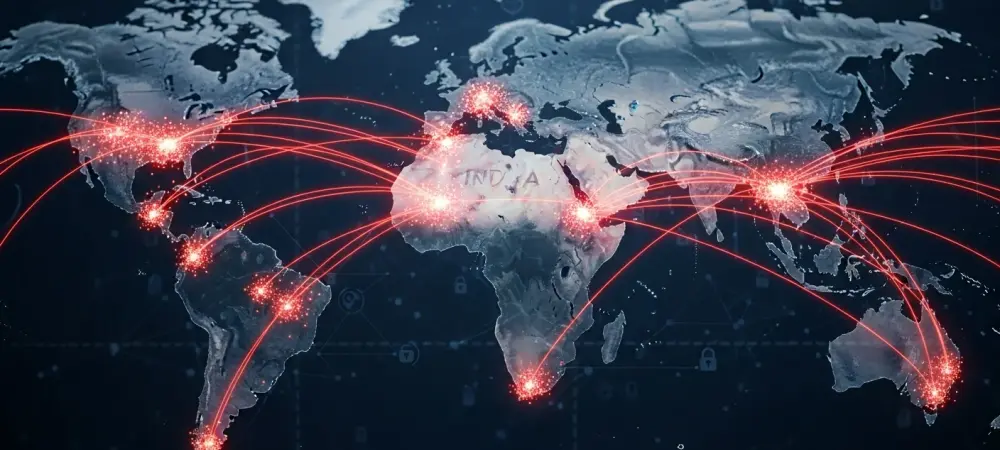
Vertical diversification has also become a hallmark of its recent strategy. The group is no longer content with just military and government targets; it has expanded its reach into critical infrastructure, including the nuclear energy sector, maritime logistics, and telecommunications. Evidence now places SideWinder’s activity as far afield as Africa, Europe, and the Middle East. This global reach proves that its collection requirements have grown to mirror the globalized nature of modern geopolitics, where a single breach in a maritime logistics firm in one country can provide intelligence that affects trade agreements half a world away.
Technical Methodologies: The Art of Disciplined Intrusion
SideWinder’s success does not stem from high-tech wizardry, but from a relentless and disciplined application of proven techniques. The group exploits the “human element” and the “patch gap” with surgical precision, often bypassing modern security measures through simple persistence. Its primary entry point remains the classic spear-phishing email. By crafting lures themed around official government audits or administrative mandates, the group tricks high-value employees into opening malicious attachments that seem perfectly legitimate within their professional context. In a stinging indictment of corporate and government patch management, the group continues to successfully use years-old vulnerabilities in Microsoft Office to gain initial access. This reliance on known vulnerabilities demonstrates an understanding that many organizations struggle to keep their software updated, especially within large, bureaucratic networks. Furthermore, the group frequently employs DLL hijacking to evade standard antivirus software. This technique allows it to hide malicious code within legitimate system processes, making its presence nearly invisible to casual observation and basic automated detection tools.
Advanced Persistence and Infrastructure Churn
What truly sets SideWinder apart is its commitment to the “long game,” as the group seeks pre-positioned access that can last for years rather than a quick data heist. Rather than deploying its entire toolkit at once—which might trigger alarms—the group delivers malware in carefully timed stages. It establishes a foothold through Windows services before slowly expanding its reach across the network. This staged payload execution ensures that even if one component is detected, the primary intrusion remains intact and hidden from the defenders’ view. The most innovative tactic observed is the use of dynamic configuration data. By retrieving Command-and-Control server addresses at runtime based on filenames, the group can rotate its entire server infrastructure without ever recompiling its malware. This agility makes traditional blocklists of IP addresses almost entirely useless, as the indicators of compromise change as soon as the security team identifies them. Researchers noted that the malware is often configured to avoid “noisy” networks, ensuring that it minimizes collateral damage and avoids detection by international authorities while remaining embedded for the long haul.
Strategies for Defending: Against Persistent Espionage
Because SideWinder operates on a five-to-ten-year strategic horizon, defenders had to move beyond reactive security measures toward behavioral intelligence. To counter an agile, long-term threat, security teams began focusing on Tactics, Techniques, and Procedures rather than simple indicators of compromise. Monitoring for unauthorized modifications to Windows services or unusual DLL loading patterns became a primary defense mechanism. Organizations that succeeded in thwarting these intrusions were those that implemented tools capable of flagging anomalous outbound traffic and staged execution patterns early in the kill chain. Aggressive patch management remained the single most effective way to block SideWinder’s primary entry route. Since the group relied heavily on known vulnerabilities, closing the window between a patch release and its implementation became a critical security priority. Furthermore, cross-sector collaboration proved vital as the lines between state espionage and cybercrime continued to blur. Sharing threat intelligence across the maritime, energy, and government sectors allowed organizations to identify shifting targets in real-time, creating a collective defense that was far stronger than any individual entity could maintain on its own.
The international security community recognized that the global expansion of SideWinder required a fundamental shift in how espionage was countered. Intelligence agencies and private security firms coordinated more closely, sharing the behavioral markers of the group’s “long game” to prevent deep-seated persistence. Policy makers prioritized the hardening of critical infrastructure, specifically in the maritime and energy sectors, which were identified as high-value targets for the group’s expanded mission. These defensive shifts were not merely technical but represented a cultural change in how data sensitivity and network integrity were managed across the globe. Ultimately, the lessons learned from the expansion of this campaign provided a blueprint for more resilient digital borders.