

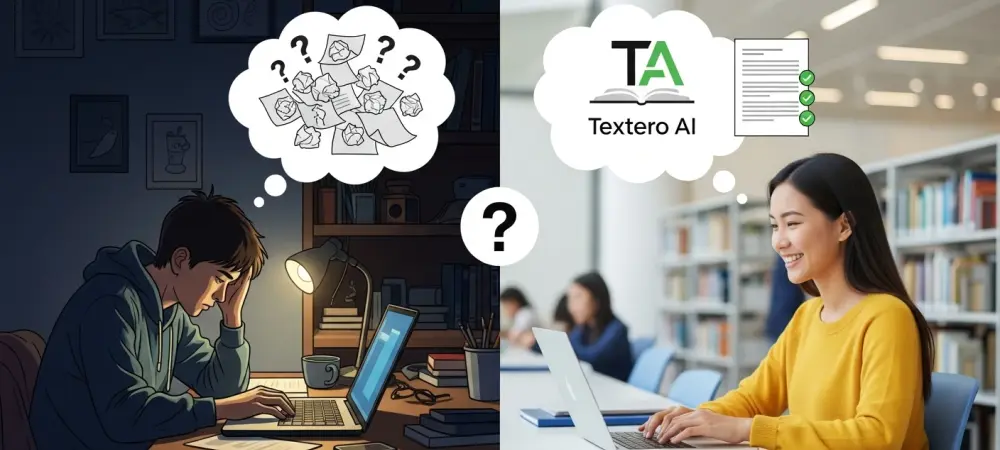
Modern scholarship no longer rests solely on the weary shoulders of a lone researcher surrounded by stacks of paper; instead, it has evolved into a sophisticated dance between human intuition and algorithmic precision. As digital tools become more deeply embedded in the classroom and the laboratory, the conversation has shifted from whether technology belongs in academia to how it can be harnessed to elevate the quality of thought. Textero AI has emerged as a central figure in this transition, acting as a specialized bridge that helps writers navigate the increasingly complex demands of contemporary education without sacrificing the rigorous standards that define scholarly excellence.
The Evolution of Writing in the Digital ErFrom Manual Effort to AI Collaboration
A Shift in Scholarly Paradigms
The transition from traditional research methods to the current age of rapid integration has fundamentally altered how knowledge is produced. Where students once spent dozens of hours manually indexing sources and agonizing over the first sentence of a draft, they now utilize platforms that can synthesize vast amounts of information in seconds. This shift does not represent a decline in intellectual effort but rather a change in where that effort is directed. Modern writers are moving away from the mechanical labor of transcription and toward the higher-level cognitive tasks of synthesis, critique, and original argumentation.
Why Textero AI Matters
Understanding the growing necessity for tools that bridge the gap between human creativity and machine efficiency is vital for anyone operating in a high-pressure academic environment. Textero AI addresses the specific friction points that often cause projects to stall, such as the initial formatting of a thesis or the tedious nature of citation management. By providing a reliable framework, the tool ensures that the writer remains the architect of the ideas while the software handles the structural heavy lifting. This collaboration allows for a more fluid creative process, where the fear of the blank page is replaced by the momentum of a well-organized starting point.
The Roadmap of Transformation
The ongoing metamorphosis of the writing process is defined by a preview of how automated generators, ethical frameworks, and specialized tools are redefining the experience for students and educators alike. This evolution is not a chaotic rush toward automation but a calculated move toward a more sustainable way of working. As these tools become more intuitive, they establish a new standard where the technical barriers to entry—such as knowing the minute details of a specific citation style—are lowered, allowing a more diverse group of voices to participate in the global academic conversation.
Beyond Simple Text Generation: The Multi-Faceted Capabilities of Textero AI
Orchestrating the Research Lifecycle with Specialized Tools
Exploring the utility of features like the Thesis Generator, Outline Creator, and AI Proofreader reveals an ecosystem designed to support a project from its messy inception to its polished conclusion. A full-stack assistant does more than just produce sentences; it helps the writer visualize the logical architecture of their argument before they even begin to write. By using an outline creator, a researcher can identify gaps in their reasoning early on, preventing the need for massive structural revisions later in the process. Data-driven efficiency is the primary benefit of automating repetitive tasks such as word count adjustments and bibliography formatting. This automation allows writers to focus on high-level critical thinking, which remains the most valuable currency in any academic discipline. While some observers may express skepticism regarding the use of these tools, the consensus among many forward-thinking users is that these features are enhancements rather than shortcuts. They function similarly to how a calculator assists a mathematician: they handle the routine processing so the human mind can tackle the complex problem-solving.
Redefining the Student Experience through Accessible Support
The real-world application of tools like the Essay Expander and Rewriting features helps students move past cognitive hurdles that often lead to burnout. Writer’s block is frequently a symptom of perfectionism or a lack of structural clarity, and having a tool to generate ideas or suggest alternative phrasing can break that paralysis. By offering these capabilities, the platform acts as a digital mentor that provides immediate feedback, helping the learner see their topic from a different perspective and encouraging them to keep moving forward. Beyond the text itself, affordable AI tools democratize access to high-quality writing support, contributing to both financial and mental wellness. In an environment where professional tutoring or editing services can be prohibitively expensive, an accessible AI assistant levels the playing field for students from various socioeconomic backgrounds. This accessibility reduces the immense stress associated with tight deadlines and high stakes, allowing students to maintain their structural integrity and formal tone without the constant fear of falling behind their peers.
Empowering Educators and Researchers with Smart Automation
Educators are increasingly viewing AI as a new ally rather than a threat to the classroom. By using technology to generate assignment prompts, feedback rubrics, and structured lesson materials, teachers can reclaim hours of their time each week. This shift from grading to mentoring is one of the most significant changes in the profession, as professors are no longer bogged down by the routine aspects of formatting and basic grammar checks. Instead, they can spend more time engaging directly with students, fostering deep discussions, and providing the kind of nuanced guidance that a machine cannot replicate.
For researchers, the precision offered by these tools ensures that scientific or literary papers meet the highest standards of clarity. Academic writing requires a specific logical flow that can be difficult to maintain over dozens of pages. Textero helps refine this flow, ensuring that complex ideas remain accessible to the reader while retaining their technical depth. This balance is crucial for publication and peer review, where the quality of the presentation is often just as important as the data itself.
Humanizing the Machine: The Bridge Between AI Output and Authentic Voice
Innovation in the realm of “Human Touch” features, such as AI Humanizers and specialized detectors, serves as an essential checkpoint for authenticity. These tools encourage users to scrutinize machine-generated text and adapt it to their unique voice, ensuring that the final output feels personal and grounded. This process of refinement is where the most significant learning occurs, as the student must evaluate the AI’s suggestions against their own understanding of the subject matter, effectively acting as an editor-in-chief of their own work.
The way these tools are adopted often varies based on regional and institutional standards, reflecting the global diversity of education systems. While some institutions are more permissive, others require strict adherence to specific manual processes. Navigating these variations requires a nuanced approach where the user treats the AI as a collaborative partner rather than a total replacement. The most successful academic writers are those who challenge the “easy fix” assumption, using the technology to spark curiosity and improve their own writing skills rather than just checking a box.
Masterclass in Responsible AI Integration: Best Practices for Success
Strategic Implementation: The “Assistant First” Philosophy
Adopting an “Assistant First” philosophy is the most effective way to integrate AI into a professional workflow. This strategy involves using the machine for brainstorming, organizing research, and creating rough drafts while maintaining rigorous human oversight throughout every stage. By treating the tool as a sophisticated sounding board, a writer can explore unconventional angles or find better ways to explain difficult concepts. However, the final decision-making power always rests with the person behind the keyboard, ensuring the work remains a reflection of human effort.
The Golden Rules of Ethics and Integrity
To protect academic integrity, certain actionable recommendations must be followed, such as the mandatory manual rewriting of generated content and the verification of every source. Fact-checking is perhaps the most critical step, as AI can sometimes present information that sounds plausible but lacks empirical backing. By verifying citations and cross-referencing data points, a writer ensures that their work is not only well-written but also accurate and trustworthy. This commitment to honesty is what separates a responsible user from someone looking for an unethical shortcut.
Red Flag Awareness: Avoiding Common Pitfalls
Practical advice for navigating the market of AI tools includes staying away from platforms that offer “guaranteed grades” or promise to bypass all detection systems. These claims are often misleading and can lead to serious academic penalties or a loss of reputation. A reliable tool focuses on providing the user with the means to improve their work rather than promising a specific outcome that depends on a human instructor’s judgment. Manual editing remains the most important step, and any service that suggests otherwise should be approached with caution.
The Future of Academic Integrity in an AI-Driven World
The landscape of academic writing was forever changed by the introduction of collaborative intelligence, shifting the focus from the output itself to the process of critical engagement. As tools like Textero AI became more sophisticated, they did not replace the need for original thought; instead, they demanded a higher level of scrutiny from the writers who used them. This evolution fostered a new standard of excellence where the ability to direct an AI effectively became a core competency, much like digital literacy or traditional research skills. Those who thrived in this environment were the ones who viewed technology as a medium for expansion rather than a tool for avoidance.
The long-term impact of this shift suggested that the boundary between human and machine contribution would continue to blur, making transparency and personal accountability more valuable than ever. Future academic frameworks were likely to incorporate these tools directly into the curriculum, teaching students how to maintain their unique voice while leveraging the speed of automation. This synthesis of speed and soul ensured that the fundamental goal of education—the development of a sharp, inquisitive mind—remained intact. The ultimate legacy of this era was the realization that while an algorithm could assemble a sentence, only a human could give it meaning and purpose.