

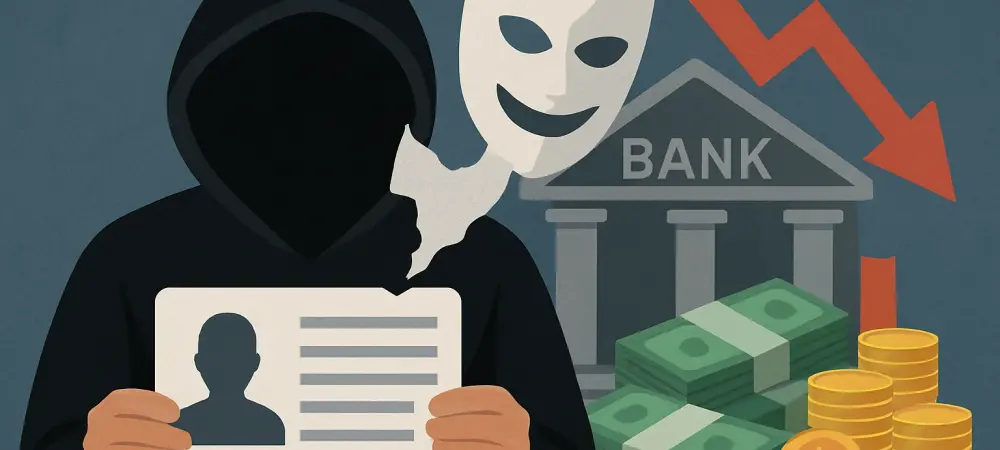
As we dive into the complex world of financial fraud, I’m thrilled to speak with Dominic Jainy, an IT professional with deep expertise in artificial intelligence, machine learning, and blockchain. With his keen interest in how emerging technologies intersect with industries like finance and lending, Dominic offers a unique perspective on the growing threat of synthetic identity fraud—a sophisticated crime that’s costing lenders billions. Today, we’ll explore how these fake identities are crafted, the evolving tactics of fraudsters, and the challenges financial institutions face in this high-stakes battle.
Can you walk us through what synthetic identity fraud is and how it stands apart from traditional identity theft?
Synthetic identity fraud is a whole different beast compared to traditional identity theft. While identity theft involves stealing someone’s real personal information—like their Social Security number or bank details—synthetic fraud is about creating a completely fictitious identity from scratch. Fraudsters mix real and fake data, often using a legitimate Social Security number that isn’t tied to a real person, combined with fabricated names, addresses, and other details. This hybrid identity looks real enough to fool systems, but it doesn’t belong to an actual individual. The key difference is the level of deception; it’s not about impersonating someone, but inventing a persona to exploit financial systems.
How do fraudsters go about building these synthetic identities, and what makes them so convincing to financial institutions?
Building a synthetic identity is like crafting a detailed backstory for a character. Fraudsters start with bits of real data—often a Social Security number that’s unclaimed or belongs to someone unlikely to use it, like a child or deceased person. Then they layer on fake details: a name, date of birth, address, and even phone numbers. They might apply for small lines of credit or open accounts to establish a footprint. Over time, they nurture this identity by making small payments to build a credit history, which makes it look legitimate. Financial institutions get tricked because these identities mimic real consumer behavior, passing through automated checks that aren’t always designed to spot fabricated patterns.
We’ve seen financial losses from synthetic identity fraud jump from $1.9 billion in 2020 to $3.3 billion in 2024. What do you think is driving this sharp increase?
The surge in losses comes down to a few key factors. First, the sheer volume of data breaches over the past decade has given fraudsters access to more personal information than ever, making it easier to craft convincing identities. Second, the shift to online banking and lending has lowered the barriers—fraudsters can apply for loans or credit cards without ever showing their face. Also, the sophistication of their methods has grown; they’re using AI and cloud tools to analyze data and refine their schemes. The rise is particularly tied to sectors like automotive lending, where high-value loans are a juicy target, but we’re seeing ripples across other industries as well, like cryptocurrency and traditional banking.
Speaking of automotive lending, why is this sector particularly vulnerable to synthetic identity fraud?
Automotive lending is a goldmine for fraudsters because of the high dollar amounts involved. A single auto loan can be worth tens of thousands of dollars, compared to a credit card limit of a few hundred or thousand. Plus, the approval process often prioritizes speed to close deals, which can mean less rigorous identity checks. Fraudsters exploit this by using synthetic identities to secure loans for vehicles they either resell or never intend to pay off. The combination of big payouts and sometimes lax verification makes this sector a prime target, contributing heavily to that $3.3 billion loss figure.
Credit agencies have called this an ‘arms race’ between fraudsters and financial institutions. Can you unpack what that dynamic looks like in practice?
The ‘arms race’ analogy is spot on. On one side, fraudsters are constantly upping their game—using advanced tools like AI to analyze stolen data, predict system weaknesses, and create more believable synthetic profiles. They’re leveraging the same tech that defenders use, like cloud computing and machine learning, to stay ahead. On the other side, credit agencies and lenders are racing to build better detection models, tapping into richer data sources and refining algorithms to spot anomalies. It’s a cat-and-mouse game where each side adapts to the other’s moves, and neither can afford to stand still because the stakes—financial losses and trust—are so high.
One tactic fraudsters use is ‘nurturing’ synthetic identities by making small payments over time. How does this slow-and-steady approach pay off for them?
This nurturing strategy is all about playing the long game for a bigger reward. Fraudsters start with a small line of credit—say, $500—and make regular minimum payments to build a positive credit score for the synthetic identity. Over months or even years, this fake persona graduates to larger credit limits or loans, sometimes worth tens of thousands of dollars. By delaying the big cash-out, they avoid triggering immediate red flags and maximize their haul. It’s a patient con, but incredibly effective because it exploits how credit systems reward consistent behavior, assuming it’s genuine.
Beyond individual identities, fraudsters are also targeting business identities. How are they pulling off these schemes, and what makes them different?
Synthetic business identity fraud is a growing menace. Fraudsters either fabricate a business from scratch—using fake registration details, tax IDs, and addresses—or they hijack dormant but legitimate companies through a tactic called ‘piggybacking.’ They take over an inactive business’s credentials, reactivate accounts, or apply for credit in its name. What makes this different from individual fraud is the scale; businesses often access larger loans or lines of credit, and the damage can ripple through supply chains or banking networks. It’s also harder to detect because business verification processes aren’t always as tight as personal ones.
There are red flags, like 39% of synthetic identities having no linked relatives. What other patterns or behaviors can help spot these fake identities?
That lack of familial connections is a huge clue because real people usually have some relational data—parents, siblings, or dependents—tied to their records. Other patterns include inconsistencies in behavioral data. For instance, real people often have a messy digital footprint—think parking tickets, car registrations, or utility bills. Fraudsters don’t bother faking these mundane details because it’s not worth their time, so an identity with a suspiciously clean or narrow history can raise suspicion. Also, look for odd credit usage, like accounts that only make minimum payments with no variation, which doesn’t mimic typical human financial behavior.
How can everyday activities, like owning a car or getting a speeding ticket, actually help confirm someone’s legitimacy?
Everyday activities are like breadcrumbs of authenticity. If someone owns a car, that’s often tied to registration records, insurance, or even maintenance history—data points a fraudster wouldn’t replicate because it’s too much hassle for little gain. A speeding ticket, while annoying, shows real-world interaction; it’s proof someone was physically out there, driving. These mundane, incidental records are hard to fake at scale, so when credit agencies see them, it boosts confidence that the identity is tied to a living, breathing person rather than a constructed profile.
Looking ahead, what’s your forecast for the future of synthetic identity fraud and the efforts to combat it?
I think synthetic identity fraud will keep evolving as fraudsters leverage more advanced tech, like generative AI, to create even more convincing profiles and deepfakes. The financial impact could climb higher if detection doesn’t keep pace, especially as more transactions move online. On the flip side, I’m optimistic about defensive innovations—adaptive risk models, better data integration, and continuous monitoring are raising the bar for fraudsters. The key will be collaboration between credit agencies, lenders, and tech providers to share insights and stay proactive. It won’t be ‘solved’ anytime soon, but with the right investments, the balance can tilt toward the defenders.