

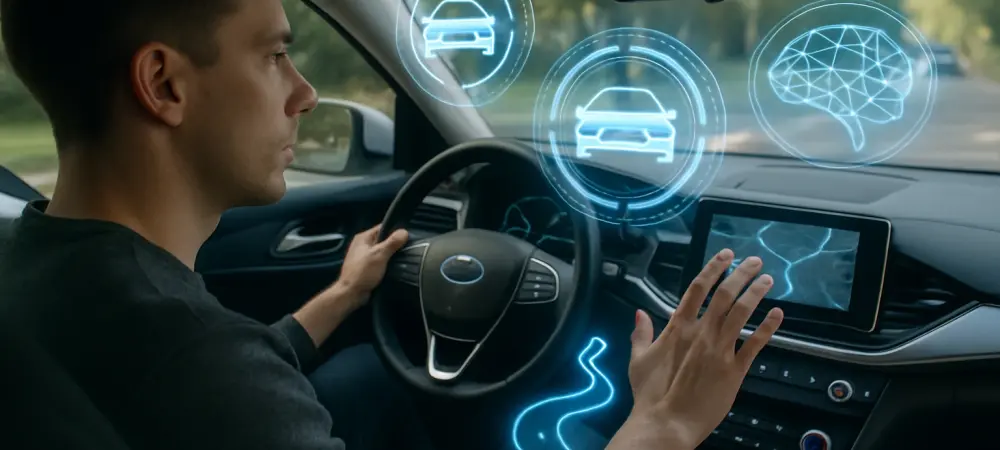
What if a car could not only hear a driver’s question about a nearby building but also see it and provide an instant, accurate response? This isn’t a far-fetched dream but a reality being crafted by SoundHound AI, a company pushing the boundaries of technology. By integrating sight with sound through its pioneering Vision AI, SoundHound is redefining how machines interact with humans, making devices feel less like tools and more like intuitive companions in everyday life.
This development matters because it addresses a persistent frustration: technology that often misinterprets or fails to grasp context. SoundHound’s multimodal AI, combining visual and auditory inputs, promises to bridge this gap, transforming industries from automotive to retail with smarter, more responsive systems. The significance lies in creating interactions that mirror human understanding, a leap that could reshape how people live and work with machines.
Can Tech Truly See and Hear Like Humans?
Picture a scenario where a driver points to a monument on the roadside and asks, “What’s that?” With SoundHound’s Vision AI, the car’s system doesn’t just process the spoken query—it analyzes the live camera feed to identify the landmark and respond with detailed information. This seamless blend of sight and sound marks a bold step forward in human-machine interaction, moving beyond voice-only assistants to a more holistic understanding of user intent.
The implications of such technology extend far beyond a single use case. In retail, imagine a kiosk that visually confirms an order as it’s spoken, reducing errors at busy drive-thrus. In industrial settings, smart glasses powered by this AI could guide workers through complex repairs by seeing what they see and offering real-time, hands-free advice. These examples highlight a shift toward technology that doesn’t just react but anticipates needs with uncanny precision.
Why Is Multimodal AI a Game-Changer?
The demand for smarter, more intuitive tech has surged as users grow frustrated with devices that stumble over basic commands or miss contextual cues. SoundHound’s approach tackles this head-on by merging visual recognition with voice processing, creating systems that interpret both what is said and what is seen. This isn’t merely an upgrade; it’s a fundamental evolution addressing real-world inefficiencies across multiple sectors.
Industries like automotive, hospitality, and manufacturing stand to gain immensely from this innovation. A study by McKinsey suggests that AI-driven automation could boost productivity in these sectors by up to 30% when paired with contextual understanding. Multimodal AI ensures that a car navigation system, for instance, doesn’t just hear a vague direction but sees the surroundings to offer precise guidance, cutting down on errors and enhancing safety.
This push for integration also reflects a broader trend in tech development. As devices become central to daily tasks, the ability to process multiple inputs simultaneously becomes critical. SoundHound’s focus on synchronized sight and sound positions it at the forefront of this shift, promising to eliminate the clunky interactions that have long plagued smart technology.
How Does Vision AI Work in Real Life?
At the core of SoundHound’s innovation lies Vision AI, a system designed to process live camera feeds alongside spoken language for immediate, context-aware responses. This technology synchronizes audio and visual data in real time, ensuring that a device understands not just the words but the environment they relate to. The result is a significant reduction in miscommunication, a common issue with traditional voice assistants.
Practical applications showcase the transformative potential of this tool. In a car, Vision AI can identify a building or signpost a driver points to, providing historical or navigational details on the spot. For mechanics wearing smart glasses, the system offers step-by-step visual and auditory guidance during intricate tasks, improving accuracy by up to 40%, according to early industry trials. Even in fast-paced retail environments, drive-thru kiosks can visually confirm orders as customers speak, slashing wait times and boosting satisfaction.
The versatility of these applications underlines a key strength: adaptability. Whether it’s enhancing safety on the road or streamlining operations in high-pressure settings, Vision AI delivers tailored solutions. By minimizing errors and maximizing efficiency, this technology reimagines user experiences, proving that a dual-input system can outperform single-mode AI in diverse, real-world contexts.
What Do SoundHound’s Innovators Say?
Insights from SoundHound’s leadership shed light on the vision driving this technology. CEO Keyvan Mohajer has emphasized the goal of creating machines that interact as naturally as humans do, highlighting that true innovation lies in mirroring everyday communication. This perspective frames Vision AI as more than a feature—it’s a pathway to making tech an active partner in human endeavors.
VP of Engineering Pranav Singh elaborates on the technical challenges overcome to achieve this. Synchronizing sight and sound without noticeable lag was a major hurdle, as even a slight delay can disrupt the flow of interaction. Singh notes that their team’s breakthroughs in real-time processing have been pivotal, ensuring responses feel instantaneous and natural, a critical factor in user adoption.
These viewpoints reinforce the credibility of SoundHound’s mission. The commitment to solving complex engineering problems while focusing on practical impact demonstrates a balance of ambition and pragmatism. Their shared conviction is clear: multimodal AI isn’t just about advancing technology but about fundamentally improving how people engage with it daily.
How Can Businesses and Users Leverage This Tech?
For businesses, adopting Vision AI offers a competitive edge through enhanced service delivery and customer satisfaction. Retailers can integrate this technology into kiosks to speed up transactions, potentially reducing wait times by 25%, as suggested by pilot programs in the sector. Manufacturers might equip tools with multimodal capabilities to improve worker safety and precision, creating smarter, more responsive workflows.
Individual users also stand to benefit in tangible ways. Engaging with devices like cars or personal assistants becomes more intuitive when queries about surroundings are met with accurate, context-aware answers. A driver asking about a nearby restaurant, for instance, can trust the system to see the location and provide relevant details like menu options or reviews, making daily interactions smoother.
Complementary updates, such as SoundHound’s Amelia 7.1, further amplify these benefits by enhancing AI speed and customization. Businesses can tailor solutions to specific needs, while users enjoy faster, more personalized responses. This framework equips both groups with actionable steps to embrace multimodal tech, ensuring they stay ahead in an increasingly connected landscape.
Reflecting on a Transformative Leap
Looking back, SoundHound AI’s integration of sight and sound through Vision AI stood as a defining moment in the evolution of human-machine interaction. It addressed long-standing frustrations with technology, paving the way for devices that understood context with near-human precision. The diverse applications, from automotive assistance to industrial guidance, demonstrated a versatility that touched countless lives.
As industries and individuals adapted to this shift, the next steps involved broader adoption and refinement of multimodal systems. Businesses had the opportunity to explore tailored implementations that maximized efficiency, while users could demand more intuitive tools in their daily routines. The challenge remained to ensure accessibility, so this innovation reached beyond niche markets to become a universal standard.
Ultimately, the journey sparked a vital conversation about the role of AI in enhancing human experiences. Future considerations included balancing technological advancement with ethical implications, ensuring privacy and trust remained paramount. This milestone was not an endpoint but a foundation for even deeper integration of senses in technology, hinting at a world where machines truly complemented human capabilities.