

Oracle management strategically opted for a fifty-fifty split between new equity and debt to maintain a stable credit profile while funding the high-profile OpenAI partnership. This aggressive yet calculated financial maneuver, finalized in late 2026, signals a transformative era for the enterprise software giant as it pivots toward becoming a dominant force in the specialized artificial intelligence infrastructure market. By securing a massive injection of capital, the corporation aims to satisfy the intense technological and physical demands of its agreement with OpenAI, a partnership that requires an unprecedented scale of high-performance computing clusters. Market analysts and institutional investors had been awaiting this level of transparency, as the costs associated with cooling, power distribution, and high-end semiconductor acquisition have continued to escalate across the industry. Oracle’s assertion that it has already secured the necessary funding allows it to operate with a level of certainty that is currently rare among its peers, who are still grappling with the skyrocketing expenses of the generative AI boom. This strategic positioning is not merely about liquidity; it is a declaration of readiness to host the world’s most sophisticated frontier models. The announcement serves to stabilize market expectations and underscores the company’s commitment to providing the specialized data center environments essential for the next generation of machine learning. In doing so, it has effectively addressed the immediate concerns regarding its balance sheet while setting a rigorous standard for how major cloud providers communicate their infrastructure readiness to the public.
Capital Architecture: The Twenty-Billion-Dollar Raise
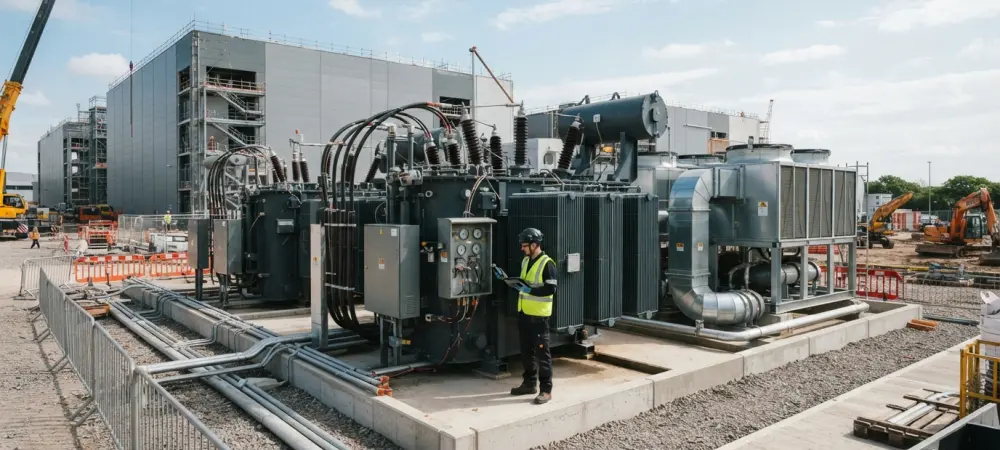
The primary engine driving this expansion is a comprehensive $20 billion capital raise that concluded in early November. Oracle management utilized a sophisticated, two-pronged strategy to amass this sum, carefully navigating the complexities of modern corporate finance to optimize leverage without overextending its obligations. By splitting the raise evenly, with $10 billion from new equity offerings and $10 billion from debt offerings, the company effectively balanced shareholder dilution against the weight of long-term interest payments. This approach is particularly noteworthy in the current economic environment, where debt can become a significant burden on quarterly earnings if not managed with extreme precision. The decision to issue $10 billion in new stock demonstrates a strong belief in the company’s internal valuation, as it trades short-term equity stability for long-term liquid capital. This influx of cash allows for the immediate procurement of long-lead items, such as specialized power transformers and advanced liquid cooling systems, which are currently in short supply across the global market. By finalizing these transactions by November 4, the company ensured it was speaking from a position of absolute factual certainty during its subsequent public disclosures to the investment community.
The timing of these financial moves suggests a deliberate effort to front-load capital requirements before the peak of current expansion projects. By closing both the equity and debt portions of the deal weeks before the formal announcement, Oracle has established a foundation of credibility that distinguishes it from organizations that announce funding intentions before securing actual commitments. This operational sequence prevents speculative trading from impacting the terms of the raise and allows the company to focus on immediate execution. Furthermore, the $10 billion debt portion was structured to take advantage of the corporation’s established credit rating, which remains resilient despite the massive scale of the OpenAI commitment. Investors have largely responded with cautious optimism, recognizing that the balanced split protects the company’s investment-grade status while providing the “war chest” necessary to compete at the highest level of the hyperscaler hierarchy. This capital structure also reflects a sophisticated understanding of the current technological lifecycle, where the initial build-out phase requires massive upfront payments that will eventually be offset by long-term service contracts. By securing the funds now, the company has insulated its most critical project from the vagaries of the banking sector, ensuring that the partnership remains on a predictable trajectory regardless of broader economic shifts.
Corporate Definitions: Understanding Fully Funded Status
While Oracle uses the term “fully funded” to signal organizational strength, the claim carries specific corporate nuances that investors must parse with care. In the context of large-scale infrastructure, this designation typically means the company has arranged the financing it believes it will need based on current projections, rather than having already paid the total project cost in full. This distinction is vital because the total cost of building and maintaining AI-optimized data centers is often subject to inflationary pressures and unforeseen technical requirements. By declaring itself fully funded, Oracle is effectively stating that its current cash reserves, combined with its available credit facilities and the recent $20 billion raise, are sufficient to meet the estimated obligations of the OpenAI contract without requiring further trips to the capital markets in the near term. This provides a sense of security to OpenAI, which relies on Oracle’s ability to deliver massive compute capacity on a strict schedule. However, the term remains a snapshot in time; it reflects the budget as it exists today, assuming that supply chain costs for specialized hardware like H200 or Blackwell chips do not experience further dramatic spikes.
The specific legal language in the securities filings provides the company with significant operational flexibility that extends beyond the OpenAI project. The filing notes that the proceeds from the capital raise are intended for “general corporate purposes,” a standard legal designation that allows Oracle to deploy funds wherever they are most needed. While management has explicitly linked this money to OpenAI infrastructure, it is not legally “ring-fenced” or restricted solely to that project. This means the capital could technically be used for debt repayment, dividend distributions, or other capital expenditures if the company’s priorities shift. This creates a situation where the market must rely on management’s stated intentions and strategic focus rather than a legally binding, project-specific trust. Despite this lack of formal restriction, the scale of the OpenAI contract makes it the most logical destination for the bulk of these funds. The flexibility afforded by the “general corporate purposes” designation is likely a safeguard against unforeseen changes in the AI landscape, allowing the company to pivot its resources if the technological requirements of frontier models evolve unexpectedly over the next several quarters.
Financial Support: The Role of Vendor Financing
Oracle has also brought the role of vendor financing into the spotlight, identifying it as a secondary but critical layer of its capital strategy. This system involves purchasing the hardware necessary for AI clusters—such as chips, high-speed networking equipment, and specialized servers—on credit provided directly by the manufacturers. By utilizing vendor-backed credit, Oracle can spread out the payments for this expensive equipment over several years, aligning its outflows more closely with the revenue generated by the data centers. This effectively turns hardware manufacturers into de facto lenders, allowing Oracle to preserve its cash for construction and labor costs. The company has clarified that while it is in ongoing private discussions with various vendors for additional financing options, its ability to fulfill the OpenAI contract is not dependent on these talks. This framing is essential for maintaining investor confidence, as it positions vendor financing as an “optional upside” that could further optimize cash flow, rather than a missing piece of the financial puzzle that could stall the project if negotiations fail.
This reliance on vendor relationships reflects a broader trend in the hyperscaler market, where the demand for specialized AI silicon has shifted the balance of power between buyers and sellers. By integrating vendor financing into its broader capital plan, Oracle is demonstrating an ability to leverage its deep relationships with companies like Nvidia and other hardware giants to secure better terms than smaller competitors. These discussions are often kept private to protect the competitive pricing and credit terms offered to major partners. For Oracle, the advantage of these deals lies in the ability to scale up capacity rapidly without immediately depleting the $20 billion pool of capital secured through public markets. It also signals a maturation of the AI supply chain, where the companies producing the components are becoming more invested in the long-term success of the infrastructure providers. This interconnected financial ecosystem helps distribute the risk of the AI build-out across multiple stakeholders, although it also means that any disruption in the semiconductor industry could have immediate ripple effects on Oracle’s financing and deployment schedule.
Transparency Gaps: Navigating the Information Vacuum
Despite the transparency regarding the recent capital raise, several critical variables remain undisclosed, leaving analysts to speculate on the long-term economics of the deal. Neither Oracle nor OpenAI has shared the total dollar value of their infrastructure agreement, which makes it difficult to determine exactly what percentage of the project the $20 billion covers. Without a clear “denominator” for the total contract value, it is impossible to verify if the current funding is sufficient for the entire duration of the partnership or merely the first few phases of construction. This information vacuum is common in high-stakes tech partnerships where proprietary pricing is a closely guarded secret, but it creates a challenge for those trying to model the company’s future return on investment. The “fully funded” claim rests entirely on internal projections that are not available for public audit, requiring investors to trust that management has accurately estimated the astronomical costs of power, cooling, and hardware maintenance over a multi-year horizon.
Additionally, the specific timeline for capacity delivery and the exact duration of the contract remain confidential, which adds another layer of complexity to the financial analysis. Building AI-optimized clusters is a physical task that involves more than just purchasing chips; it requires securing massive amounts of power from a strained grid and managing complex construction schedules for specialized facilities. The announcement on November 20 did not address these physical timelines or the potential for supply chain bottlenecks that could delay bringing revenue-generating capacity online. If delays occur, the capital already raised may sit idle while interest on the debt continues to accrue, potentially impacting the project’s profitability. Furthermore, the lack of data regarding the power purchase agreements necessary to run these facilities means that a significant portion of the operating expenses remains an unknown variable. For the market to fully validate Oracle’s strategy, more granular data on the deployment schedule and the operational costs of these massive AI clusters will be required in the coming quarters.
Competitive Strategy: Oracle and the Hyperscaler Hierarchy
Oracle’s financing strategy represents a direct challenge to industry leaders like Amazon Web Services, Google Cloud, and Microsoft Azure. By claiming the title of the first hyperscaler to be “fully funded” for this specific investment cycle, the company is attempting to win the narrative battle in the cloud sector. Most of its larger competitors are funding their AI expansion through a combination of massive existing cash flows and ongoing corporate debt, but they have not necessarily earmarked or highlighted their funding status for specific AI partnerships in the same way. Oracle’s move is a strategic play to position itself as the most reliable and financially prepared infrastructure backbone for high-end AI labs. This clarity is designed to attract other enterprise customers and AI startups that may be concerned about capacity constraints or the financial overextension of larger cloud providers. By demonstrating a solid financial foundation, Oracle is signaling that it is a safe and stable choice for the most demanding workloads in the industry.
This move also highlights the various methods used by different players to navigate the AI boom. While some smaller AI startups have turned to massive initial public offerings or specialized debt deals backed by GPU collateral, Oracle has stuck to a more traditional and stable corporate finance model. As an established, profitable entity, it can access public equity and debt markets with a level of ease that younger companies cannot match. This allows Oracle to move at a speed and scale that are difficult for others to replicate. Competition in the hyperscaler space is no longer just about who has the best software or the most regions; it is increasingly about who can secure the capital and hardware necessary to build the largest AI training clusters. Oracle’s $20 billion commitment is a bold statement that it intends to be a leader in this new physical layer of the internet. By focusing on the infrastructure needs of the world’s most prominent AI lab, the company is betting that the demand for specialized AI hosting will become the primary driver of cloud growth for the foreseeable future.
Stability Factors: Counterparty Risk and Regulation
The scale of Oracle’s investment has not gone unnoticed by global financial regulators, who are increasingly tracking the exposure of major corporations and banks to the AI infrastructure sector. Oracle’s decision to diversify its capital sources through a mix of public markets and vendor financing helps insulate its lenders from concentrated risk by spreading the financial burden across a wider base of investors. However, the company still faces significant counterparty risk regarding the stability and regulatory environment of its primary partner, OpenAI. As a frontier AI lab, OpenAI is subject to intense scrutiny, including potential legal challenges and evolving government regulations that could impact its business model or its ability to pay for the massive compute capacity Oracle is building. If the regulatory landscape shifts in a way that hinders OpenAI’s growth, Oracle’s “fully funded” infrastructure would still represent a massive fixed cost that must be managed, regardless of the bank balance.
Furthermore, the legal complexities surrounding AI training data and model deployment mean that the long-term viability of the partnership is tied to the legal success of its partner. Oracle is essentially betting on the continued growth and stability of OpenAI, making it a high-stakes partnership that goes beyond traditional vendor-client relationships. The European Central Bank and other regulatory bodies have already begun to note that data center exposure represents a small but growing portion of global credit risk, particularly as the physical assets are specialized for a single type of workload. If the market for high-end generative AI were to cool, the specialized hardware Oracle is purchasing might not be easily repurposed for general cloud tasks without a significant loss of value. This concentration of risk is the trade-off for the potential rewards of being the primary infrastructure provider for the industry leader. Oracle must continue to manage its relationship with OpenAI with a high degree of diligence, ensuring its massive financial commitment remains aligned with the actual demand and regulatory health of the AI sector.
Execution Challenges: From Funding to Functionality
While the $20 billion capital raise addresses the financial hurdles of the OpenAI partnership, it does not solve the physical challenges of building and operating the world’s most advanced data centers. Financing is merely the first step; success will ultimately be measured by the company’s ability to turn that capital into functional, revenue-generating clusters. Shortages in specialized labor, high-voltage electrical equipment, and industrial-scale cooling systems continue to plague the data center industry. Even with a full bank account, Oracle must navigate a supply chain that is currently stretched to its limits. The competition for electrical transformers and specialized switchgear is particularly fierce, with lead times often extending into years rather than months. If Oracle cannot secure the physical components and the power grid connections necessary to run these facilities, the capital it has raised will not produce the expected returns, and the partnership with OpenAI could face significant deployment delays.
Furthermore, the rising cost of industrial electricity and the push for sustainable energy sources add another layer of operational complexity. Oracle must ensure it has access to reliable, massive amounts of power while also meeting environmental goals that are increasingly important to both investors and corporate partners. The market’s focus is expected to shift over the next two quarters from the company’s balance sheet to its actual construction and performance metrics. Investors will be looking for evidence that the $20 billion is being converted into active server racks and that those racks are performing at the efficiency levels required for frontier AI models. The transition from the “funding phase” to the “execution phase” is where many large-scale infrastructure projects face their most difficult tests. Oracle’s ability to manage the physical realities of the build-out, including the labor and logistics of global data center expansion, will determine whether its massive financial bet pays off or becomes a cautionary tale of overextension in a rapidly evolving market.
Strategic Outlook: Future Capital Allocation and Metrics
Oracle successfully positioned itself as a leader in the AI infrastructure race by finalizing its $20 billion capital raise in late 2026. The management team secured these funds through a balanced approach that protected the company’s credit rating while providing the necessary liquidity for the OpenAI partnership. Investors observed a deliberate effort to front-load capital, allowing the corporation to claim fully funded status, which distinguished it from its competitors in the hyperscaler market. This proactive strategy addressed immediate concerns regarding the company’s ability to handle the astronomical costs of AI expansion. However, the focus has now shifted toward the technical execution of these plans, with the market demanding more granular data on how funds are being deployed. The normalization of vendor financing and the integration of hardware manufacturers into the credit ecosystem became clear indicators of the industry’s evolution. As the construction of these specialized data centers progressed, the company’s ability to navigate physical bottlenecks and power grid constraints became the new benchmark for success.
The strategic insights gained from this financing cycle suggested that transparency in funding was becoming a requirement rather than an option for major tech players. Other hyperscalers were pressured to provide similar clarity on their AI infrastructure budgets, as the scale of investment reached levels that impacted global credit markets. Oracle’s move set a precedent for how large-cap technology companies could leverage their established market positions to fund the high-risk, high-reward build-out of the AI frontier. Looking ahead, the long-term success of this $20 billion commitment will depend on the continued growth of the generative AI market and the operational stability of OpenAI. The management team demonstrated a clear understanding that in the era of artificial intelligence, financial readiness is as important as technical innovation. By clearing the initial financial hurdles, Oracle provided itself with the breathing room necessary to focus on the next phase of its evolution: becoming the physical foundation upon which the future of AI is built. Success in this endeavor will require a sustained commitment to execution, careful management of counterparty risks, and a continued focus on the physical logistics of the global data center footprint.