

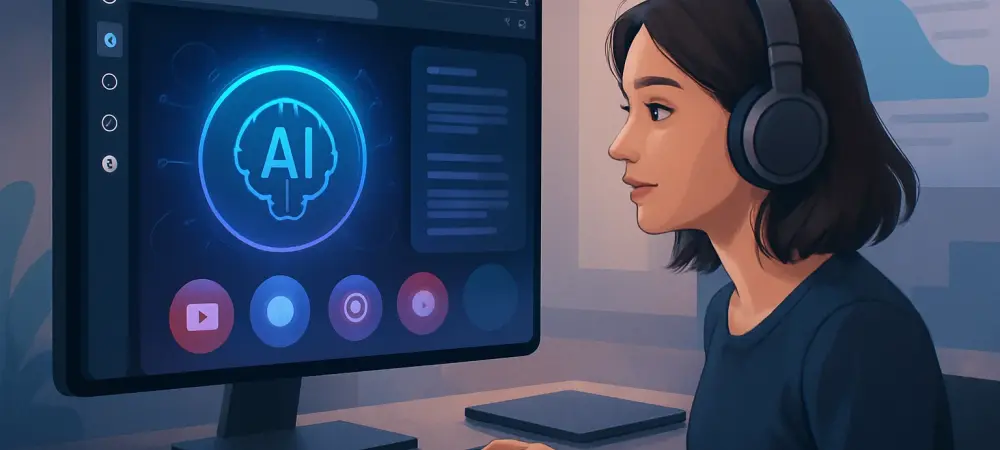
What if a single click could transform hours of scattered online research into a minute of crystal-clear insight? In a world drowning in data, Opera Neon, an experimental browser by Opera, has unleashed an AI-driven update that promises to do just that. This isn’t just another tech gimmick—it’s a bold reimagining of how people interact with the web. With features that streamline research and automate tasks, this update is catching the eye of tech enthusiasts and productivity seekers alike. Let’s explore how this browser is setting a new standard for digital navigation.
Why Opera Neon Stands Out in the Browser Arena
At its core, Opera Neon isn’t built for the casual user—it’s a testing ground for innovation, aimed at power users who crave tools beyond the ordinary. The latest AI update positions it as more than a portal to websites; it’s a proactive partner in managing information overload. As digital demands grow, with users juggling endless tabs and battling misinformation, the need for smarter browsing tools has never been clearer. Neon’s focus on experimental features offers a glimpse into a future where browsers don’t just display content—they anticipate needs and solve problems.
This significance can’t be overstated. In an era where efficiency is king, Neon’s AI capabilities address real pain points, from time-consuming research to disjointed workflows. By integrating artificial intelligence directly into the browsing experience, it challenges the status quo of mainstream browsers. This shift hints at a broader trend: the evolution of digital tools into intelligent assistants that empower users to focus on strategy rather than grunt work.
Diving into the AI Powerhouse: Key Features Unveiled
The heart of Opera Neon’s update lies in its suite of AI-driven tools, designed to turn passive browsing into active problem-solving. One standout is the Opera Deep Research Agent (ODRA), a game-changer for anyone who’s ever felt buried under a mountain of search results. Its 1-minute research mode delivers concise, citation-backed reports in roughly 60 seconds, slashing research time by up to 70%, according to early user feedback. This isn’t about skimming the surface—it’s about providing enough depth for informed decisions without the usual hassle of cross-referencing multiple sources.
Beyond speed, Neon offers flexibility that caters to diverse needs. Users can switch between leading AI models like Google’s Gemini 3 Pro and Nano Banana Pro mid-task, retaining chat history and context. This means choosing the best tool for the job—whether it’s analytical precision for data crunching or creative flair for brainstorming. Such adaptability appeals to those who demand tailored solutions, setting Neon apart from the one-size-fits-all approach of traditional browsers.
Then there’s the “Do” agent, a feature that bridges research and real-world application. By integrating with external platforms like Google Docs, it allows users to gather data and format it into polished documents in real time. Imagine compiling a presentation where the browser handles both the research and setup seamlessly. This automation targets a wide audience, from students crafting essays to professionals streamlining reports, proving that Neon isn’t just innovative—it’s intensely practical.
Voices from the Field: What Experts and Users Say
To gauge the true impact of this update, perspectives from both industry insiders and early adopters provide valuable insight. Tech analysts are buzzing about Neon’s agentic AI systems, which anticipate and execute tasks, heralding them as the future of user interfaces. One analyst noted, “Browsers like Neon are shifting from gateways to collaborators, and this update is a bold step in that direction.” This aligns with the industry’s push toward tools that don’t just respond but predict user needs.
Users, too, are vocal about the transformation. A freelance researcher shared, “I used to spend entire mornings piecing together information for client briefs. With Neon’s 1-minute research mode, I get reliable summaries almost instantly, complete with sources I can trust.” Such testimonials highlight the update’s real-world value, especially in high-pressure environments where time is a scarce commodity. Opera’s long-standing reputation for pushing boundaries only adds credibility to these claims, suggesting that Neon could influence broader browsing standards.
Real-World Impact: Changing How Work Gets Done
Consider the daily grind of a project manager racing against a deadline. Traditionally, pulling together market data might involve hours of sifting through websites, taking notes, and organizing findings. With Neon’s AI tools, that process shrinks dramatically—ODRA delivers a focused report in minutes, while the “Do” agent formats it directly into a shareable document. This isn’t just a time-saver; it’s a shift in focus from tedious tasks to strategic thinking, empowering users to prioritize creativity over logistics.
Moreover, the customizable AI model selection ensures that different professions benefit uniquely. A content creator might lean on Nano Banana Pro for imaginative drafts, while a data analyst opts for Gemini 3 Pro to crunch numbers with precision. This tailored intelligence means Neon isn’t a static tool—it evolves with the user’s demands. Such versatility underscores its potential to redefine productivity across industries, from education to corporate settings.
Peering Ahead: The Bigger Picture of AI in Browsing
Reflecting on Neon’s update reveals a deeper implication: browsers are no longer mere windows to the web—they’re becoming active layers of intelligence between users and information. This update showcases how AI can tackle persistent digital challenges, like information overload and workflow inefficiencies. As these tools mature, they could trickle down to mainstream browsers, reshaping expectations for what browsing should achieve over the next few years, from 2025 onward.
Looking back, the strides made with Opera Neon’s AI integration stood as a testament to the power of experimental tech in solving everyday problems. The journey of ODRA and the “Do” agent highlighted a turning point, where users reclaimed time once lost to manual processes. For those eager to stay ahead, exploring Neon’s capabilities offered a clear next step—testing these features in personal workflows could unlock untapped efficiency. The legacy of this update was not just in its innovation, but in its invitation to rethink how digital tools could serve humanity’s ever-growing needs.