

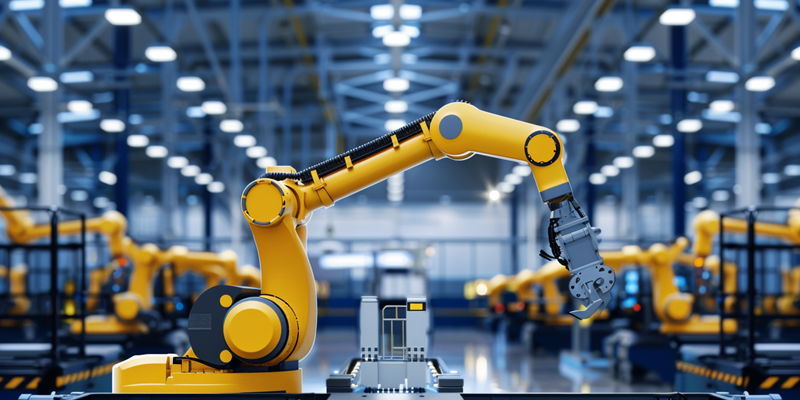
The field of industrial robotics is undergoing a transformative shift, with NVIDIA leading the charge by incorporating artificial intelligence into its platforms Isaac and Omniverse. Stephanie Leonidas’ reports shed light on how NVIDIA’s collaboration with prominent industry titans is ushering in a new era of AI-driven robotics solutions. Major players like Rockwell Automation, Techman Robot, Siemens, Intrinsic, and Teradyne Robotics are key partners in this venture. They’re focused on fine-tuning robot programming efficiency, accelerating deployment with simulation-based training, and streamlining their application in the real world—a blend of initiatives that’s reshaping the landscape of industrial automation.
Leveraging AI for Enhanced Robotics
Collaboration with Industrial Leaders
Joining forces with NVIDIA, these companies are keenly aware of how AI can redefine the realm of robotics. With the objective to address pressing issues such as labor shortages and the need for heightened safety measures, they’re exploring ways to utilize AI to bolster their robotic systems. NVIDIA’s partnerships demonstrate a proactive approach toward leveraging AI to not only complement the human workforce but to also create new avenues for efficiency and safety in manufacturing and beyond.
Breakthroughs in Robotic Technology
Techman Robot is making waves with its TM AI Cobot, showcased at Computex 2024. Backed by NVIDIA’s state-of-the-art AI models and vision systems—trained on a mixture of real and synthetic data from NVIDIA Isaac Sim—the cobot is engineered to handle diverse tasks with ease. Similarly, Universal Robots and Mobile Industrial Robots, subsidiaries of Teradyne Robotics, are utilizing NVIDIA’s technology to propel their cobot solutions forward and to simulate autonomous operations effectively, marking significant advancements in the cobot sphere.
Integrating Simulation for Rapid Deployment
Advancements in Robot Programming
Thanks to the Isaac Sim platform, Siemens is fine-tuning their SIMATIC Robot Integration Pack AI software, which employs deep learning to enhance applications like piece-picking. This strategic use of synthetic data is not only a cost-effective approach to training robots for intricate tasks but it’s also indicative of the far-reaching potential synthetic data has in robotics training. Intrinsic, another key player, uses Isaac Sim for its vacuum-grasping robot application, further underscoring the relevance of NVIDIA’s simulation platforms in perfecting robotic functions.
Fostering Real-world Applications
In the dynamic realm of industrial robotics, NVIDIA is at the forefront, infusing AI into its Isaac and Omniverse platforms. As reported by Stephanie Leonidas, NVIDIA’s strategic partnerships with industry giants are catalyzing a groundbreaking shift towards AI-centric robotic solutions. This coalition includes heavy hitters like Rockwell Automation, Techman Robot, Siemens, Intrinsic, and Teradyne Robotics. Together, they’re honing the precision of robot programming, expediting deployment via simulation-driven training, and refining robots for practical use. These collaborative efforts signify a profound transformation in the field of industrial automation, marking a significant turn towards greater efficiency and innovation across manufacturing processes. This synergy of industry expertise with NVIDIA’s AI technology is charting a new course in the pursuit of enhanced automation, promising to redefine productivity and competitiveness within the sector.