

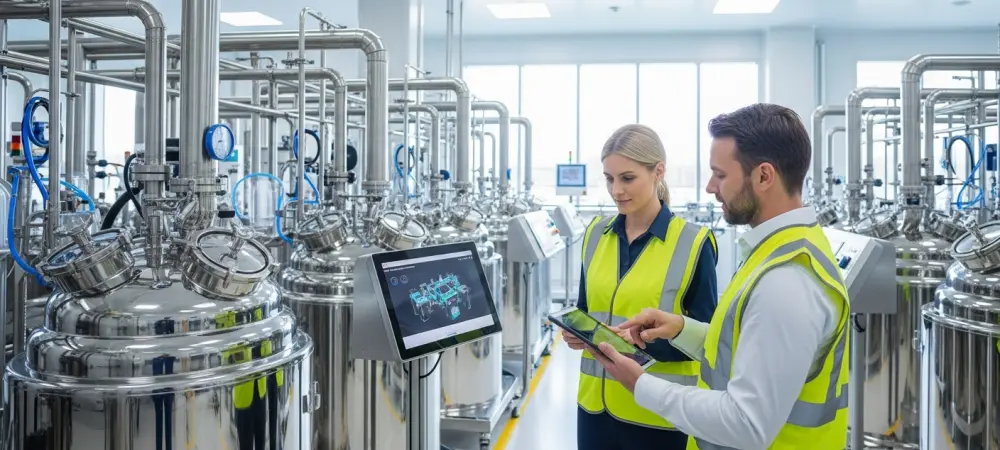
The traditional trial-and-error approach to drug discovery is rapidly being eclipsed by a sophisticated digital architecture that leverages high-performance computing to solve biological mysteries in record time. As the pharmaceutical industry moves deeper into this era of computational biology, the convergence of data science and life sciences has created a paradigm shift that redefines how molecules are identified, tested, and manufactured. This transformation is not merely an incremental improvement in software efficiency; it represents a fundamental overhaul of the entire drug development value chain, moving away from slow, manual processes toward a highly automated, predictive model. By integrating machine learning tools designed for high-stakes tasks such as predictive toxicology and molecular modeling, companies are finally addressing the systemic inefficiencies that have plagued the industry for decades. The goal is to move beyond the constraints of standard analytics and embrace a more disciplined, data-driven approach that ensures the global supply architecture remains both diversified and resilient against future disruptions.
Market Outlook and Growth Projections
Financial Trends: Stability and Scalability
The economic landscape for machine learning in the pharmaceutical sector is characterized by an exceptionally optimistic forecast, with a projected compound annual growth rate of 16% through 2035. This rapid expansion is rooted in the industry’s urgent need to modernize workflows that have historically been bogged down by rising costs and diminishing returns. Market value is expected to more than quadruple over the next decade as heavy capital investment flows from both established global giants and agile biotechnology startups. These organizations are increasingly allocating significant portions of their research and development budgets to digital infrastructure, recognizing that computational superiority is now a prerequisite for competitive survival. This influx of capital is not just supporting experimental software but is also funding the construction of high-tech facilities that are built from the ground up to be compatible with advanced algorithmic management. A significant driver of this financial stability is the shift toward a recurring revenue model centered on specialized reagents and consumables designed for machine-learning-enabled workflows. Unlike the one-time purchase of a software license, these high-margin items provide a consistent income stream for technology providers and lab equipment manufacturers. This trend toward high-margin, consistent revenue helps to offset the substantial initial costs associated with implementing complex hardware and software systems. As these integrated systems become the standard for quality control and release testing, the financial foundation of the market continues to strengthen, attracting long-term institutional investors who value the predictability of this modernized business model. This economic transition is ultimately making the pharmaceutical market more attractive to a broader range of financial partners, ensuring a steady supply of resources for ongoing innovation.
Strategic Capital Allocation: From Laboratories to Silicon
Pharmaceutical companies are fundamentally reallocating their resources to favor digital screening over physical infrastructure, representing a move toward a more “asset-light” research model. This strategic shift allows firms to minimize the massive overhead costs traditionally associated with maintaining large-scale physical laboratories and vast chemical libraries. By investing in scalable cloud computing and proprietary data lakes, these organizations can perform millions of simulations for a fraction of the cost of physical experimentation. This change in capital allocation is not just about saving money but about maximizing the return on investment for every dollar spent on drug discovery. The ability to fail fast in a virtual environment before ever moving to a physical trial allows companies to pivot quickly, focusing their most expensive human and capital resources on the most promising drug candidates.
This reallocation of capital is also visible in the growing number of acquisitions and strategic partnerships between big pharma and specialized artificial intelligence firms. Rather than attempting to build these complex computational capabilities entirely in-house, many established players are purchasing or merging with smaller firms that possess unique algorithmic intellectual property. This allows larger companies to rapidly integrate advanced machine learning models into their existing pipelines, bypassing years of internal development time. These partnerships are creating a new type of hybrid organization where biological expertise and computational power are treated as equal pillars of the corporate strategy. This consolidation trend is expected to continue as the barrier to entry for developing truly sophisticated models becomes higher, favoring those who have already established a robust digital footprint.
Core Drivers and Technological Shifts
Efficiency: The Revolution in Research and Manufacturing
The primary technological driver behind the current market transformation is the replacement of labor-intensive physical testing with high-fidelity virtual screening. Algorithms are now capable of analyzing millions of chemical compounds in a digital environment to identify potential “hits” with a level of speed and precision that was previously unimaginable. This acceleration in the early stages of the pipeline is a critical factor in reversing “Eroom’s Law,” a long-standing trend where drug discovery became more expensive and slower despite technological advances. By narrowing down potential candidates through predictive modeling before any lab work begins, researchers can focus on molecules with the highest probability of success, drastically reducing the time spent on dead-end projects. This efficiency gain is essential for bringing life-saving treatments to market faster and at a lower cost to the consumer. In the manufacturing sector, the move toward Industry 4.0 is being spearheaded by closed-loop systems that utilize real-time sensor data to optimize complex bioprocessing tasks. These systems automatically adjust variables like temperature, oxygen levels, and pH in bioreactors, which helps to maximize yields and eliminate the potential for human error. By creating “digital twins” of entire production lines, manufacturers can simulate various scenarios and prevent potential batch failures before they occur in the physical world. This predictive maintenance and optimization approach not only increases the overall output of pharmaceutical plants but also ensures a higher level of consistency and safety for the final products. The integration of these advanced manufacturing technologies is transforming production facilities from static environments into dynamic, self-optimizing ecosystems that can respond instantly to changes in the supply chain.
Regulatory Clarity: Supporting the Rise of Specialized Medicine
Clearer frameworks from major regulatory bodies like the FDA and EMA have significantly reduced the perceived risks for conservative pharmaceutical companies looking to adopt artificial intelligence. These agencies have begun to provide specific guidance on how machine learning can be validated and utilized in drug production, offering a roadmap for companies to move away from outdated legacy systems. This regulatory support has been a major catalyst for the industry, as it provides a level of certainty that was missing in previous years. With a defined path to compliance, manufacturers are more willing to invest in the necessary infrastructure to automate quality control and streamline their submission processes. This alignment between technology and regulation is fostering an environment where innovation can flourish without compromising safety or efficacy. Furthermore, the rise of personalized medicine and advanced gene therapies has made the adoption of machine learning a necessity rather than an optional luxury. These complex treatments require a level of precision in dosing and manufacturing that manual processes simply cannot achieve, as each therapy must be tailored to the specific genetic profile of an individual patient. Machine learning algorithms are uniquely suited for this task, as they can process the vast amounts of genomic data required to customize these treatments at scale. As the demand for these targeted therapies continues to grow, the role of sophisticated algorithms in managing the intricacies of production will only become more central. This shift toward precision medicine is driving a fundamental change in the pharmaceutical business model, moving it toward a service-oriented approach where the data is just as valuable as the physical drug itself.
Sector Dynamics and Global Distribution
Market Segmentation: Discovery vs. Manufacturing Dominance
The demand for machine learning technologies is distributed across several key segments of the industry, with drug discovery currently holding the largest market share at approximately 35%. This dominance is driven by the immediate and measurable impact that computational models have on reducing research timelines and costs. However, bioprocessing and manufacturing are catching up quickly, now accounting for 30% of the market share as companies look to automate their production floors. Other high-growth areas include specialized workflows for cell and gene therapies, which require real-time data integration to manage their sensitive biological components. This segmentation reflects a broader trend of end-to-end digitalization, where data flows seamlessly from the initial discovery phase all the way through to final manufacturing and distribution, creating a unified digital thread. A particularly impactful development within these sectors is the implementation of real-time release testing, which allows products to be shipped almost immediately after production by using automated quality checks. This eliminates the need for weeks of manual testing and quarantine, significantly improving the agility of the supply chain. By utilizing predictive models that monitor the entire production process, manufacturers can guarantee the quality of a batch based on the data collected during its creation. This transition toward real-time quality assurance is not only a logistical triumph but also a financial one, as it reduces the amount of capital tied up in inventory and storage. As more companies adopt these automated testing protocols, the speed at which drugs move from the factory to the pharmacy will continue to accelerate, benefiting patients and providers alike.
Geographic Trends: Regional Growth and Strategic Hubs
On a geographic level, North America remains the dominant player in the pharmaceutical machine learning market, currently holding nearly 40% of the global share. This position is supported by a robust venture capital environment and the presence of world-leading pharmaceutical hubs that are eager to integrate new technologies. The concentration of top-tier research universities and tech giants in regions like Boston and the San Francisco Bay Area has created a unique ecosystem where biology and data science can easily intersect. This regional advantage allows North American firms to attract the best talent and lead the way in setting global standards for computational drug discovery. However, this dominance is not uncontested, as other regions are aggressively investing in their own biotech capabilities to capture a larger share of this growing market. In contrast, the Asia-Pacific region is emerging as the fastest-growing market, driven by massive public and private investments in biotechnology hubs in China and India. These countries are not only focused on traditional manufacturing but are also rapidly building their own domestic capabilities in artificial intelligence and data science. This investment is aimed at creating self-sufficient pharmaceutical sectors that can compete on a global scale while also serving their large domestic populations. While Europe maintains a strong position through its long history of manufacturing excellence and clinical research, it faces specific challenges related to strict data privacy laws and fragmented national policies. Despite these hurdles, European firms are increasingly collaborating across borders to pool data and resources, ensuring that the continent remains a central player in the global pharmaceutical landscape as it navigates the complexities of the digital age.
Competitive Landscape and Market Constraints
Operational Challenges: Supply Chains and Specialized Talent
Despite the overwhelmingly positive outlook, the market faces several significant hurdles, including long qualification periods for new suppliers that can last up to four months. These lengthy review processes are necessary to ensure compliance with strict safety and quality standards, but they can slow down the implementation of new machine learning tools. High switching costs also create a barrier for companies looking to move away from established legacy providers, as the cost of retraining staff and migrating data can be prohibitive. Furthermore, a heavy dependency on a small group of international producers for specialty inputs and high-end computing hardware creates vulnerabilities in the supply chain that can be exacerbated by geopolitical tensions. These logistical constraints mean that the transition to a fully digital pharmaceutical market will likely be a gradual process rather than an overnight revolution. Another critical constraint is the significant shortage of professionals who possess the rare blend of expertise in both biology and data science. These “bilingual” experts are essential for designing and tuning models that can accurately reflect the complexities of biological systems. Without a workforce that understands both the nuances of molecular chemistry and the mechanics of neural networks, the effectiveness of these advanced tools will always be limited. This talent gap has led to a fierce competition for skilled employees, with pharmaceutical companies often finding themselves in bidding wars with Big Tech firms. Addressing this shortage will require a long-term commitment to education and cross-disciplinary training programs that bridge the gap between different scientific fields. Until this talent pool is expanded, the speed of innovation in the pharmaceutical machine learning sector may be throttled by the lack of human experts to lead the way.
The Competitive ArenBig Tech and Specialty Firms
The competitive environment in 2026 is clearly split between “Big Tech” infrastructure providers and specialized “AI-Pharma” firms that focus on niche biological applications. Large technology companies like NVIDIA and Microsoft provide the essential computational backbone, offering the high-performance hardware and cloud infrastructure required to train massive biological models. These giants are increasingly positioning themselves as indispensable partners for the pharmaceutical industry, providing the “picks and shovels” for the digital gold rush. On the other side of the landscape are specialists such as Schrödinger and Recursion Pharmaceuticals, who focus on developing highly specific models for drug-target interactions and cellular imaging. These firms differentiate themselves by their deep understanding of biology, offering proprietary platforms that are specifically tuned for the unique challenges of drug discovery.
Recent trends indicate a shift toward long-term, exclusive partnerships between technology suppliers and large contract manufacturing organizations. These alliances are built on the realization that reliability and output quality have become the most important factors for competition in a data-driven market. By securing a stable supply of high-end computing power and specialized software, manufacturers can offer their clients a more efficient and predictable service. This move toward vertical integration and strategic collaboration is creating a more consolidated market where a few dominant partnerships set the pace for the rest of the industry. For smaller firms, finding a unique niche or developing a truly groundbreaking algorithm remains the primary way to compete against these larger, more established coalitions. This competitive dynamic ensures that the market remains vibrant and innovative, even as it becomes more mature and resource-intensive.
Future Strategic Integration
The integration of machine learning into pharmaceutical workflows represented more than a simple technological upgrade; it was a fundamental redefinition of how medicine was conceived and delivered. Organizations that prioritized data literacy and cross-disciplinary collaboration eventually found themselves at the forefront of a more resilient and responsive health ecosystem. The transition toward silicon-based modeling allowed the industry to move past the era of diminishing returns, establishing a new baseline for speed and precision that benefited everyone involved. Strategic leaders recognized that the key to sustained success lay not just in the software itself, but in the seamless harmonization of computational power with biological expertise.
Looking ahead, the pharmaceutical industry needed to focus on harmonizing international data standards to ensure that the global research community could share insights without compromising privacy or intellectual property. The establishment of secure, federated learning environments allowed multiple organizations to train models on shared data without revealing sensitive information, further accelerating the pace of discovery. Decision-makers also had to address the ethical implications of automated decision-making in drug safety, ensuring that human oversight remained a core component of the development process. By the time these digital systems were fully matured, the industry had moved into a new era where the time between identifying a biological threat and delivering a cure was measured in months rather than years. Organizations that successfully navigated these changes secured their place in a future where data was the most critical ingredient in every new treatment.