

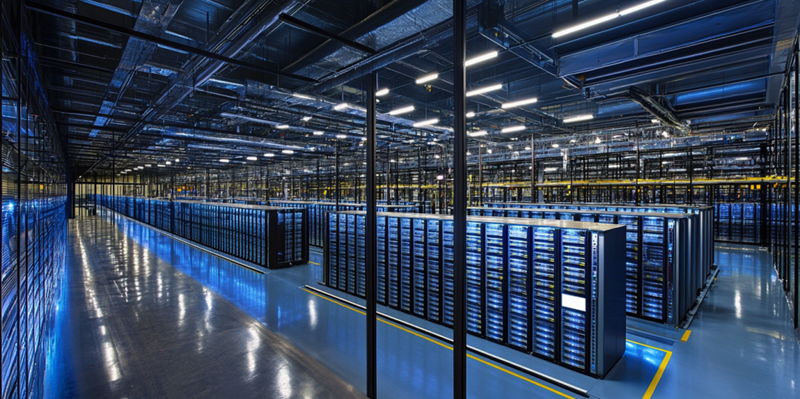
The digital world is becoming increasingly data-driven, and enterprises are relying more on data centers for their ever-growing data needs. With this reliance comes the complex necessity of deploying new equipment, relocating servers, or even building new data centers, all of which can present significant challenges to maintaining operational efficiency, security, and confidentiality. Recognizing this vital need, Kuehne+Nagel has launched specialized logistics solutions specifically tailored to support the rapidly growing data center industry worldwide, addressing these critical challenges with innovative and efficient logistics practices.
Addressing Complex Supply Chains
As global trends such as artificial intelligence (AI), sustainability, and automation continue to evolve, data center operators face the formidable task of building new sites and upgrading existing facilities. These activities require managing highly sensitive shipments that demand extraordinary care to ensure their safety and integrity. White-glove handling has become an increasingly common practice for these critical transitions. The drive to develop a dedicated logistics solution for server and data center equipment emerged from a clearly identified need to address these intricate complexities with precision and effectiveness.
Kuehne+Nagel, widely recognized as a leader in the logistics industry, aims to stay ahead of the accelerating demands of the data center sector. Barry O’Dowd, Head of Global Development at Kuehne+Nagel, emphasizes the company’s extensive experience in shipping cloud infrastructure equipment, affirming their readiness to meet both the immediate and future needs of their customers. Their newly developed logistics playbook prioritizes reliability, security, and scalability, leveraging their vast 1,000-site global network to support rapid deployment and scaling of data center infrastructure across various regions.
Comprehensive Logistics Services
Kuehne+Nagel offers a complete suite of logistics services designed to ensure minimal downtime for data centers. These services include meticulous pre-delivery preparation, detailed route planning, careful unloading, and thorough inspection at the destination. The aim is to ensure smooth and uninterrupted operations for their clients. It is noted that approximately 80% of respondents have encountered delays in the manufacturing or delivery of critical equipment, underscoring the critical importance of having a coordinated logistics plan in place to mitigate such disruptions.
The company’s 2025 global cloud infrastructure network is designed to guarantee core-level services, powered by trained personnel proficient in handling the complexities of international shipping regulations and customs clearances. Lane risk assessments and maintaining an unbroken chain of custody are key components of their risk mitigation strategy. Kuehne+Nagel’s clients benefit from advanced planning and teams of knowledgeable experts who ensure high-value equipment is protected and delivered precisely on schedule. Moreover, a dedicated customer care manager serves as a single point of contact to swiftly address any unforeseen events. The deployment of digital checklists and GPS-enabled real-time monitoring sensors ensures that each shipment adheres to the planned schedule and route.
Emphasizing Sustainability
The importance of sustainability in data centers continues to grow, with many leading companies striving to achieve zero carbon emissions by 2030. Managing indirect greenhouse gas (GHG) emissions, known as Scope 3 emissions, remains a substantial challenge. Kuehne+Nagel looks to tackle this issue through their Living Environmental, Social, and Governance (ESG) program, which offers tangible solutions aimed at reducing CO2 emissions within supply chains. With comprehensive CO2 shipment data transparency and a selection of low-emission transport options, they empower their customers with visibility and insights into the emission data for every shipment, facilitating informed decision-making.
Operational efficiency, alongside protecting cloud infrastructure equipment from environmental and physical disturbances, is crucial during transportation. Specialized logistics solutions incorporating climate control and shock absorption features may be added as necessary to ensure zero damage during transit. Additional value-added services include white-glove handling, site surveys, and direct delivery to secured locations, reinforcing the seamless transition of equipment. Significantly, Kuehne+Nagel’s ISO 27001 certification provides assurance to customers about the confidentiality and protection of their information, whether stored on servers or concerning the locations of data centers.
Ensuring Security and Reliability
The digital age is increasingly driven by data, and companies are more dependent on data centers to meet their expanding data requirements. This dependence brings the intricate challenge of managing new equipment deployment, moving servers, or building new data centers, all of which can pose significant obstacles to sustaining operational efficiency, security, and confidentiality. Understanding this critical need, Kuehne+Nagel has introduced specialized logistics solutions to support the burgeoning data center industry on a global scale. These tailored solutions are designed to tackle the complex challenges with innovative and efficient logistics practices, ensuring that businesses can maintain seamless operations. With the rapid growth of data center demands, Kuehne+Nagel’s logistics services provide essential support in handling the logistical intricacies. Their expertise helps reduce downtime and ensures that data centers can operate smoothly without compromising on security or confidentiality. This comprehensive approach addresses the specific needs of data centers, marking a significant step toward supporting the data-driven future.