

In an era where rapid technological advancements characterize the business landscape, companies across various sectors are exploring innovative solutions to enhance efficiency and maintain competitiveness. Intelligent Automation (IA), a convergence of artificial intelligence (AI) and robotic process automation (RPA), stands out as a transformative force revolutionizing business operations. IA goes beyond simple automation by integrating machine learning, natural language processing, and cognitive automation. These technologies enable systems not only to automate tasks but also to learn and adapt, ultimately making informed decisions. As companies navigate the complexities of digital transformation, IA offers compelling potential to optimize processes, improve accuracy, and reduce costs, profoundly impacting sectors such as finance, manufacturing, and healthcare.
Core Components of Intelligent Automation
At the core of IA’s innovative approach are three key components: machine learning, natural language processing, and cognitive automation. Machine learning, a subset of AI, empowers systems to identify patterns and improve their accuracy over time. For instance, machine learning algorithms can analyze vast amounts of data to detect trends, forecast outcomes, and automate decision-making processes. This capability proves invaluable in industries where accuracy and efficiency are paramount, such as finance and healthcare.
Natural language processing (NLP) is another critical element of IA, facilitating seamless human-computer interactions. By enabling machines to understand, interpret, and respond to human language, NLP bridges the gap between technology and users. Applications of NLP include chatbots that provide customer support, voice-activated assistants that streamline tasks, and sentiment analysis tools that offer insights into customer opinions. Finally, cognitive automation integrates machine learning and NLP with advanced decision-making algorithms, allowing systems to tackle complex scenarios typically managed by humans. This holistic approach enables businesses to fully leverage IA’s capabilities, fostering innovation and efficiency.
Impact on Financial and Manufacturing Sectors
The financial sector has witnessed significant enhancements due to IA’s ability to analyze transaction data in real-time, improving fraud detection and compliance monitoring. Advanced algorithms can sift through enormous datasets to discern suspicious patterns, reducing risks and boosting operational efficiency. For example, IA-driven solutions can instantly flag anomalies in transactions, protecting consumers and institutions alike. By automating compliance tasks, such as verifying transactions against regulatory requirements, IA also helps financial institutions maintain adherence to stringent regulations.
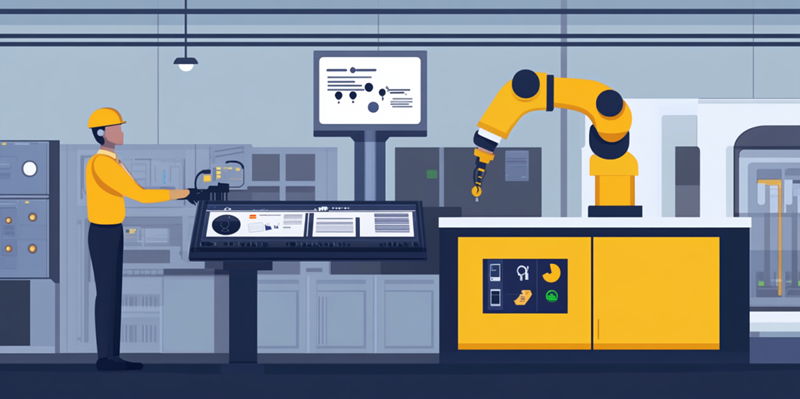
In manufacturing, IA has been a game-changer, driving productivity and efficiency to new heights. Smart robots equipped with IA can adapt their performance based on sensor data, safeguarding quality control and minimizing downtime. This adaptability has led to a remarkable 60% increase in productivity within the sector. Predictive maintenance, another application of IA, leverages real-time data to anticipate equipment failures, significantly reducing downtime by half and cutting maintenance costs by 10%. Together, these advancements ensure that manufacturing processes run smoothly and efficiently, setting a new standard for the industry.
Transformation in Healthcare Operations
IA’s impact on the healthcare sector has been profound, resulting in improved diagnostic capabilities, streamlined administrative tasks, and enhanced patient experiences. The technology has dramatically reduced error rates by up to 50%, ensuring more accurate and timely patient care. IA’s ability to analyze medical images and patient data has revolutionized diagnostics, allowing for quicker and more precise identifications of conditions. This advancement leads to better patient outcomes and more effective treatments, ultimately elevating the standard of care provided by healthcare institutions.
Administrative efficiency in healthcare has also benefited from IA, which has streamlined processes like record management, appointment scheduling, and billing. By automating these tasks, IA frees up healthcare professionals to focus on patient care, improving overall service quality. Intelligent chatbots and automated support systems have enhanced patient interactions, providing timely responses and improving satisfaction. These advancements have collectively transformed the healthcare ecosystem, paving the way for a more efficient and patient-centric approach.
Challenges and Strategic Implementation
Despite its many benefits, implementing IA poses several challenges that businesses must navigate. High initial costs and the need for skilled personnel represent significant barriers to entry. Additionally, integrating IA with existing systems can be complex, requiring thorough planning and strategy. Data security and privacy issues, particularly in sensitive sectors like healthcare and finance, necessitate robust data governance frameworks to protect sensitive information and ensure regulatory compliance.
Ethical considerations also play a crucial role in IA adoption, particularly concerning its impact on the workforce. As automation increasingly takes over routine tasks, there is a growing need to re-skill employees and prepare them for new roles. A strategic approach to IA implementation involves phased integration, focusing on high-impact processes initially, and gradually expanding IA’s scope. This method allows businesses to manage the transition effectively, maximizing the benefits while mitigating potential risks.
The Future of Intelligent Automation
The future of intelligent automation holds significant promise for transforming business operations across multiple sectors. In the financial sector, for instance, IA’s real-time transaction data analysis enhances fraud detection and compliance monitoring. Advanced algorithms can rapidly sift through extensive datasets to identify suspicious patterns, mitigating risks and boosting operational efficiency. IA-driven tools can swiftly flag transaction anomalies, protecting both consumers and institutions. Additionally, by automating compliance tasks, such as validating transactions against regulations, IA helps financial institutions adhere to strict regulatory standards.
In manufacturing, IA continues to revolutionize productivity and efficiency. Smart robots equipped with IA can adjust their operations using sensor data, ensuring quality control and minimizing downtime. This adaptability has led to a 60% productivity increase in the sector. Predictive maintenance, another IA application, uses real-time data to foresee equipment failures, slashing downtime by 50% and reducing maintenance costs by 10%. These advancements guarantee that manufacturing processes run seamlessly and efficiently, establishing a new benchmark for the industry.