

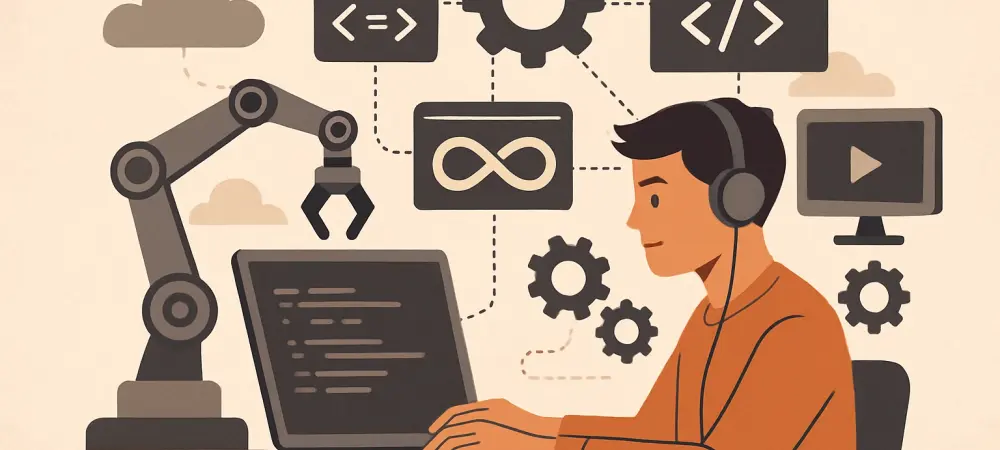
In the fast-evolving realm of software development, DevOps teams are under constant pressure to deliver high-quality applications at breakneck speeds, and the challenges of manual processes can significantly hinder progress. Picture a scenario where every manual task, from debugging to deployment, slows down progress, costing countless hours and risking critical errors. What if artificial intelligence could step in to shoulder this burden, automating complex workflows with precision? Harness AI has emerged as a groundbreaking force in this space, promising to redefine how teams approach software delivery through intelligent automation. This technology is not just a tool but a paradigm shift, capturing the attention of industry leaders and developers alike.
What If DevOps Workflows Could Operate Autonomously?
Envision a DevOps environment where tedious, repetitive tasks no longer consume valuable time. Instead of wrestling with broken scripts or manually configuring pipelines, teams could focus on high-level strategy and innovation. Harness AI is turning this vision into reality by introducing a platform that anticipates needs, constructs workflows, and resolves issues with minimal human intervention. This shift toward automation is not merely a convenience but a necessity in an era where speed and reliability are paramount.
The impact of such a system is profound, especially for organizations managing intricate software delivery cycles. By leveraging AI to handle grunt work, developers can dedicate their energy to creative problem-solving and long-term planning. Harness AI stands out as a pioneer, offering a glimpse into a future where efficiency and scalability are no longer aspirations but achievable standards.
Why AI in DevOps Has Become Essential
The demand for faster software releases without compromising quality has never been higher. Traditional DevOps practices often falter under this strain, with fragile scripts and manual processes leading to delays, downtime, and frustrated teams. AI is no longer a trendy concept but a critical solution to these persistent challenges, automating routine tasks and optimizing complex operations with unmatched precision.
Harness AI is leading this transformation by addressing specific bottlenecks such as testing inefficiencies and deployment failures. Unlike older methods that struggle to scale, this platform uses intelligent algorithms to streamline workflows, reducing the risk of errors and enhancing productivity. Its ability to adapt to dynamic environments positions it as an indispensable asset for modern development teams striving to stay competitive.
This shift reflects a broader industry recognition that automation powered by AI can solve real-world problems. With software delivery cycles becoming increasingly intricate, the integration of such technology is essential for maintaining a balance between speed and reliability. The evidence is clear: AI in DevOps is here to stay, reshaping expectations and outcomes.
Harness AI’s Cutting-Edge Features in DevOps Automation
At the core of Harness AI lies a Software Delivery Knowledge Graph, a sophisticated framework that aggregates data from various DevOps tools to fuel its capabilities. This system empowers AI agents to execute diverse functions, from crafting deployment pipelines based on natural language inputs to performing detailed root-cause analysis during system failures. Such innovation eliminates much of the manual effort that has long plagued software delivery.
Key features of this platform include automated test generation, support for chaos experiments, vulnerability scanning, and cloud cost optimization. Beta testing has yielded impressive results, with a reported 50% reduction in downtime, an 80% decrease in test cycle times, and a 70% drop in test maintenance efforts. These statistics demonstrate how Harness AI addresses scalability challenges and transforms workflows into seamless, efficient processes.
Beyond raw numbers, the platform’s ability to integrate with existing tools ensures that teams can adopt it without overhauling their current systems. This adaptability, combined with tangible efficiency gains, underscores the potential for Harness AI to become a cornerstone of DevOps practices. It offers not just automation but a smarter way to manage the complexities of modern software environments.
Industry Perspectives on Harness AI’s Real-World Value
Across the tech landscape, thought leaders and early adopters are acknowledging the transformative power of Harness AI. Industry conversations have shifted from questioning the relevance of AI in DevOps to strategizing its widespread implementation. The consensus is that automation through AI agents will soon become standard, fundamentally altering how software delivery is approached.
Feedback from beta testers paints a compelling picture of enhanced productivity, with many reporting significant reductions in manual workload. Yet, a critical insight emerges: while AI excels at handling repetitive tasks, human oversight remains vital for validating results and managing intricate workflows. This balance ensures that automation serves as a partner rather than a replacement, empowering engineers to focus on innovation.
This duality highlights a larger narrative within the industry. As AI adoption grows, the role of DevOps professionals evolves from task execution to strategic orchestration. The reduction in burnout and the opportunity to engage in higher-value work signal a positive trajectory, positioning Harness AI as a catalyst for sustainable progress in the field.
Practical Strategies for Implementing Harness AI in DevOps
For teams eager to integrate Harness AI, the first step involves identifying specific pain points within current workflows, such as delays in testing or frequent deployment issues. Mapping these challenges to the platform’s features—like automated pipeline creation or root-cause analysis—provides a clear path to improvement. This targeted approach ensures that automation addresses the most pressing needs.
Integration with existing systems is another crucial consideration. Harness AI’s Software Delivery Knowledge Graph enables seamless data aggregation from multiple tools, but teams must establish protocols to ensure alignment with organizational policies. Assigning personnel to monitor AI outputs and make critical decisions maintains control while maximizing the benefits of automation.
Finally, measuring the impact through key metrics like downtime reduction and test cycle efficiency is essential for continuous refinement. Regularly reviewing these data points allows for adjustments and optimization of the DevOps process. By following these practical steps, organizations can effectively harness AI-driven automation, transforming challenges into opportunities for growth and innovation.
As the journey with Harness AI unfolds, it becomes evident that this technology has reshaped the DevOps landscape in remarkable ways. The impressive reductions in downtime and testing cycles during beta phases speak volumes about its potential to alleviate longstanding burdens. Looking ahead, teams are encouraged to explore how such automation can be tailored to their unique needs, ensuring that every workflow benefits from intelligent intervention. The focus shifts toward refining the orchestration of AI agents, balancing their capabilities with human expertise to drive sustained success in software delivery.