

The German data center market is currently navigating a period of unprecedented expansion that is fundamentally altering how digital information flows across the entire European continent. With nearly 500 facilities already operating across its borders, the nation is successfully transitioning from a centralized model toward a more geographically distributed and technologically advanced ecosystem. This evolution is being propelled by the rapid integration of artificial intelligence, machine learning, 5G connectivity, and expansive cloud services that require localized processing power. As global data volumes continue to climb toward a projected 284 zettabytes by 2027, Germany finds itself at the center of a strategic expansion that balances immense enterprise demand with increasingly stringent regulatory and environmental constraints. The current landscape suggests that the country is no longer merely a participant in the digital economy but its primary infrastructural engine.
The Rise of a New Digital Powerhouse in Central Europe
The German market has reached a level of maturity that places it at the forefront of European digital infrastructure. The relevance of this shift cannot be overstated, as the country now serves as the primary gateway for data traffic between Western and Eastern Europe. This transformation is driven by a massive influx of capital from global hyperscalers and colocation providers who view Germany as a safe haven for data due to its robust legal framework and economic stability. By expanding its capacity, Germany is not only meeting its internal needs but is also providing the necessary compute power for the entire European Union’s digital single market initiatives.
This article explores the multifaceted growth of the German data center sector, examining how it is moving away from the traditional dominance of a single hub toward a multi-region strategy. Key insights include the rising importance of sovereign cloud solutions, the integration of high-performance computing to meet artificial intelligence demands, and the pioneering role the country is taking in sustainable energy integration. As the industry faces the dual challenges of power scarcity and regulatory compliance, the German model offers a glimpse into the future of responsible and resilient digital infrastructure on a global scale.
Historical Context and the Shift from Centralization
Historically, the European data center market has been defined by the “FLAP-D” cities, which include Frankfurt, London, Amsterdam, Paris, and Dublin. However, Germany is unique within this group for its decentralized economic structure, which prevents any single city from monopolizing the market. Unlike the United Kingdom, where data center activity is heavily concentrated around London, Germany’s industrial and population centers are spread across several major regions. This geographic diversity is fostering a multi-hub model that breaks the traditional reliance on a single primary city, allowing the country to serve as a more resilient backbone for the continent’s digital economy.
The foundational shift toward this decentralized model began as German industries realized the importance of low-latency data processing for manufacturing and automotive sectors. In the past, the focus was almost entirely on the financial services sector in Frankfurt, but the digital transformation of the “Mittelstand” (medium-sized enterprises) required infrastructure to be closer to where the actual production occurred. These background factors are critical for understanding why Germany is now seeing explosive growth in regions that were previously overlooked. This historical momentum has paved the way for a more robust and distributed digital landscape that can withstand local power constraints and regional disruptions.
Strategies for Regional Expansion and High-Density Growth
Diversifying the Hub: Beyond the Frankfurt Ecosystem
Frankfurt remains the primary anchor of the German market, serving as Europe’s second-largest data center hub with high-density interconnectivity. Supported by DE-CIX, the world’s leading internet exchange, the city manages approximately 745 MW of live IT load, with nearly 1,000 MW more in various planning phases. However, the market is no longer a one-city show as Berlin is emerging as a critical secondary hub. This shift is driven by Berlin’s status as the political capital and the rising demand for sovereign cloud solutions. Such facilities allow government entities to run workloads under strict local data residency protocols, making Berlin a primary target for hyperscalers who need to comply with national security standards.
The growth in Berlin is not just a trend but a strategic necessity to ensure low-latency services for its population of four million. With a significant pipeline of projects under development, the city is quickly catching up to more established markets. This development reflects a broader desire for geographic diversity to ensure data redundancy and disaster recovery capabilities. By spreading the load across different seismic and power zones, operators can offer higher service-level agreements to their enterprise clients.
Industrial Hubs and the Rise of Tier-Two Markets
Beyond the major metropolises, strategic investments are flowing into regions like the Rhineland, Munich, Hamburg, and Bonn to support local industry. These areas capitalize on Germany’s specialized sectors, such as automotive manufacturing in the south and large-scale chemical production in the west. For example, recent developments in the Rhineland highlight a shift toward placing compute power where land and grid access are more readily available than in the congested Frankfurt market. This distributed approach ensures low-latency services for industrial internet of things applications and corporate headquarters located far from the traditional financial centers.
These tier-two markets offer a unique competitive advantage in terms of space and scalability. While Frankfurt faces land scarcity and rising costs, regional hubs provide a path for sustainable long-term expansion. Moreover, these locations allow for closer collaboration between data center operators and industrial giants who are increasingly utilizing machine learning to optimize their supply chains. This localized infrastructure is becoming the bedrock of Germany’s industrial future, bridging the gap between physical production and digital intelligence.
Innovation in AI and High-Performance Computing
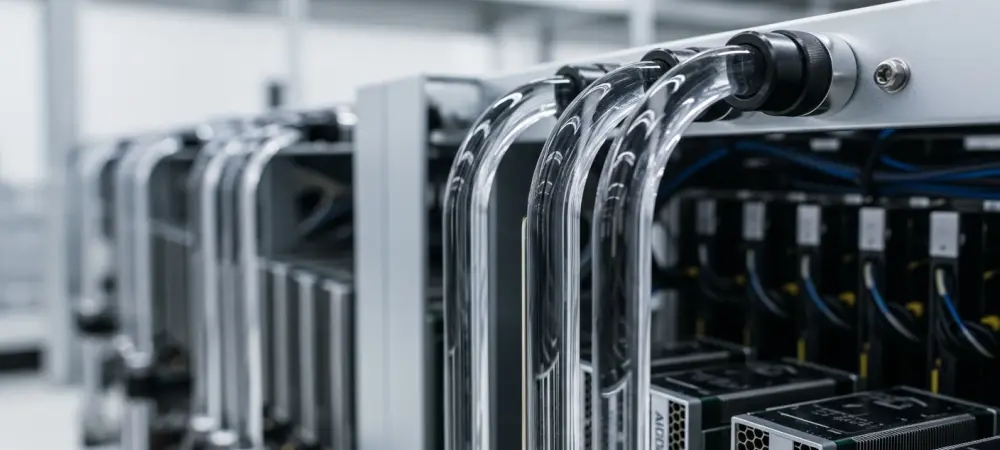
The demand profile in Germany is increasingly dominated by public cloud providers, but artificial intelligence workloads represent the fastest-growing segment of the market. The industry is seeing a significant shift toward AI inference and high-performance computing, which require more power-dense environments than traditional enterprise workloads. This shift is pushing data center operators to innovate in liquid cooling and high-density rack configurations that were previously considered niche. Hyperscalers are favoring Germany not only for its stability but also because of the virtuous cycle created by established availability zones, making it cost-effective for enterprises to migrate hybrid cloud workloads to the same vicinity.
The rise of these specialized workloads also addresses common misconceptions that all data center growth is identical. In reality, the infrastructure being built today is far more complex than the server rooms of a decade ago. These modern facilities are designed to handle massive thermal loads and provide the extreme reliability required for real-time AI processing. As these technologies become more integrated into daily business operations, the need for high-density environments will only continue to accelerate.
Future Trends in Sustainable Infrastructure and Grid Integration
The most significant constraint facing future expansion is the availability and distribution of electrical power across the national grid. German data centers consume approximately 17.9 billion kilowatt-hours annually, and the strain on the national grid has become a critical hurdle for new developments. Moving forward, a deeper integration between data centers and the energy sector is expected to redefine the operational relationship between infrastructure and utilities. Operators are no longer just consumers; they are becoming active participants in Germany’s energy transition, known locally as the Energiewende. Emerging trends suggest that future facilities will act as flexible loads for the grid, utilizing massive battery storage systems to provide frequency regulation. These systems support the stability of a renewable-heavy energy market by absorbing excess power during peaks and discharging it when demand rises. Furthermore, the bottleneck in grid transmission is forcing utilities to upgrade infrastructure at an unprecedented pace, while developers are increasingly required to show how their facilities will integrate with local energy plans. This synergy between data and power is creating a new paradigm where digital infrastructure is viewed as a partner in national sustainability.
Strategic Recommendations for Navigating the German Market
For businesses and investors looking to enter or expand within this landscape, a proactive approach to regulation and local integration is essential. The Energy Efficiency Act has introduced mandatory requirements for waste-heat recovery and renewable energy procurement that can no longer be ignored. Best practices now include partnering with local municipalities to feed byproduct heat into district heating networks, which helps data centers integrate into the urban fabric. This strategy not only meets regulatory requirements but also improves the public perception of large-scale infrastructure projects.
Additionally, moving beyond simple carbon offsets toward real-time renewable energy procurement is becoming the industry standard. By entering into partnerships with local wind and solar providers, operators can ensure their energy supply is carbon-free on a 24/7 basis. Investors should also prioritize grid-ready site selection by identifying locations with existing high-voltage capacity or by investing in private infrastructure to mitigate the approval bottlenecks seen in major cities. Those who can navigate these bureaucratic and technical hurdles will find themselves with a significant competitive advantage in a market where capacity is at a premium.
Setting the Global Standard for Digital Infrastructure
Germany’s trajectory suggested that it remained the central pillar of the European data center market, likely becoming the only market in the region to exceed 4 GW of installed capacity. By forcing innovation in energy efficiency and grid integration, the country matured into a more sustainable and technologically sophisticated version of itself. This evolution proved significant because it provided a blueprint for how high-density digital infrastructure could coexist with aggressive environmental targets. The market demonstrated that regulatory hurdles were not roadblocks but catalysts for superior engineering and community integration.
The strategy shifted toward a model where data centers operated as civic assets rather than isolated industrial sites. This transition allowed the industry to secure its future by proving that digital growth did not have to come at the expense of national energy goals. Ultimately, Germany did not just expand its capacity; it redefined the very parameters of what a modern, responsible data hub looked like for the 21st century. Stakeholders who embraced this holistic view of infrastructure were the ones who successfully secured their place in the continent’s digital future. Actionable steps taken now in waste-heat recovery and grid-interactive technologies will likely dictate the winners of the next decade.