

Modern enterprise security departments often find themselves caught in a difficult balancing act between maintaining expensive physical infrastructure and the undeniable pressure to transition toward cloud-based agility. For many, the hurdle is not a lack of interest in digital transformation but rather the staggering capital investment already sunk into hundreds of miles of wiring and thousands of legacy hardware components. This friction creates a stagnation point where security teams are forced to choose between an insecure rip-and-replace strategy or remaining tethered to outdated on-premise servers. Genetec has addressed this specific dilemma by evolving its Security Center SaaS platform into a bridge that connects traditional physical security with the high-performance capabilities of the hybrid cloud. By shifting the focus from total replacement to strategic modernization, the platform allows for a gradual and economically viable migration. This approach ensures that current investments remain viable while gaining the scalability needed for future growth.
The Architecture of Open Connectivity
Bridging Legacy Systems Through Hybrid Integration
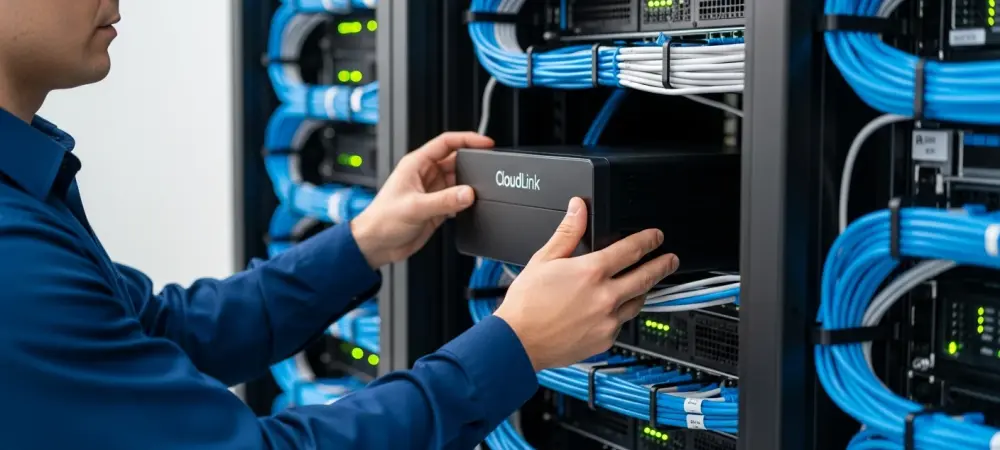
The implementation of high-capacity Cloudlink appliances serves as the primary technical foundation for connecting existing on-site intrusion panels directly to the cloud environment. Instead of discarding functional hardware from established brands like Bosch or Honeywell, organizations can now route these systems through a centralized interface that handles data processing in a hybrid environment. This strategic move aligns with a broader industry shift toward a single-pane-of-glass management style, where security personnel no longer need to switch between multiple proprietary software applications to monitor different zones. The flexibility provided by this open architecture is particularly beneficial for large-scale campuses where a diverse array of hardware brands may have been installed over several decades. By standardizing the communication protocols through a cloud-native platform, the complexity of maintaining varied legacy systems is drastically reduced, allowing teams to focus on active threat response rather than troubleshooting hardware compatibility issues.
Scalable Infrastructure and Cloud Efficiency
Transitioning to a hybrid model provides the necessary agility to scale security operations across multiple global sites without requiring a massive local server footprint at every location. The cloud-native approach allows for centralized management of permissions and security policies, which ensures that a change made at the corporate headquarters is instantly reflected in satellite offices. This reduction in local hardware dependencies not only lowers maintenance costs but also enhances the overall resilience of the security network against localized power outages or equipment failures. By leveraging the elasticity of the cloud, enterprises can add or remove camera feeds and access points dynamically as their operational needs evolve. This modularity is essential for businesses experiencing rapid growth or those managing seasonal fluctuations in staffing and facility usage. The platform ensures that the underlying infrastructure remains invisible to the end user, providing a smooth experience that prioritizes security over technical management.
Operational Excellence and Advanced Identity
Unifying Front Desk Workflows for Enhanced Safety
Beyond the technical hardware layer, the focus on user experience has led to the unification of front-desk operations into a singular and highly efficient digital workflow. Historically, visitor management and employee access control were treated as separate silos, which often resulted in data discrepancies and security gaps during guest check-ins. The new integrated design eliminates this friction by allowing reception staff to verify visitor permissions and cross-reference identities against external security databases from the same screen used for regular badge management. In environments such as healthcare facilities or educational institutions, where the speed of notification is vital, this automation provides immediate alerts to security teams the moment a restricted individual is identified. By simplifying these complex interactions into a streamlined process, the platform reduces the cognitive load on administrative staff and significantly lowers the risk of human error in high-pressure situations. This modernization transforms the lobby from a security bottleneck into a proactive checkpoint.
Biometric Verification and Future Security Protocols
Looking toward the immediate horizon of identity management, the inclusion of SAFR SCAN for facial authentication signals a shift toward more stringent credential-free security layers. As traditional physical badges become increasingly vulnerable to theft or duplication, the move toward biometric verification ensures that access to high-security areas is granted only to the actual authorized person. The rollout of these features, along with expanded support for DMP panels, is strategically timed to conclude by June of the current year. To maximize the benefits of these advancements, security leaders should prioritize the audit of their current hardware inventories to determine which zones are most eligible for hybrid cloud migration. Taking actionable steps toward consolidating disparate security logs into a unified cloud repository allowed organizations to gain better oversight of their operations. This transition paved the way for more responsive security protocols that adapted to changing threats. Decision-makers successfully utilized these tools to bridge the gap between their legacy past and a more secure digital reality.