

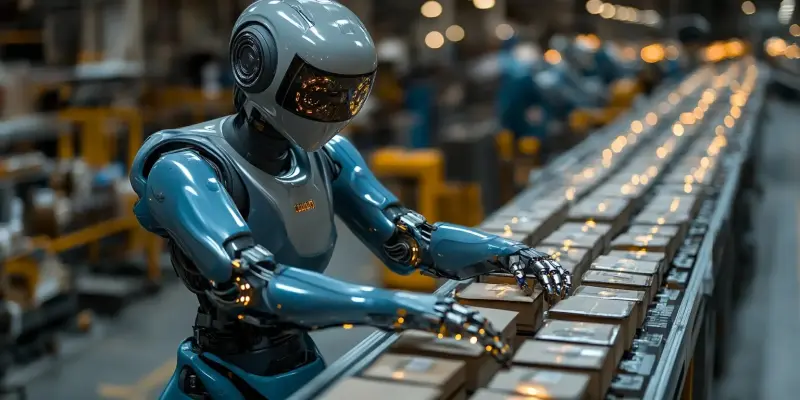
The advent of humanoid robots is revolutionizing the modern workforce by heralding a significant shift toward automated labor that was once only imagined in science fiction. Figure, a pioneering company in the robotics sector, has rapidly ascended to prominence within just 31 months of its inception, marking a landmark achievement in the field. The company has successfully developed and shipped its advanced humanoid robot, the Figure 02, to commercial partners. This milestone is not merely an incremental improvement; it underscores the innovative drive and ambitious spirit of the company and serves as a testament to the burgeoning capabilities of humanoid robotics. According to CEO Brett Adcock, these robots are now efficiently integrating into operational networks at customer sites, exemplifying their transformative potential in real-world applications.
Advanced Capabilities of Figure 02
Figure 02’s specifications and capabilities underscore its potential to transform labor-intensive and precision-demanding tasks across various industry sectors. Standing at 5 feet 6 inches tall and weighing 155 pounds, the robot is robust enough to transport loads of up to 44 pounds. It also boasts a battery life sufficient to allow it to operate for five hours on a single charge while moving at nearly three miles per hour. Designed for versatility and practicality, Figure 02 can perform a diverse array of functions such as opening doors, handling tools, lifting, assembling, and climbing stairs. These multifaceted abilities highlight the robot’s potential to significantly enhance operational efficiency, making it a valuable asset in a variety of industrial settings.
A key demonstration of Figure 02’s capabilities can be seen in its collaboration with BMW, where it has been utilized on production lines to transfer parts with remarkable dexterity. This partnership not only showcases the robot’s proficiency and speed—previous robotic models operated at just 17% of human speed, whereas Figure 02 has seen considerable improvements—but also exemplifies how such advanced technology can seamlessly integrate into existing manufacturing processes. The robot’s enhanced functionality is indicative of the broader trend of automation sweeping through labor markets, signaling a new era in which machines and humans work side by side to augment productivity and sustainability.
Benefits and Challenges of Humanoid Robots
The deployment of humanoid robots like Figure 02 brings a host of advantages as well as noteworthy challenges. Among the most significant benefits is increased efficiency in labor-intensive tasks and the robot’s ability to function in environments demanding high precision and dexterity. Continuous operation without fatigue means that companies can expect to see potential reductions in labor costs over time. However, the initial investment required for such advanced technology is substantial, and leasing costs—though expected to decrease—remain prohibitively expensive for smaller enterprises. There are also legitimate concerns regarding job displacement, given that robots are poised to replace human workers in specific roles.
As the humanoid robotics market continues to evolve, experts anticipate substantial trends that will reshape labor dynamics. One significant prediction is the reduction of leasing costs for advanced robots like Figure 02 to under $500 per month. This anticipated price drop would democratize access to robotic solutions, making them more affordable for smaller businesses and thereby widening their application across various industries. Such affordability could catalyze a transformative shift, leading to further automation of tasks currently performed by humans and fundamentally altering how goods are produced and services delivered.
Future Trends in Humanoid Robotics
As the humanoid robotics market progresses, experts predict trends that will markedly influence labor dynamics. A key projection is that leasing costs for advanced robots like Figure 02 will drop to under $500 per month. This anticipated reduction in price would make robotic solutions accessible to smaller businesses, expanding their use across various industries. Increased affordability could trigger a significant shift toward automating tasks currently done by humans, fundamentally altering how goods are produced and services are provided. This evolution could greatly impact the workforce, highlighting the need for strategies to adapt to such changes.