

Dominic Jainy stands at the intersection of emerging technologies, bringing years of expertise in artificial intelligence and blockchain to the table. His perspective on infrastructure is particularly relevant today as the industry witnesses a massive migration of data processing from centralized hubs to the network’s edge. This shift is epitomized by recent developments in South Texas, where new facilities are being established to handle the surge in international data traffic and localized AI workloads. The following discussion explores the strategic importance of regional hubs, the evolution of communication towers into high-performance computing centers, and the growing scale of the digital frontier.
How do you view the strategic importance of Corpus Christi in the context of the growing demand for Mexico-US IP transit and localized AI inference?
The launch of a multi-tenant edge data center in Corpus Christi represents a significant shift in what we call “digital gravity.” By placing infrastructure in the heart of South Texas, the industry is creating a vital frontier for next-generation connectivity that directly serves the skyrocketing demands of Mexico-US Internet IP transit. This facility is not just about storage; it is designed for distributed computing and real-time cloud environments where latency can make or break a commercial application. For local AI inference workloads, having a carrier-neutral facility nearby means that data does not have to travel to distant hubs, allowing for near-instantaneous processing that is essential for modern automated operations.
What does the rapid expansion of this infrastructure portfolio tell us about the future of traditional tower operators in the digital economy?
It is fascinating to see a company founded in 1989 and headquartered in Boca Raton evolve from a traditional tower operator into a high-tech infrastructure provider. With operations across sixteen markets and a massive footprint of 17,000 towers in the US, the foundation for an edge network was already physically in place. Their journey began in earnest around 2018 with trials in places like Foxborough, and the growth since then has been aggressive and calculated. Between late 2022 and May 2023, the company grew its edge site count from approximately 30 to 40 sites to somewhere between 40 and 50, signaling that the demand for at-tower deployment is no longer experimental but a core business strategy.
With the announcement of upcoming phases and support for speeds up to 400 Gbps, what specific advantages does this provide for high-performance computing?
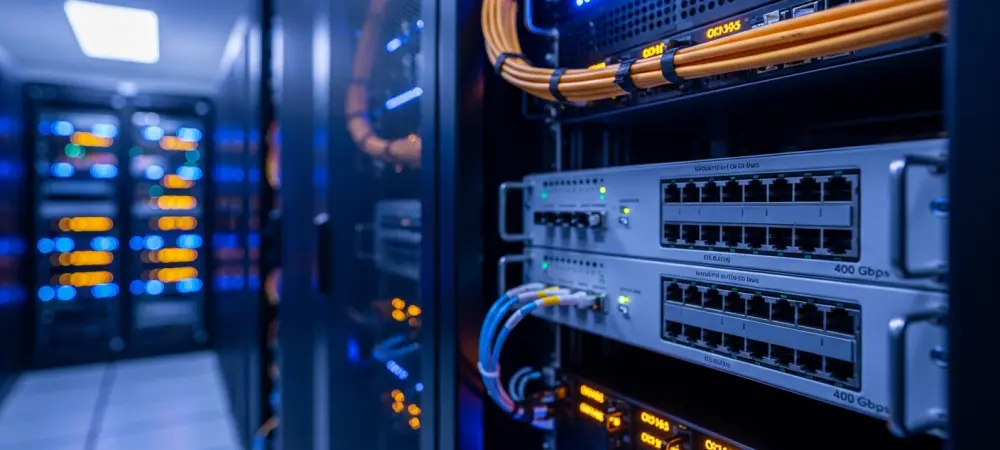
A carrier-neutral meet-me room capable of supporting data speeds up to 400 Gbps is an absolute powerhouse for modern industrial applications. As the project moves into its second phase, the focus on turnkey, scalable deployments optimized for high-performance computing will allow businesses to deploy heavy workloads without the usual infrastructure overhead. This local capability complements larger-scale operations, such as the company’s existing 21MW data centers in Chicago, Jacksonville, and São Paulo, which span over 400,000 square feet. By bridging the gap between these massive regional centers and the localized edge, they are creating a seamless environment for data-intensive tasks like deep learning and complex simulations.
What is your forecast for the role of edge computing in regional markets over the next few years?
I anticipate that we will see a dramatic surge in localized infrastructure as more industries integrate real-time AI into their daily operations. The expansion we have seen in Arlington and Jacksonville is just the beginning of a trend where data processing moves to wherever the user is physically located. We will likely see the number of edge sites continue to climb well beyond the current 50-site mark as the need for low-latency connections becomes a standard requirement for international trade and local services. Ultimately, the success of these hubs in South Texas will serve as a blueprint for how we connect different global markets through intelligent, high-speed regional nodes.