

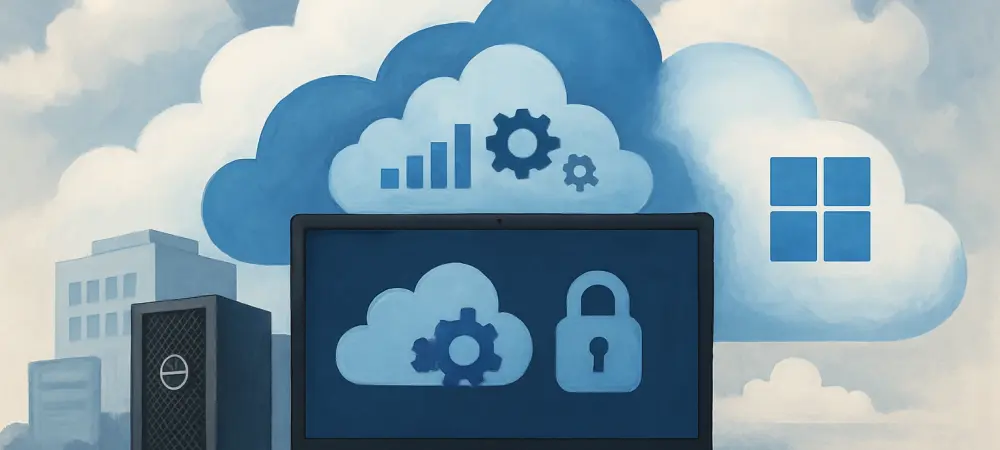
In an era where enterprises juggle an unprecedented volume of data across on-premises and cloud environments, hybrid cloud solutions have become a cornerstone of digital transformation. A staggering statistic reveals that over 80% of businesses now operate in multicloud setups, yet many struggle with integration, security, and scalability challenges. This roundup dives into the expanded partnership between Dell Technologies and Microsoft, exploring how their collaboration is reshaping hybrid cloud management through Azure integration. By gathering insights, opinions, and expert perspectives from across the industry, this piece aims to unpack the innovative tools, cyber resilience strategies, and workplace transformations driving this alliance, offering a comprehensive view of its impact on enterprise IT.
Unpacking the Dell-Microsoft Partnership: Industry Perspectives
A Game-Changing Alliance for Hybrid Cloud Innovation
The collaboration between Dell and Microsoft has garnered attention for its focus on streamlining hybrid and multicloud environments. Industry analysts have noted that the integration of Dell’s infrastructure with Microsoft Azure addresses a critical pain point for enterprises: the complexity of managing disparate systems. This partnership promises automated tools and scalable solutions, positioning itself as a vital resource for businesses seeking seamless IT operations in a fragmented digital landscape.
Feedback from tech consultants highlights the alliance’s emphasis on flexibility as a standout feature. Many organizations face hurdles in balancing on-premises legacy systems with modern cloud demands, and this joint effort is seen as a bridge to unify these environments. The consensus points to a shared mission of empowering enterprises with control over their hybrid setups, though some caution that adoption may require significant upfront investment and training.
A differing view emerges from smaller enterprises, where cost concerns often overshadow enthusiasm for innovation. While larger firms may readily adopt these advanced solutions, feedback suggests that small-to-medium businesses seek more tailored support to navigate the transition. This spectrum of opinions underscores the partnership’s broad potential, tempered by practical considerations of accessibility and scale.
Why This Matters to Global Businesses
Across various sectors, the need for secure and efficient IT infrastructure has never been more pressing. Cybersecurity experts stress that hybrid cloud environments, while powerful, expose organizations to heightened risks if not managed with robust tools. The Dell-Microsoft collaboration is frequently praised for prioritizing cyber resilience, a factor deemed essential in an age of escalating threats.
IT managers from multinational corporations have shared that the ability to integrate cloud and on-premises data seamlessly offers a competitive edge. Their experiences suggest that this partnership could reduce downtime and enhance productivity, provided the tools are implemented with clear strategic planning. This perspective aligns with broader industry trends pushing toward integrated solutions as a standard for operational success.
However, some industry voices express skepticism about over-reliance on a single ecosystem like Azure. Concerns about vendor lock-in and long-term costs surface in discussions, with certain analysts advocating for hybrid solutions that maintain vendor neutrality. These contrasting insights paint a nuanced picture of the alliance’s role in shaping enterprise IT priorities.
Core Innovations: Diverse Opinions on Dell-Microsoft Offerings
Seamless Hybrid Integration with Azure-Powered Tools
The integration of Dell Private Cloud and PowerStore with Azure Local has sparked varied reactions among tech professionals. Many system architects commend the automated lifecycle management and independent scaling capabilities, which reportedly simplify control over hybrid environments. Dell’s use of NVMe technology and always-on data reduction is often cited as a boost for workload efficiency across diverse applications.
On the other hand, some IT specialists point out potential adoption challenges, particularly for organizations with entrenched legacy systems. Compatibility issues and the learning curve associated with new tools are recurring themes in their feedback. Despite these hurdles, the prevailing opinion leans toward the benefits outweighing the drawbacks, especially for enterprises already invested in Azure ecosystems.
A third perspective from independent consultants emphasizes the need for robust support during implementation. Their input suggests that while the technology itself is groundbreaking, success hinges on Dell and Microsoft providing comprehensive guidance to mitigate transition risks. This blend of enthusiasm and caution reflects the complexity of rolling out such advanced hybrid solutions.
Data Management Transformation via PowerScale for Azure
Dell PowerScale for Azure, a managed file storage solution, has elicited strong interest for its handling of data-intensive applications and unstructured data. Cloud engineers frequently highlight its native Azure integration as a key strength, enabling scalability and security that align with modern enterprise needs. The fact that Dell manages deployment and ongoing operations is often seen as a significant relief for overburdened IT teams.
Contrasting opinions surface from data analysts who question the long-term cost implications of such managed services. While the ease of deployment is a clear advantage over competitors, there’s a noted concern about dependency on Azure’s ecosystem, which could limit flexibility. These critiques suggest that businesses must weigh immediate gains against potential future constraints.
Another angle comes from industry observers who compare PowerScale to other storage solutions. Their assessments indicate that Dell’s offering stands out for its seamless integration, yet they advise enterprises to evaluate their specific data needs before committing. This diversity of thought underscores the solution’s promise while urging careful consideration of its broader implications.
Cyber Resilience through PowerProtect Backup Services
Dell’s PowerProtect Backup Services on Azure, designed as a backup-as-a-service model, has drawn praise for its focus on protecting hybrid workloads. Cybersecurity professionals often cite the automated recovery and multicloud management features as critical for maintaining business continuity. In an era of sophisticated cyber threats, this solution is viewed as a forward-thinking approach to resilience.
Some IT directors, however, challenge the idea that traditional backup methods are obsolete, arguing that not all organizations require such advanced, integrated tools. Their feedback suggests a preference for hybrid strategies that combine legacy and modern solutions, especially for budget-constrained firms. This perspective highlights a divide in how different businesses prioritize data protection investments.
A broader industry trend, as noted by security consultants, points to regional variations in data protection needs, with stricter regulations in some areas driving demand for robust tools like PowerProtect. Their insights advocate for tailored approaches, suggesting that Dell and Microsoft’s offering excels in adaptability. This range of opinions illustrates the nuanced landscape of cyber resilience strategies.
Workplace Modernization with AI and Automation
Dell’s AI-powered PCs, integrated with Microsoft Intune, Windows 11, and Microsoft 365, have generated buzz for their local AI processing capabilities. Tech innovators applaud the focus on security and personalization, noting that these devices cater to a growing demand for automation in workplace settings. The ability to process workloads locally is often seen as a step toward safeguarding sensitive data.
Comparisons with other market offerings, as discussed by AI specialists, reveal that Dell’s AI Factory portfolio offers unique flexibility for developers. However, there’s a noted concern about balancing cost with the need for cutting-edge features, with some suggesting that smaller firms might find alternatives more viable. These contrasting views reflect the evolving nature of AI-driven workplace tools.
Additional insights from IT strategists emphasize the empowerment of developers and IT teams through these innovations. Their opinions suggest that the partnership’s focus on manageable, secure AI deployment could set a new standard for workplace efficiency. This variety of feedback highlights the transformative potential of AI, tempered by practical considerations of implementation.
Key Takeaways from Industry Voices
Synthesizing the range of perspectives, the Dell-Microsoft partnership stands out for its hybrid cloud flexibility, robust data protection via PowerProtect, and AI-enhanced workplace solutions. IT leaders consistently point to the scalability of tools like PowerScale for Azure as a major draw, while others stress the importance of cyber resilience in today’s threat landscape. These insights collectively affirm the alliance’s relevance across diverse enterprise needs.
Practical advice from consultants centers on leveraging Dell’s Professional Services for Microsoft to ease deployment and optimization. Businesses are encouraged to assess their hybrid IT requirements thoroughly before adoption, ensuring alignment with strategic goals. Exploring scalable storage options and payment solutions offered by Dell is also recommended to support digital transformation without financial strain.
A recurring theme in discussions is the need for tailored approaches to implementation. Tech advisors suggest starting with pilot programs to test compatibility and effectiveness, particularly for smaller enterprises. This hands-on guidance, drawn from multiple industry voices, provides a roadmap for navigating the complexities of adopting such comprehensive solutions.
Shaping Enterprise IT: A Collective Vision
Looking back, the Dell-Microsoft collaboration has proven to be a pivotal force in addressing multicloud complexities, as evidenced by the varied industry feedback. The partnership’s emphasis on security, scalability, and efficiency resonated across sectors, offering a blueprint for resilience amid rapid technological shifts. Discussions around their integrated solutions revealed both enthusiasm and constructive critique, enriching the understanding of hybrid cloud potential.
For the road ahead, businesses are encouraged to delve deeper into specific offerings like PowerScale or PowerProtect, tailoring adoption to their unique environments. Exploring Dell’s professional services emerged as a practical next step to maximize benefits while mitigating risks. Additionally, staying informed about evolving AI and automation trends is advised to maintain a competitive edge in an ever-changing digital landscape.