

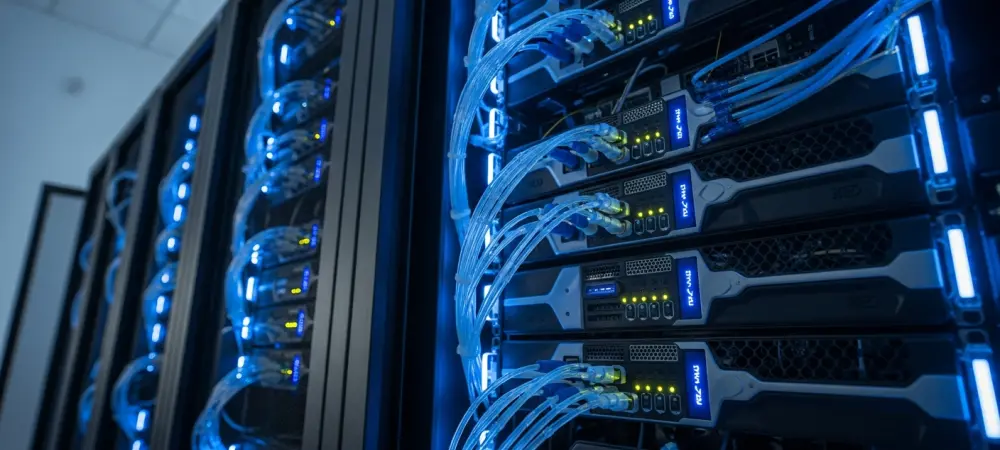
Trillion-dollar investments in artificial intelligence often stall because the most expensive components in the modern data center, the high-performance GPUs, are frequently left idling while waiting for training data to arrive across congested network links. This paradox creates a significant operational data problem where raw compute power significantly outpaces the ability of traditional storage architectures to deliver large-scale datasets at the required velocity. As organizations scale their machine learning models from millions to billions of parameters, the physical distance between where data is stored and where it is processed becomes a critical liability for time-to-market. When high-end accelerators sit underutilized for even a fraction of their operational cycle, the return on investment for massive infrastructure projects drops precipitously, turning what should be a competitive advantage into a financial drain. The industry is reaching a consensus that throwing more silicon at the problem is no longer a viable solution unless the underlying data plumbing is fundamentally redesigned to meet the real-time demands of generative AI workloads. This inefficiency is not just a technical glitch; it is an economic barrier that prevents companies from realizing the full potential of their hardware investments, leading to a desperate search for orchestration layers that can bridge the gap between static storage and dynamic compute needs.
The Fragmented Landscape: Overcoming Localized Data Silos
The dispersion of training datasets across multi-cloud environments and geographically separated regional centers has introduced a layer of complexity that traditional storage management simply cannot handle. Data scientists frequently find themselves acting as amateur systems administrators, spending hours or even days manually identifying, copying, and verifying files before a single training epoch can begin. This fragmentation is not merely a logistical annoyance; it represents a fundamental barrier to scaling AI operations beyond small-scale experimental labs. When data exists in isolated silos—whether they are on-premises NAS systems, public cloud buckets, or edge locations—the time required to stage this data into high-performance compute zones creates massive delays. Without a unified view of these disparate assets, organizations often lose track of their most valuable training data, leading to redundant collection efforts and a failure to leverage existing intellectual property for model refinement and fine-tuning.
Instead of focusing on architectural innovation, engineering teams are bogged down by the manual labor of data movement, which creates a significant drag on the overall pace of development. This lack of visibility into the data estate means that even when powerful hardware is available, it remains starved for the very information it is meant to process. The operational data problem is exacerbated by the sheer volume of unstructured files, such as images, video, and text, which must be indexed and moved with high precision to avoid corrupting the training process. By shifting the focus from a capacity-centric model to a flow-centric model, organizations can begin to treat data as a dynamic resource that moves according to the needs of the compute cluster rather than a static asset trapped in a specific box. This shift requires a rethink of the entire stack, moving away from manual staging toward an automated environment where the location of the data becomes transparent to the end-user.
Global Namespace Strategies: Bridging the Gap Between Clouds
The modern approach to infrastructure modernization involves a strategy known as assimilation, which allows enterprises to integrate their existing storage investments into a unified ecosystem without the need for destructive migrations. By implementing a metadata-only operation, an orchestration layer can scan existing storage volumes and create a single global namespace that represents all files as if they were located in one logical directory. This process allows researchers and engineers to browse and access datasets instantly, regardless of whether the physical bits reside in an old on-premises array or a new high-speed cloud environment. The underlying data remains in place until it is actually called upon by a processing job, at which point the orchestration engine intelligently moves the necessary blocks to the compute-adjacent storage. This method effectively preserves the value of legacy hardware while providing the agility of a modern software-defined architecture, ensuring that the transition to advanced AI capabilities does not require a costly overhaul of the entire data center.
By moving the focus from the physical location of the file to its logical metadata, orchestration platforms enable a much more fluid interaction between storage and compute. This “live” access means that training can begin almost immediately, as the orchestration layer fetches the required data in the background while the initial layers of the neural network are being processed. This eliminate the “dead time” usually associated with pre-loading massive datasets from cold storage to active training clusters. Furthermore, this approach provides a centralized point of management for security and access controls, ensuring that only authorized users can view or modify specific datasets across the entire global infrastructure. The ability to abstract the physical storage layer from the application layer allows for a more resilient system where hardware can be upgraded or replaced without disrupting the ongoing work of the data science teams, ultimately leading to a more stable and scalable development environment.
Tier 0 Storage: Harnessing Stranded Resources for Performance
A transformative shift in data center economics is the emergence of Tier 0 storage, which utilizes the high-performance NVMe drives found inside modern GPU server nodes rather than relying exclusively on external SAN or NAS appliances. In many standard configurations, these internal drives are vastly underutilized, often serving as nothing more than temporary scratch space or boot drives for the operating system. Data orchestration platforms can now aggregate these individual local drives into a shared, high-performance storage pool that is accessible by every node in the cluster. This creates a virtual super-tier of storage that operates at the speed of the PCIe bus, effectively eliminating the network latency that usually occurs when data travels from an external storage box through multiple switches to the processors. By turning these stranded resources into a collective asset, organizations can achieve throughput levels that were previously unattainable without investing heavily in specialized and proprietary high-performance computing hardware.
Using internal NVMe drives is not only faster but also significantly more cost-effective than expanding external storage arrays. While external storage boxes are often bottlenecked by a limited number of network interface cards, the internal drives utilize the massive bandwidth of the PCIe lanes and existing high-speed network paths already dedicated to the GPUs. This setup ensures that the most expensive part of the data center—the accelerators—remains fully utilized throughout the training cycle by providing a massive, localized buffer that can feed the processors at wire speed. This internal storage layer acts as a high-velocity cache that keeps the data close to the compute power, reducing the reliance on the primary network and preventing the “traffic jams” that often occur when multiple GPU nodes try to pull data from a single central storage server simultaneously. The result is a much more efficient use of hardware that maximizes the performance of every dollar spent on high-end silicon and networking infrastructure.
Open Standards and Parallelism: Breaking Vendor Lock-In
The historical reliance on proprietary storage software is rapidly diminishing as open standards like the Network File System version 4.2 evolve to meet the massive throughput requirements of large language models. This protocol, when combined with parallel access features and RDMA technology, allows for linear scaling of performance that can match or exceed the capabilities of expensive, closed-source storage solutions. By adopting these industry-standard protocols, enterprises avoid the vendor lock-in that often accompanies specialized high-performance computing hardware, giving them the flexibility to choose the best-of-breed components for their specific needs. This standardization also simplifies the integration with modern container orchestration platforms like Kubernetes, ensuring that storage resources can be provisioned and managed with the same level of automation as the compute workloads themselves. The democratization of high-speed data access ensures that organizations can compete in the AI space by utilizing widely available software tools to maximize their existing hardware investments. Automation serves as the final piece of this architectural puzzle, allowing for policy-based rules to manage the movement of data across different storage tiers without human intervention. These systems can be configured to automatically move hot data to the fastest Tier 0 storage when a training job is scheduled and then clear that space once the task is complete, ensuring that the most expensive storage is always used for the most critical tasks. This automated governance also handles the complexities of data sovereignty and compliance, ensuring that sensitive information remains within specific geographic borders or follows strict regulatory guidelines like HIPAA. By embedding these objectives into the orchestration layer, companies can maintain high levels of data security while simultaneously increasing their operational speed. This combination of open standards and intelligent automation creates a robust framework that can handle the massive scale of contemporary AI projects while reducing the administrative burden on IT and security teams.
Operational Excellence: Lessons from Successful Infrastructure Scaling
The transition from a hardware-centric storage model to a software-driven orchestration framework has redefined how enterprises approach the development of large-scale machine learning systems. Organizations that successfully decoupled their data management from their physical storage boxes saw a dramatic increase in GPU utilization rates and a corresponding decrease in the time required to bring new models to market. By implementing global namespaces and automated data placement policies, these teams ensured that their high-performance compute clusters never had to wait for data to be manually staged or moved across slow network links. The integration of internal server drives into a unified Tier 0 storage layer provided the necessary bandwidth to keep up with the processing power of the latest accelerators, while the use of open standards like NFSv4.2 maintained the flexibility required to adapt to changing technological requirements. This strategic focus on data movement rather than just data capacity proved to be the missing link in achieving true operational efficiency for enterprise AI initiatives.
To move forward, infrastructure teams prioritized the adoption of software-defined orchestration over the purchase of additional proprietary hardware boxes. These engineers focused on identifying stranded NVMe resources within their existing clusters and integrated them into the active data pipeline to eliminate network-induced latency. By setting clear objectives for data sovereignty and automated movement, they successfully reduced the manual burden on data science teams, allowing them to focus on model architecture rather than file transfers. The most effective strategies involved a gradual transition toward parallel NFS protocols, which provided the necessary throughput for next-generation training jobs while maintaining compatibility with existing workflows. Ultimately, the shift toward an orchestration-centric model allowed businesses to reclaim lost GPU cycles and stabilized the costs associated with scaling artificial intelligence across the enterprise. Leaders who implemented these changes saw their projects transition from experimental phases to production-ready applications with significantly higher efficiency.