

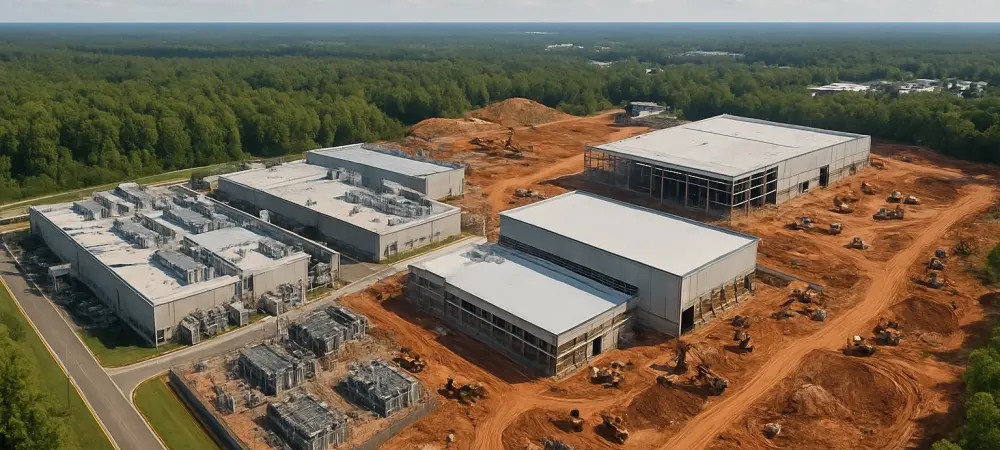
In an era where digital infrastructure serves as the backbone of modern enterprise, the demand for robust, high-capacity data centers has never been more critical, especially in rapidly growing regions like the southeastern United States. DartPoints, a prominent U.S.-based data center operator, has taken a significant step to address this need with a major expansion of its facility in Greenville County, South Carolina. This ambitious project, backed by a substantial $125 million investment, is set to increase the site’s capacity from 2.5MW to 12.5MW while adding 88,000 square feet of high-density space. Located at GSP01 in Greenville’s Global Business Park, the upgraded facility will feature advanced cooling systems capable of supporting densities up to 120kW per rack. This move not only caters to the rising demand for efficient and reliable IT infrastructure but also positions Greenville as a pivotal hub for technology-driven businesses seeking cutting-edge solutions in a competitive market.
A Strategic Boost for Regional IT Infrastructure
The Greenville facility, operational for nearly two decades, holds a storied history of supporting critical IT needs in the region, originally developed by a company that merged with DartPoints several years ago. This latest expansion is a cornerstone of DartPoints’ broader strategy to enhance its footprint across multiple U.S. markets, with specific approval for the Greenville project granted by the local county council recently. The initiative reflects a deep-rooted commitment to the area, aiming to fortify the local technology ecosystem through increased capacity and performance. Beyond mere physical growth, the project underscores a response to industry trends favoring localized, high-performance data centers that can handle vast data volumes closer to operational bases. South Carolina’s appeal as a tech hub is further validated by state leadership, with Governor Henry McMaster noting the synergy between innovation and infrastructure investment as a driver for attracting advanced digital operations to the state.
Future Implications and Industry Impact
Looking ahead, the expansion of DartPoints’ Greenville data center marks a pivotal moment in addressing the escalating need for sophisticated IT infrastructure in a key growth market. The project, supported by significant financial backing following a recent shift in ownership with Nova Infrastructure taking a majority stake, demonstrates a clear vision for scaling operations to serve over 900 enterprise clients across various sectors, including major universities and Fortune 500 companies. This development not only reinforces South Carolina’s standing as a destination for tech innovation but also highlights the critical role of strategic investments in driving digital transformation. Moving forward, stakeholders can anticipate further advancements by monitoring how such expansions influence regional economic progress and set benchmarks for localized data solutions. Keeping an eye on DartPoints’ ongoing initiatives across its 11 data centers in 10 markets will provide valuable insights into the evolving landscape of data center capabilities.