

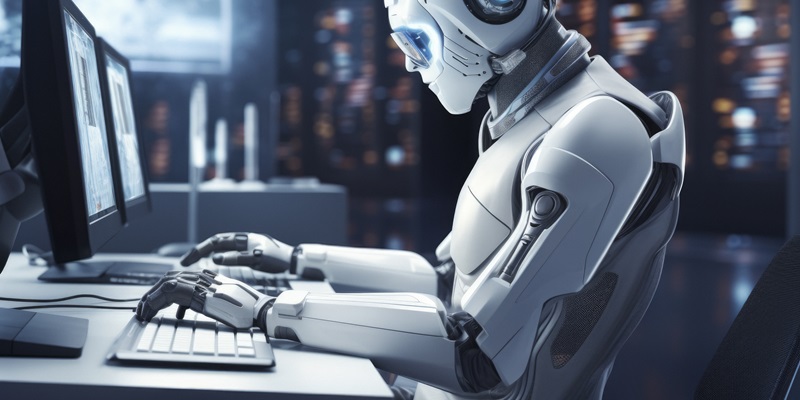
The rapid advancement of technology demands innovative approaches in all sectors, with the marriage of artificial intelligence (AI) and IT management being one of the most transformative. A company that exemplifies this cutting-edge hybridization is Atera. Founded in 2016, Atera has swiftly established itself as a leader in IT management, offering a comprehensive suite of services that streamlines and automates an array of IT tasks. From patch management and security to sophisticated ticketing systems, Atera’s all-in-one platform is not just intuitive but also powerful, thanks to its integration of AI. With a significant global presence that spans 120 countries and a particularly strong footprint in the US and UK markets, Atera’s innovative approach serves over 12,000 customers and is reshaping the landscape of IT management.
Atera’s Journey and AI Integration
Atera’s AI journey has been marked by a commitment to incorporating AI as a core feature of its identity and operations. CEO Gil Pekelman’s vision is clear: AI is not just an add-on but an essential facet that enhances Atera’s platform, making it proactive and predictive. Under Pekelman’s direction, Atera has become a celebrated example of how AI can be seamlessly integrated into business processes to boost both efficiency and reliability. The result is a platform that not only provides comprehensive IT management services but also leverages the latest AI developments to predict, alert, and resolve issues, thus freeing IT professionals to focus on more complex challenges.
This focus on AI has led Atera to embrace some of the most advanced tools in the field. Their collaboration with AI giants like ChatGPT and OpenAI has birthed ‘Action AI,’ which takes the concept of AI beyond just interaction and allows it to autonomously perform measurable actions in the real world. This includes tackling IT issues independently, signifying a leap from content creation to active problem-solving. Such developments are indicative of Atera’s commitment to innovation and its forward-thinking approach to IT management.
AI Trends and Developments in IT Management
The trend of integrating AI into IT management is burgeoning, with Atera at the front lines pioneering these innovative solutions. The company’s efforts synchronize with the broader trajectory of AI’s evolution, which encompasses not only analytical thinking but also proactive action. Atera’s sophisticated work with ChatGPT and OpenAI epitomizes this movement towards an IT management ecosystem that preemptively identifies problems and suggests solutions, thereby offering unparalleled efficiency gains for IT professionals.
Atera’s endeavor in this space is notably distinguished by the development of ‘Action AI.’ This technology has the potential to not just predict but also resolve IT issues, thereby redefining how AI can contribute to IT management. With a growing emphasis on AI’s capabilities extending into tangible, actionable solutions in the physical world, Atera is laying the groundwork for a future where AI’s role in IT support is not accessory but essential.
Autopilot and Copilot: Atera’s AI Innovations
Atera’s innovations do not pause at problem identification; they extend into problem resolution with features such as Autopilot and Copilot. Autopilot is the embodiment of self-sufficiency; it independently diagnoses and solves IT problems within a secure and private framework. This revolutionary AI feature significantly reduces the burden on IT professionals, giving them the freedom to invest time in areas that require their expertise. Copilot, on the other hand, is designed to augment the human role in IT management. It acts as an assistant, providing diagnostic support and actionable recommendations while respecting the ultimate decision-making sovereignty of the IT expert.
The integration of these two facets — Autopilot’s autonomy and Copilot’s assistive capacity — promises to transform IT support. The blend of independent operations and augmented intelligence could potentially save hours of work for IT professionals on a daily basis. While Autopilot is slated for a major release following its beta period, Copilot has already arrived on the scene, indicating Atera’s progressive rollout strategy for its AI-powered features.
Implementing AI in Business IT Practices
With such clear benefits emanating from AI in IT management, businesses are encouraged to adopt these technologies swiftly. Atera’s CEO, Gil Pekelman, advises companies to integrate AI solutions not just for automation but for the efficiency, precision, and speed they introduce into problem-solving. Essential to this integration, however, is ensuring that the AI tools in use are secure and trustworthy. Atera models this through its collaboration with Microsoft, ensuring customer data security and privacy while providing AI tools that boost the productivity of IT teams and satisfaction of end-users.
Businesses seeking to harness the power of AI in their IT practices can look to Atera’s strategies for a blueprint. As this integration unfolds, it’s critical that companies not only implement AI for task automation but also as a partner in delivering enhanced services and experiences. With its eye on security and efficiency, Atera’s approach serves as a guiding light for business IT practices looking to navigate the complexities of AI adoption.
The Advancing Horizon of AI and Atera’s Strategic Vision
The horizon for AI in IT management is not just widening; it’s becoming increasingly intelligent, adaptive, and even empathetic. As AI’s reasoning and predictive capabilities flourish, we’re moving toward a future where AI is a nearly indispensable partner in our daily professional roles. Atera’s strategic vision aligns with this progress. Their upcoming launch of Autopilot marks a milestone in IT management, where AI’s abilities move beyond assistance to active, self-sufficient management of IT tasks.
Atera is poised to roll out AI-driven products that reflect this future, by emphasizing AI’s empathetic dimension as showcased by recent offerings from OpenAI. As AI continues to evolve, becoming ever smarter and more responsive, the potential for it to become a trusted collaborator in IT support is substantial. Atera’s roadmap is set to further polish the close relationship between AI and IT management—a promising sign of the revolution currently underway.
Atera’s innovative approach is guiding IT management into a future dominated by AI-powered efficiency and productivity. As these technologies streamline workflows and enhance the capabilities of IT professionals, they’re not only transforming the IT industry but also setting the stage for a partnership between humans and AI that’s intuitive, effective, and profoundly integral to the modern workplace.